+86-18058825678
- All
- Product Name
- Product Keyword
- Product Model
- Product Summary
- Product Description
- Multi Field Search

- Home
- Our Product
- About Didtek
- Solutions
- Exhibition Show
- Support
- News
 English

Views: 0 Author: Site Editor Publish Time: 2026-06-18 Origin: Site


You need good protection from backflow in many systems. The tilting disc check valve closes quickly and saves energy. This helps stop sudden pressure changes and water hammer. Many industries use this valve, like oil and gas, water treatment, and chemical processing. The valve is made of strong carbon steel and works well, even with low flow. Some people say it is hard to install and costs more at first than simple valves. But you get strong performance and a long-lasting valve.
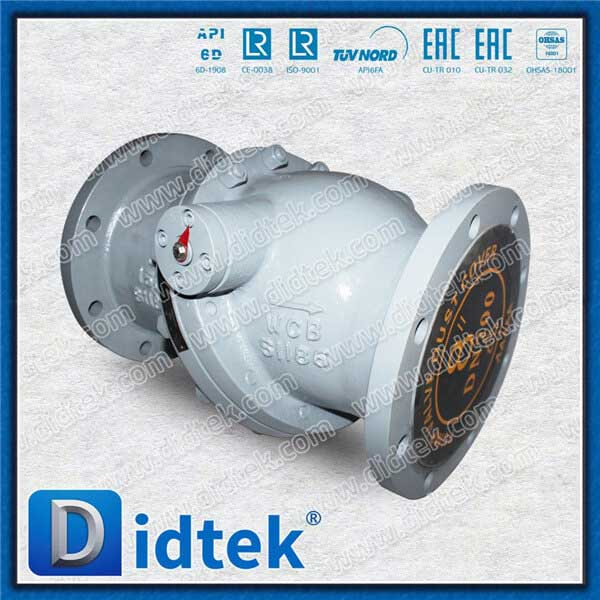
You want your system to move fluids smoothly. The tilting disc check valve helps you achieve this goal. Its disc tilts open with little resistance, so fluid passes through with minimal pressure drop. This means your pumps do not have to work as hard, which saves energy and reduces costs. The Didtek Valve tilting disc check valve uses strong carbon steel. This material gives you durability and long-lasting performance.
Here is a table that shows how the pressure drop stays low at different flow rates:
Flow Rate | Pressure Drop (bar) | Pressure Drop (psi) |
|---|---|---|
30% | 0.079 | 1.15 |
Nominal | 0.141 | 2.04 |
120% | 0.203 | 2.94 |
You can see that the pressure drop remains low, even when the flow increases. This helps your system stay efficient and reliable.
You need a check valve that closes quickly to prevent backflow. The tilting disc check valve does this well. The disc only moves a short distance to close, so it reacts fast when the flow stops. This quick action protects your pipes and equipment from sudden changes in pressure.
Tip: Quick closure is very important in high-flow systems. It keeps your pipeline safe and helps your valve last longer.
Here is a table that explains how quick closure works and why it matters:
Feature | Description |
|---|---|
Quick Closure | The disc operates over a short distance, so it closes rapidly. |
Impact Reduction | Fast closure reduces the impact on the valve and the system. |
Frequent Operation | The valve works well even if you open and close it many times. |
You can count on the tilting disc check valve to give you reliable backflow prevention and high sealing performance.
Water hammer can damage your pipes and pumps. The tilting disc check valve helps you avoid this problem. The disc closes quickly and smoothly, so it stops reverse flow before it builds up speed. This action almost eliminates water hammer.
The pivot point sits near the center, so the disc closes fast.
The short stroke means the disc does not travel far.
Fast closure keeps backflow volume low, which protects your system.
You get peace of mind knowing your system is safe from pressure spikes.
You may have limited space in your facility. The tilting disc check valve fits well in tight spots. Its compact design makes installation easy, even when space is a challenge. Didtek Valve builds this valve to be strong but not bulky. You can use it in many places, such as pump rooms or crowded pipelines.
Saves space in your system layout.
Makes installation and maintenance easier.
You want a check valve that does not need much attention. The tilting disc check valve has a simple design with fewer moving parts. This means you spend less time and money on maintenance. The strong carbon steel body resists wear and tear, so you get long service life.
Here is a table that compares maintenance needs:
Valve Type | Maintenance Needs |
|---|---|
Tilting Disc Check | Requires less maintenance due to simpler design |
Swing Check Valve | Prone to more wear and tear, requiring more upkeep |
You can trust the tilted disc check valve to keep working with little effort from you. This is one of the main advantages of tilting disc check valves.
Check valves can wear out as time passes. The disc and hinge move each time fluid flows. If your system has particles, they can get stuck inside. This makes the disc harder to move and causes more friction. You should check for buildup and clean the valve if needed. Sometimes, you must add oil to the hinge so it works well. Regular checks help you find early signs of wear.
A tilting disc check valve reacts to changes in flow speed. The disc opens when fluid moves forward and closes fast when flow goes back. If your system runs at low flow, the disc may not open all the way. This can cause extra head loss and make the disc shake. You may hear noise or see vibration. The valve works best when flow stays strong and steady. If your system changes flow often, you should watch for these problems.
Here is a table that shows how flow affects performance:
Flow Condition | Description |
|---|---|
Flow Velocity | Changes disc stability and valve life; normal speeds are between 3 and 12 fps. |
Cracking Pressure | Lowest pressure needed to open the valve; usually between 0.25 and 2 psi for municipal valves. |
Pressure Rating | Highest pressure the valve can handle; often between 150 and 300 psi for municipal use. |
You can see the valve needs good system conditions to work well.
Tilting disc check valves cost more than swing check valves. The design uses more parts and needs careful making. You pay more at first, but you get better performance and longer life. If you want a simple check valve, a swing check valve may cost less. If you want high performance and reliability, you may pick the tilting disc check valve.
Note: The higher price comes from the advanced design and strong materials.
It can be hard to maintain a tilting disc check valve. The pivot pins and disc inside are harder to reach than in a swing check valve. You need special tools and skilled workers to open and fix the valve. Swing check valves let you reach parts more easily through a top cover.
Here is a table that compares maintenance accessibility:
Valve Type | Maintenance Accessibility |
|---|---|
Swing Check Valves | Simple structure, less skill needed |
Tilting Disc Check Valves | More complex, needs special tools and skilled people |
You must install the valve carefully. If you do not line it up right, the disc may not close fast enough. You should check for particles that can block the disc or hinge. Regular maintenance keeps your check valve working well.
You should use a tilting disc check valve if you need fast and reliable backflow prevention. These valves work well in places like natural gas plants, chemical factories, and petrochemical sites. The valve closes quickly, so it helps stop water hammer and keeps pipes and pumps safe from pressure jumps. Because the pressure drop is low, these valves keep fluid systems running well. They can handle liquids, gases, or steam without losing efficiency.
Didtek Valve’s tilting disc check valve is great when you do not have much space. Its small size makes it easy to put in tight spots, like pump stations or busy pipeline areas. You can count on this valve to last a long time, even if the job is tough. The strong carbon steel body fights off wear and rust, so it is a good pick for important jobs.
Industries that need quick action and little maintenance like this valve the most. For example, in natural gas plants, the fast-closing disc stops backflow and pressure spikes. Chemical plants use these valves because they can handle harsh fluids safely, thanks to different material choices. All in all, the tilting disc check valve is a strong and flexible choice for many fluid control jobs.
Even though tilting disc check valves fit many uses, sometimes you need a different kind of check valve. If your system moves fluid slowly or has very little space, a swing check valve might be better. Swing check valves are shorter and lighter, so they fit in small places. They also need less care because they are simple. But swing check valves close slower, which can cause water hammer in fast-flow systems.
Silent or nozzle check valves are another choice, especially if water hammer is a big problem. These valves close quietly and fast, so they help stop pressure surges. They are best for high-speed systems where you want less noise and shaking. But they usually cost more at first and may need more upkeep.
Here is a table to help you compare:
Valve Type | Best For | Trade-off |
|---|---|---|
Tilted disc check valve | High-speed, chemical, and gas applications | Higher initial cost, more complex maintenance |
Swing check valve | Low-velocity, space-constrained systems | Slower closure, potential for water hammer |
Silent/nozzle check valve | High water hammer risk, high-speed flows | Higher cost, maintenance needs |
When you pick a check valve for oil, gas, water, or chemicals, think about flow, space, and how much care it needs. Didtek Valve’s tilting disc check valve is a strong and reliable choice for many hard jobs.
Tilting disc check valves give you many good things. They close fast, have low pressure drop, and last a long time. But they may not work well if your system has solids or sticky fluids. Think about these points when picking a valve:
What kind of fluid and pipe size do you have
How fast the fluid moves and how you install it
If the material fits your system and where you use it
If you need to stop water hammer or loud sounds
Strengths | Limitations |
|---|---|
Reduced water hammer | Not for fluids with suspended solids |
Lower pressure drop | Not ideal for slurry or sticky media |
Reliable at low flow rates | Solids can block disc movement |
Didtek Valve has strong valves for hard jobs. Make sure you pick the right valve for your system to get the best results.
You use a tilting disc check valve to stop fluid from flowing backward. The disc tilts open for forward flow and closes quickly when flow stops. This keeps your pipes safe and prevents damage.
You can install this valve in oil and gas plants, water treatment systems, and chemical factories. Its compact design fits well in tight spaces like pump rooms or busy pipelines.
The disc closes fast and smoothly. This action stops sudden pressure spikes, called water hammer, before they can hurt your pipes or pumps.
Feature | Benefit |
|---|---|
Strong and durable | |
Quick closure | Protects your system |
Low maintenance | Saves you time and money |
You get a valve that lasts and works well in tough jobs.


