+86-18058825678
- All
- Product Name
- Product Keyword
- Product Model
- Product Summary
- Product Description
- Multi Field Search

- Home
- Our Product
- About Didtek
- Solutions
- Exhibition Show
- Support
- News
 English

Views: 0 Author: Site Editor Publish Time: 2025-10-31 Origin: Site


Choosing the right ball valve can significantly impact system efficiency and safety. With numerous types available, selecting the right one may seem daunting. In this guide, we delve into the essentials of ball valve selection, highlighting their importance in various applications. You'll learn about different operation types, material considerations, and connection options to ensure you make an informed choice."
Ball valves come in different operation types, each suited to specific needs—such as manual (handwheel/lever) for simple, low-frequency use, pneumatic for automated control in industrial setups, and electric for precise, remote operation. Choosing the right type depends on factors like automation level, torque requirements (e.g., low-torque for small valves), and available power sources (air, electricity, or manual force).
Manual ball valves are operated by hand, usually via a lever or handle. They are simple, cost-effective, and ideal for applications where automation is unnecessary or power sources are unavailable. However, manual valves are not suited for frequent operation or remote control.
Actuated ball valves, on the other hand, use external power to open or close the valve. They provide automation, allowing valves to be controlled remotely or integrated into process control systems. Actuation improves precision and speed, especially in complex or large-scale systems.
Electric ball valves use an electric motor to turn the ball. They offer precise control and can be integrated easily with digital control systems. Electric valves are preferred when electricity is readily available and when fine control or automation is required.
These valves have higher upfront costs but lower operating costs compared to pneumatic valves. They are quieter and simpler to install since they don’t require compressed air lines. However, they generally provide less torque than pneumatic valves, limiting their use on very large valves.
Pneumatic ball valves use compressed air to actuate the valve. They deliver higher torque, making them suitable for larger valves or systems requiring fast, powerful operation. Pneumatic systems are common in industrial settings where compressed air is already available.
While pneumatic valves can handle heavy-duty applications, they tend to have higher operating costs due to air consumption and require more complex infrastructure. They are noisier and may need additional maintenance compared to electric valves.
When selecting an actuated ball valve, consider site power availability and torque needs—choose electric for precise control with electricity, pneumatic for high torque where compressed air exists.
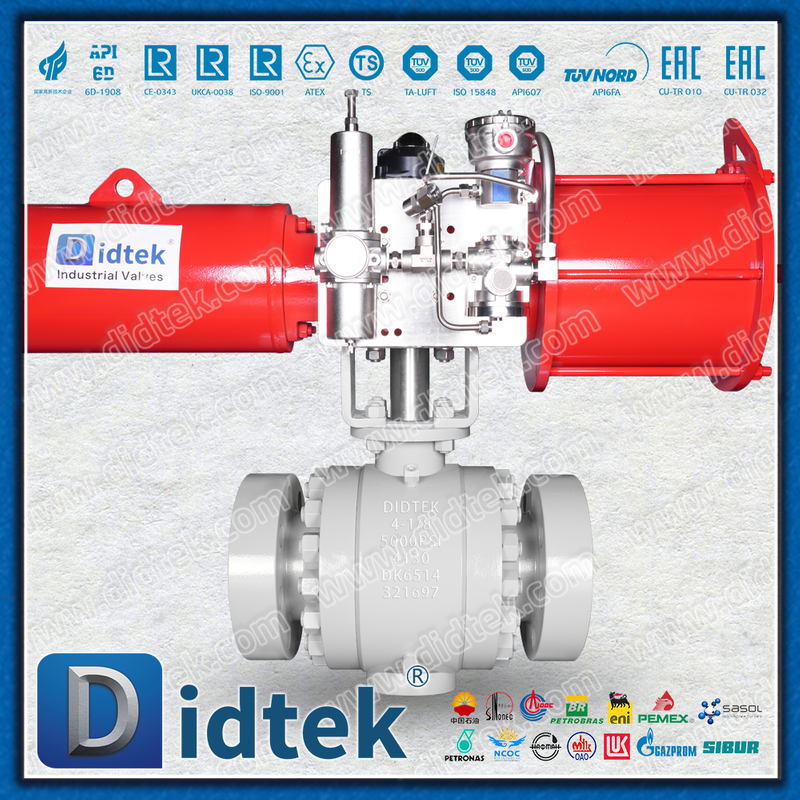
Ball valves come in different circuit functions that dictate how fluid flows through the valve, directly shaping their role in piping systems. The main types are 2-way (controlling flow between two ports, ideal for simple on-off) and 3-way (diverting/merging flow across three ports, suited for switching paths) ball valves, each designed for specific flow control tasks like line isolation or media mixing.
The 2-way ball valve is the simplest and most common type. It has two ports: an inlet and an outlet. When the valve is open, fluid flows straight through from one port to the other. When closed, the flow stops completely. This on/off functionality makes 2-way valves ideal for straightforward shut-off applications.
The flow path is direct, causing minimal pressure drop. Because of their simplicity, 2-way ball valves are cost-effective and easy to maintain. They work well in residential water lines, gas lines, and many industrial fluid systems.
3-way ball valves have three ports and come in two main internal bore designs: L-port and T-port. These designs determine how the fluid can be directed or mixed.
● L-Port 3-Way Valve: The L-shaped bore connects two of the three ports at a time. It acts as a diverter, directing flow from a common inlet to one of two outlets, or vice versa. This function is useful for switching flow between two lines but cannot flow to both outlets simultaneously.
● T-Port 3-Way Valve: The T-shaped bore can connect all three ports simultaneously or any two at a time. This allows mixing or diverting flows between different lines. T-port valves are common in heating, cooling, and chemical mixing applications where flow needs to be combined or split.
The choice between T and L port configurations depends on the application: L ports work for diverting flow from one inlet to two outlets (or vice versa), while T ports excel at merging two inlet flows into one outlet or splitting one into two—matching the specific flow routing needs of your system.
Feature | L-Port Ball Valve | T-Port Ball Valve |
Flow Paths | Connects two ports at a time | Connects two or all three ports |
Functionality | Divert flow between two outlets | Mix or divert flows |
Common Applications | Switching flow lines | Mixing, distributing fluids |
Flow Control | One outlet active at a time | Multiple flow paths possible |
For example, an L-port valve can switch flow from one pipeline to another without mixing. A T-port valve can mix two fluid streams or distribute one stream to two different paths.
When selecting a 3-way ball valve, carefully consider whether your system requires flow diversion (L-port) or mixing/distribution (T-port) to ensure optimal valve function and system efficiency.
Choosing the right material for a ball valve is crucial, as it directly impacts the valve’s durability (resisting wear and corrosion), long-term performance (maintaining sealing and flow control), and compatibility with the handled fluid (avoiding chemical reactions) and surrounding environment (e.g., high humidity or temperature). Here, we explore common housing materials—like carbon steel, stainless steel, and brass—and seal materials such as PTFE and EPDM to help you make an informed, application-specific choice.
Brass is a popular choice for ball valve bodies. It suits neutral and non-corrosive fluids. Brass is durable, handles high temperatures well, and is cost-effective. However, avoid brass valves for saltwater, distilled water, acids, or chlorides—they can corrode it.
Stainless steel offers excellent chemical resistance and is suitable for harsh environments. It withstands high pressures and temperatures better than brass. Stainless steel suits almost any medium except hydrochloric acid, bromine, bleach, and highly concentrated chlorides. For example, it works fine in swimming pools due to low chloride levels.
Plastic ball valves are lightweight and corrosion-resistant. They fit well in corrosive or chemical environments but usually handle lower pressures and temperatures than metal valves.
● PVC (Polyvinyl Chloride): Ideal for water systems, resists acids, bases, and salts. Not suitable for high temperatures.
● PP (Polypropylene): Offers excellent chemical resistance and tolerates moderate temperatures, common in industrial settings.
● PVDF (Polyvinylidene Fluoride): Superior chemical resistance and higher temperature tolerance, used in high-purity applications.
● PFA (Perfluoroalkoxy): Outstanding chemical resistance and can handle very high temperatures, ideal for aggressive environments.
Seal materials ensure tight sealing and prevent leaks. Selecting the right seal depends on fluid compatibility, temperature, and pressure.
● PTFE (Polytetrafluoroethylene): Excellent chemical resistance and thermal stability. Ideal for aggressive chemicals and high-purity needs.
● PA (Polyamide): Good mechanical strength and wear resistance. Suitable for moderate temperatures.
● EPDM (Ethylene Propylene Diene Monomer): Great for water and steam; resists weathering and UV. Not good for oils or hydrocarbons.
● FKM (Fluoroelastomer): Handles high temperatures and a wide range of chemicals, including oils and fuels.
● POM (Polyoxymethylene): Offers low friction and dimensional stability, suitable for applications needing wear resistance.
Match valve housing and seal materials carefully to your fluid’s chemical nature and operating temperature to ensure long valve life and leak-free performance.
Ball valves connect to piping systems through various connection types and sizes. Choosing the right connection ensures easy installation, reliable sealing, and proper maintenance access. Here’s a detailed look at common connection types and their typical uses.
Threaded connections are among the most common. They use internal or external threads on the valve and pipe ends to screw together. These connections suit smaller diameter pipes and moderate pressure systems. Threaded ball valves are easy to install and replace but may not be ideal for very high pressures or large pipe sizes.
Flanged connections involve bolting the valve between two pipe flanges. This connection type is preferred for larger pipes and high-pressure applications. Flanged valves allow easy removal and maintenance without disturbing the pipework. When selecting flanged ball valves, consider the flange rating, which indicates the maximum pressure and temperature the connection can handle.
True union ball valves have three parts: two end connectors and a central valve body. The valve can be removed or replaced without disconnecting the pipe ends. This design simplifies maintenance and reduces downtime. True union valves often use solvent socket connections, common in plastic piping systems.
Compression ring connections use a ring compressed around the pipe to create a tight seal. They are common in smaller pipes and systems requiring frequent disassembly. Compression ring valves provide a secure, leak-proof connection without welding or threading.
Hose pillar connections feature a barbed or ribbed end designed for flexible hose attachment. The hose slips over the pillar and is secured with a clamp. These valves are common in low-pressure applications like irrigation or fluid transfer systems where hoses are preferred over rigid pipes.
Welded sleeve connections involve welding the valve directly to the pipe. This creates a permanent, strong joint suitable for high-pressure and high-temperature industrial systems. Welded sleeve valves require skilled installation but offer excellent durability and leak resistance.
Match the valve connection type to your system’s pressure, maintenance needs, and pipe material to ensure reliable, efficient operation and ease of service.
Selecting a ball valve means ensuring it can handle your system’s pressure and temperature range. These two factors greatly influence valve performance, safety, and longevity. Both the valve body material and seal type play key roles in determining these limits.
Pressure ratings specify the maximum pressure a valve can safely withstand. Stainless steel valves usually offer the highest pressure resistance. Brass valves handle moderate pressures well, while plastic valves like PVC or PP typically have lower pressure limits.
Seals also affect pressure ratings. For example, FKM seals tolerate higher pressures and chemicals better than EPDM seals. Always check the manufacturer’s datasheet for exact pressure ratings based on your valve’s material and seal combination.
Using a valve beyond its pressure rating risks leaks, damage, or failure. For safety, select valves rated above your system’s maximum operating pressure.
Valve body and seal materials define the temperature range a valve can operate within:
● Brass valves work well between about -20 °C and 160 °C. Pairing with PTFE seals extends this range thanks to PTFE’s heat resistance.
● Stainless steel valves cover a broader range, roughly -40 °C to 220 °C. FKM seals can increase this further, handling hotter fluids and harsh chemicals.
● PVC valves generally operate from -10 °C to 60 °C. EPDM seals suit water and steam but fail with oils or hydrocarbons at higher temperatures.
Plastic valves are best for lower temperature systems, while metal valves suit hotter or more demanding environments.
Pressure and temperature affect valve sealing, durability, and operation torque. Higher temperatures can soften seals, causing leaks or faster wear. Excessive pressure may deform valve parts or seals, risking failure.
Choosing materials and seals compatible with your system’s pressure and temperature ensures reliable sealing and longer valve life. It also prevents costly downtime and maintenance.
Always select ball valves rated above your system’s maximum pressure and temperature to ensure safe, leak-free operation and extended valve life.
When selecting ball valves, meeting industry standards and obtaining proper approvals is crucial. These certifications ensure valves are safe, reliable, and suitable for specific applications like drinking water or gas systems. Regulatory compliance also helps meet legal requirements and customer expectations.
Ball valves used in potable water systems must comply with strict hygiene and safety standards. Common approvals include:
● WRAS (Water Regulations Advisory Scheme): Certifies products for use in UK water supply systems. It ensures materials won’t contaminate water or affect taste.
● KIWA: A Dutch certification focused on drinking water safety and material quality.
● DVGW (Deutscher Verein des Gas- und Wasserfaches): A German certification for gas and water products, covering safety, functionality, and material suitability.
● EN-331: A European standard specifically for gas ball valves used in residential and commercial installations.
These approvals guarantee the valve materials are safe for contact with drinking water or gas, preventing health risks and leaks.
In hazardous environments with explosive atmospheres, ball valves must meet additional standards like ATEX (ATmosphères EXplosibles). ATEX is an EU directive defining safety requirements for equipment used in explosive atmospheres, such as chemical plants or oil refineries.
Valves certified to ATEX standards are designed to prevent sparks or heat that could ignite gases or dust. This ensures safe operation in volatile environments, protecting personnel and infrastructure.
Other standards may apply depending on industry and region, including:
● ISO and ANSI standards for general valve design and testing.
● NSF certification for food-grade applications.
● API standards for valves in oil and gas industries.
Always check the specific regulatory and safety requirements for your application to select a compliant ball valve.
Verify ball valve certifications early in the selection process to ensure compliance with local regulations and application-specific safety standards.
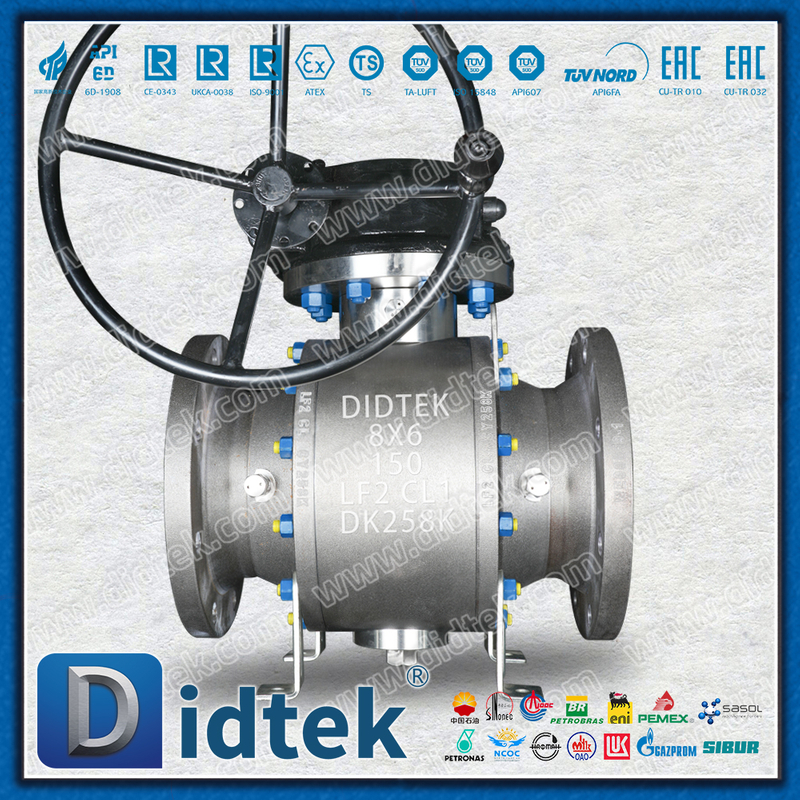
Ball valves are common in residential water systems. They help control water flow at various points, such as main supply lines, branch lines, and appliance connections. Here’s how to choose a ball valve for typical residential use:
● Operation Type: Manual ball valves are best. They’re simple, cost-effective, and easy to operate by hand since automation isn’t needed.
● Circuit Function: A 2-way ball valve with a straight flow path works well. It allows easy on/off control of water flow.
● Housing Material: Brass is a good choice. It handles hot water well and resists corrosion common in household plumbing.
● Seal Material: EPDM seals suit drinking water applications. They resist water and steam and have good durability.
● Connection Type and Size: Standard threaded ball valves fit most residential pipes and allow easy installation.
● Flow Coefficient (Kv): Usually, sizing matches the pipe diameter. For precise needs, calculate Kv based on flow rate and pressure.
● Pressure and Temperature: Brass valves handle pressures up to about 80 bar and temperatures up to 160 °C. This covers typical household water conditions.
Using the right ball valve ensures reliable water shut-off, easy maintenance, and long service life in homes.
Understanding ball valve operation types, circuit functions, materials, and connection types is crucial for optimal selection. Consideration of pressure, temperature, and regulatory approvals ensures safety and performance. Selecting the right valve type, such as manual or actuated, and materials like brass or stainless steel, enhances system efficiency. Company Profile - Didtek Valve Group offers high-quality ball valves that meet diverse needs, providing value through durable and reliable products. Their expertise ensures that systems operate smoothly and safely, meeting industry standards and customer expectations.
A: A ball valve selection guide helps choose the correct valve based on operation type, connection, materials, and performance specifications.
A: Select materials based on fluid type, temperature, pressure, and environmental conditions to ensure compatibility and durability.
A: Actuated ball valves offer automation and remote control, providing precision and speed, while manual valves are simple and cost-effective for infrequent use.


