+86-18058825678
- All
- Product Name
- Product Keyword
- Product Model
- Product Summary
- Product Description
- Multi Field Search

- Home
- Our Product
- About Didtek
- Solutions
- Exhibition Show
- Support
- News
 English

Views: 0 Author: Site Editor Publish Time: 2025-12-25 Origin: Site


Ball valves are commonly used in various industries, but can they do more than just stop or start the flow? Many believe they are only for on/off control, but can they be used for regulating flow too?
In this article, we will explore how ball valves function and whether they can be effectively used for flow control. You'll learn about the limitations, advantages, and alternative valve options for precise flow regulation.
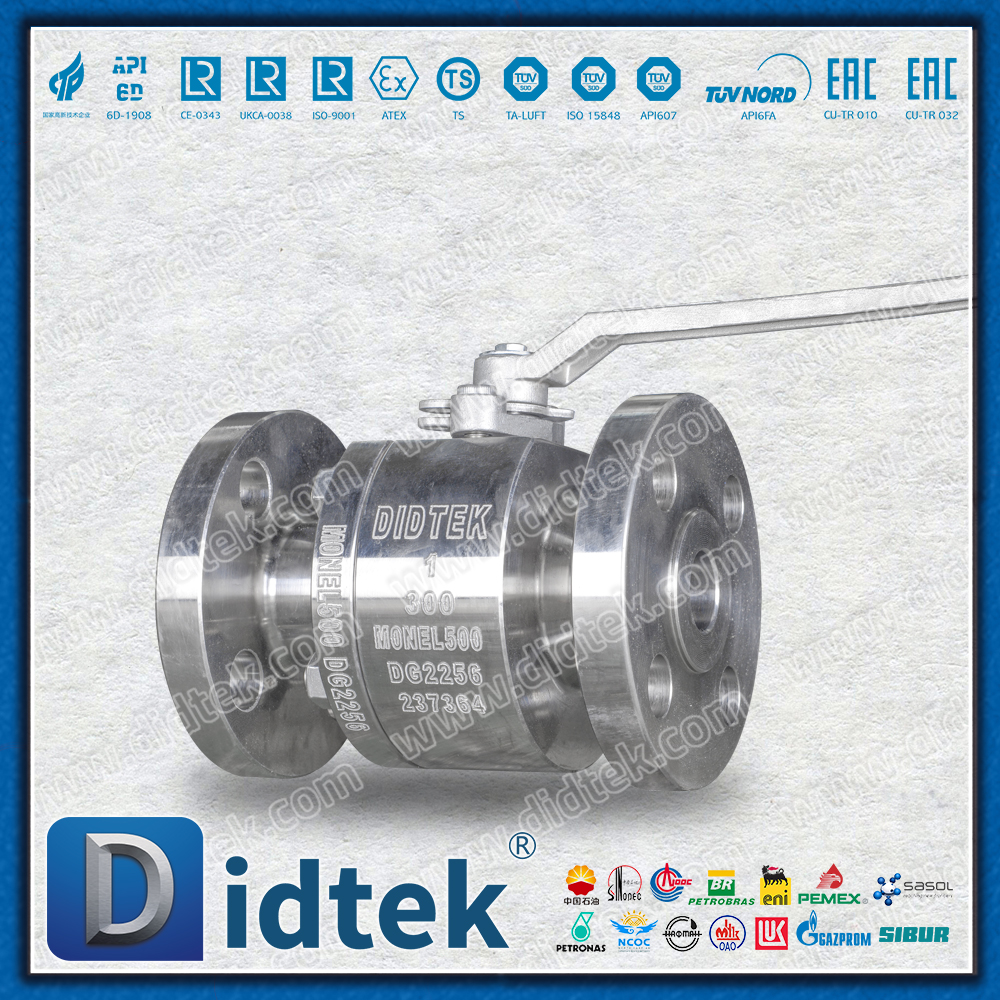
Ball valves are designed to control the flow of fluids through a system using a spherical ball with a hole through its center. When the ball is rotated by a handle or actuator, the hole aligns with the inlet and outlet ports, allowing fluid to flow through. When the valve is closed, the ball rotates 90 degrees, blocking the flow completely.
This simple yet effective mechanism makes ball valves ideal for on/off control applications. However, the question remains—can ball valves be used for more than just opening and closing the flow? The answer lies in the design of certain ball valves, particularly those optimized for flow control.
There are various types of ball valves, each serving specific functions:
Ball Valve Type | Description | Use Case |
Standard Ball Valve | A basic valve used for on/off control, allowing or blocking flow through the valve. | Isolation applications |
Full Port Ball Valve | Features a larger port to allow for unrestricted flow when open. | High flow systems |
V-Port Ball Valve | Has a "V" shaped cut in the ball, allowing for more precise modulation of flow. | Flow control applications |
Standard ball valves are designed for on/off applications, which makes them less suitable for precise flow control. While you can partially open a standard ball valve to reduce flow, the relationship between the valve’s position and the flow rate is not linear. This means that small adjustments to the valve may result in significant changes in flow, leading to imprecise regulation. As a result, they are typically not ideal for applications that require fine control of flow rates.
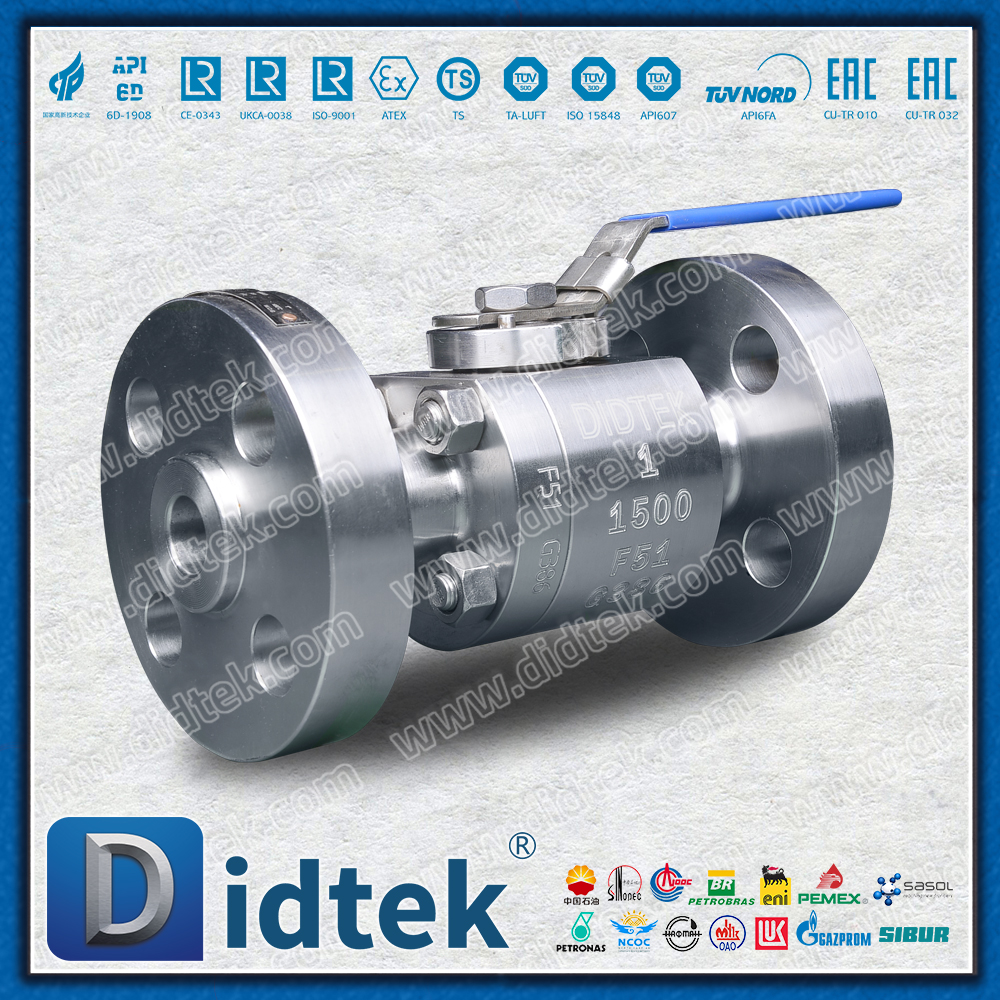
V-port ball valves offer a solution to the limitations of standard ball valves. The “V” shaped cut in the ball or valve seat creates an equal percentage flow characteristic, meaning the flow control is more precise. The V-port design allows for finer adjustments in flow, making it ideal for systems that need to modulate flow accurately.
These valves can also be equipped with actuators, providing automated control that can integrate with a plant's control system, allowing for a more complete process control solution.
Despite their usefulness, ball valves, including V-port types, have limitations in flow control. One significant drawback is their inability to provide the same level of precision as other control valves like globe valves. At very low flow rates, ball valves may experience issues like high velocity flow through small openings, which can lead to internal wear and poor throttling performance.
Additionally, because of their quick opening and closing action, ball valves can generate pressure surges, which may disrupt the system.
● High Turndown Ratio: Ball valves typically offer a high turndown ratio, which refers to the range between the maximum and minimum flow rates they can handle.
● Low Flow Resistance and Pressure Drop: Ball valves are known for their ability to maintain minimal pressure drops across the valve, which is critical in maintaining system efficiency.
● Quick Operation: The quarter-turn design of ball valves allows for fast opening and closing, making them highly responsive in systems that need rapid on/off control.
● Ability to Handle High Pressures and Temperatures: Ball valves can operate effectively in high-pressure and high-temperature environments, making them versatile for a wide range of industrial applications.
● Minimal Leakage: When fully closed, ball valves offer a high degree of sealing, minimizing leaks and preventing fluid loss.
● Self-Cleaning Seals: The movement of the ball helps clean the sealing surfaces, reducing the risk of clogging and enhancing reliability.
● Compact and Cost-Effective: Ball valves are smaller and generally less expensive than other valve types, making them a cost-effective solution for many applications.
Disadvantage | Impact |
Poor Throttling Capability | Ball valves are not ideal for precise throttling, especially at low flow rates. |
Internal Wear at Small Openings | High velocity at small openings leads to wear on valve internals, reducing lifespan. |
Imprecise Flow Adjustment | Ball valves do not provide fine control, as adjustments to the valve are not proportional to flow. |
Pressure Surges | Quick opening and closing can cause pressure surges, affecting system stability. |
When selecting a ball valve for flow control, it is essential to consider factors like the flow rate, fluid type, and system design. If the application requires precise flow regulation, a V-port ball valve may be more suitable than a standard or full port valve. It is also important to account for the pressure and temperature conditions, as ball valves are highly effective in high-pressure and high-temperature environments.
While ball valves can provide some level of flow control, other valve types like globe valves offer more precise regulation. Globe valves are better suited for throttling applications, where fine control of flow is critical. If flow precision is paramount, a globe valve or needle valve may be a better choice.
● Oil and Gas Pipelines: Ball valves are widely used in the oil and gas industry for shut-off and flow control. V-port ball valves are often employed in systems requiring precise flow regulation, such as refining processes.
● Water Treatment Systems: In water treatment, ball valves control the flow of water through pipes and filtration systems. Full port ball valves are commonly used to ensure minimal flow resistance in large pipelines.
● HVAC Systems: Ball valves are commonly used in heating, ventilation, and air conditioning (HVAC) systems for both isolation and flow regulation. V-port ball valves can be used to adjust airflow in certain systems.
● Plumbing and Water Systems: Ball valves are also found in residential plumbing systems, where they provide reliable on/off control. In systems with varying water flow, V-port ball valves may be used for flow adjustment.
Ball valves are effective for on/off control but are less precise for flow regulation. V-Port ball valves, however, offer better control and precision for flow modulation. When selecting a valve, it is essential to consider the specific needs of your application. For optimal flow control, products from Didtek Valve Group Co., Ltd. provide durable and reliable solutions, ensuring efficiency in fluid systems.
A: Ball valves can be used for flow control, but they are typically better suited for on/off applications. For more precise control, V-Port ball valves are recommended due to their design that allows for finer flow regulation.
A: V-Port ball valves have a "V" shaped cut, allowing for more precise flow adjustments. Unlike standard ball valves, they provide better modulation and are ideal for systems requiring accurate flow control.
A: The main advantage of using ball valves for flow control is their simplicity, durability, and low-cost maintenance, making them effective for general flow regulation in various systems.
A: Yes, ball valves are suitable for high-pressure applications. They can handle pressures up to 29,000 psi, but for fine flow control, it's better to use specialized valves like V-Port models.
A: Standard ball valves struggle with controlling low flow rates accurately. For more precise control at low flows, V-Port ball valves or other control valves like globe valves are better suited.


