+86-18058825678
- All
- Product Name
- Product Keyword
- Product Model
- Product Summary
- Product Description
- Multi Field Search

- Home
- Our Product
- About Didtek
- Solutions
- Exhibition Show
- Support
- News
 English

Views: 0 Author: Site Editor Publish Time: 2026-02-11 Origin: Site


Are floating vs trunnion mounted ball valves really interchangeable? Many engineers discover key differences only after problems arise. This article explains five critical differences in floating vs trunnion mounted ball valves and shows how Didtek's products support reliable, cost-effective decisions.
In a floating ball valve, the ball is supported only by the valve seats and the stem, with no mechanical anchoring at the bottom. When the valve closes and pressure builds, the ball shifts slightly downstream, pressing firmly against the downstream seat to create a seal. This pressure-assisted sealing principle is simple and effective for many standard services.
Because of this straightforward structure, floating ball valves are compact and relatively easy to manufacture. Many industrial floating ball valve designs, including those used in general-purpose Didtek product ranges, prioritize simplicity and standardization. However, as pressure increases, the force transferred to the seats also increases, which can influence operating torque and long-term seat wear.
A trunnion mounted ball valve uses mechanical supports, called trunnions, at both the top and bottom of the ball. These supports prevent the ball from moving under pressure, transferring axial loads directly into the valve body. The ball remains fixed in position regardless of pressure fluctuations.
This design is common in high-pressure and large-diameter valves, including many trunnion ball valve configurations developed for oil, gas, and LNG service. Manufacturers like Didtek apply this structure to improve stability and predictability in demanding operating environments.
Ball support has a direct impact on stability and durability. Floating designs perform reliably at low to medium pressures but become less efficient as pressure increases. Trunnion designs maintain stability even under extreme loads, which is why they are favored in critical service pipelines.
Understanding this structural difference is fundamental to correct valve selection.
Floating ball valves rely on system pressure to push the ball into the downstream seat, forming a tight seal. This mechanism works well when pressure is sufficient and relatively stable. In many utility and industrial systems, this approach delivers dependable shutoff performance.
However, in low-pressure conditions or during startup and shutdown, sealing force may be reduced. This is one reason floating ball valves are typically applied where operating conditions remain within a predictable range.
Trunnion mounted ball valves use spring-loaded seats that move toward the fixed ball. This allows sealing to occur even at very low pressures. The sealing force does not depend solely on line pressure, which improves consistency across different operating states.
This feature is especially valuable in safety-critical applications, where reliable shutoff must be maintained regardless of pressure fluctuations.
At low pressure, trunnion valves generally outperform floating valves due to their independent seat loading. At high pressure, trunnion designs also reduce excessive seat stress. Floating valves perform best in moderate pressure ranges where pressure-assisted sealing is fully effective.
This difference strongly influences valve selection in gas transmission and isolation duties.
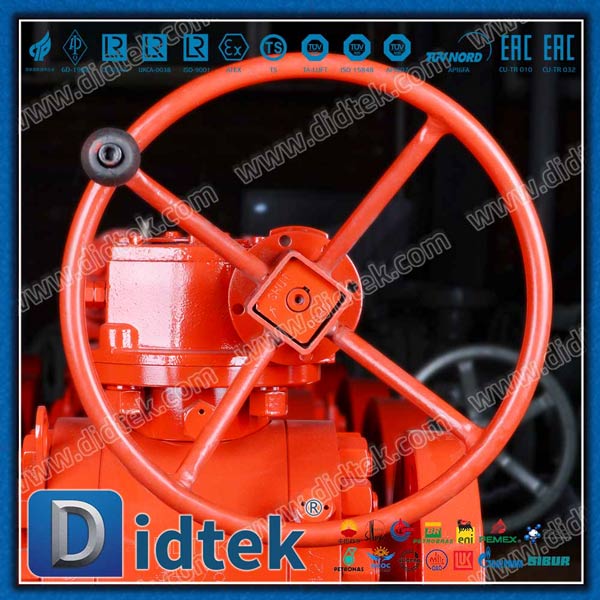
Floating ball valves are commonly used in smaller sizes and moderate pressure classes. As valve size and pressure increase, the forces acting on the floating ball become more difficult to manage. Operating torque rises, and seat wear accelerates.
For this reason, floating designs are generally limited to applications where pressure and size remain within manageable boundaries.
Trunnion mounted ball valves are engineered for high-pressure and large-diameter service. Sizes can extend well beyond those practical for floating designs, while maintaining stable torque and sealing performance.
Industrial suppliers such as Didtek offer trunnion ball valves specifically configured for large pipelines and high-pressure transmission systems, where structural stability is essential.
In many projects, pressure class and valve size alone determine whether a floating or trunnion design is feasible. Floating valves suit compact, lower-pressure systems, while trunnion valves are required as operating demands increase.
This technical boundary is one of the clearest decision points in valve engineering.
In floating ball valves, operating torque increases as system pressure rises. The ball is forced more tightly against the seat, increasing friction. At higher pressures, this can make manual operation difficult and increase actuator sizing requirements.
While acceptable for low to medium pressure systems, this characteristic limits floating valves in automated or frequently cycled applications.
Trunnion mounted ball valves exhibit more stable and lower operating torque because the ball remains fixed. Pressure loads are absorbed by the trunnions, not the seats.
This makes trunnion valves particularly suitable for automation. Many industrial trunnion ball valve designs, including those in Didtek’s industrial valve portfolio, are optimized for smooth actuator integration.
Lower torque requirements reduce actuator size, energy consumption, and wear. Floating valves remain suitable for manual operation in less demanding systems, while trunnion valves are preferred for automated and high-cycle applications.
Torque behavior is therefore a key factor in long-term operational planning.
Floating ball valves typically have a lower initial cost due to simpler construction and fewer components. Trunnion mounted ball valves involve more complex machining and assembly, resulting in higher purchase prices.
This cost difference often influences early project decisions, particularly in non-critical systems.
In floating valves, seats carry more load under pressure, which can accelerate wear in severe service. Trunnion designs reduce seat stress and often extend maintenance intervals.
Over long service periods, reduced seat wear can translate into significant maintenance savings.
Although floating valves are less expensive initially, trunnion valves often deliver lower total cost of ownership in high-pressure or critical applications. Reduced downtime and longer service life offset higher upfront cost.
Evaluating lifecycle value rather than purchase price leads to more sustainable decisions.
Aspect | Floating Ball Valve | Trunnion Mounted Ball Valve |
Initial Cost | Lower | Higher |
Operating Torque | Pressure-dependent | Stable and lower |
Seat Wear | Higher in severe service | Reduced |
Typical Use | Utility and general industry | High-pressure pipelines |
Floating ball valves are widely used in general industrial utilities such as water distribution, compressed air networks, and basic process lines. These systems typically operate at moderate pressures with relatively stable flow conditions, which fall well within the performance limits of floating valve designs.
Their simple internal structure supports reliable shutoff and smooth operation without introducing unnecessary mechanical complexity. This simplicity also makes floating ball valves easier to inspect and service, aligning well with standard industrial maintenance practices and routine plant operations.
Water treatment plants and HVAC systems often favor floating ball valves because of their compact size and straightforward installation. Pressure and temperature conditions in these applications usually remain within predictable ranges, allowing floating designs to perform effectively over long periods.
Maintenance teams are generally familiar with the construction and operation of floating ball valves, which simplifies training and reduces troubleshooting time. This familiarity contributes to lower maintenance effort and faster system recovery when servicing is required.
In applications where operational risk is low and system conditions are stable, floating ball valves offer an optimal balance between cost and functionality. Their lower initial cost and adequate performance make them well suited for non-critical services.
They remain a practical choice for many everyday industrial applications where reliability is required but extreme pressure or safety demands are not present.
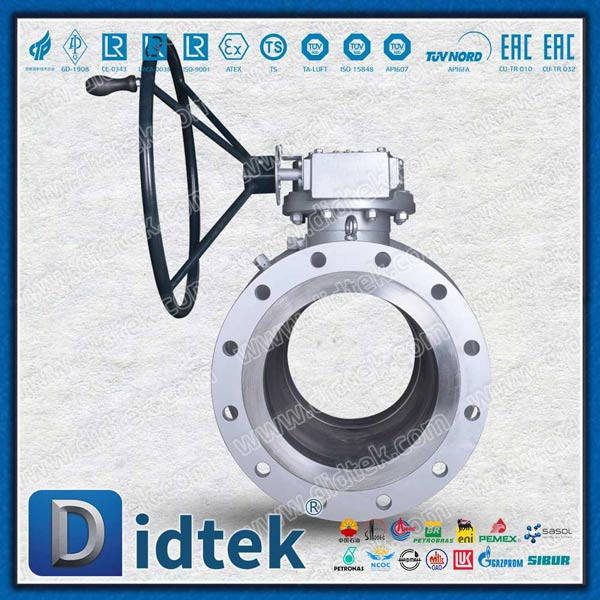
Oil and gas pipelines often operate under high pressure and require dependable isolation capability. Trunnion mounted ball valves are the standard solution in these systems because their fixed-ball design provides stable sealing and controlled operating torque.
Their ability to handle high loads without excessive seat wear supports safe and consistent long-term operation in demanding pipeline environments.
LNG systems and large-diameter transmission pipelines involve extreme pressures, low temperatures, and frequent thermal cycling. Trunnion mounted ball valves are designed to manage these challenges while maintaining reliable shutoff performance.
Many industrial LNG projects rely on trunnion ball valves supplied by experienced manufacturers such as Didtek, where structural stability and predictable behavior under severe conditions are essential selection criteria.
In systems where valve failure could result in major safety, environmental, or economic consequences, trunnion designs provide additional assurance. Their robust construction and controlled sealing behavior reduce the likelihood of leakage or mechanical instability.
This makes trunnion mounted ball valves a preferred choice for safety-critical installations where risk mitigation and long-term reliability are primary concerns.
Application | Floating Valve | Trunnion Valve |
Water Utilities | Common | Rare |
LNG Pipelines | Not suitable | Standard |
High-Pressure Gas | Limited | Preferred |
Engineers should begin by evaluating key operating parameters such as pressure rating, valve size, media type, and operation frequency. These factors immediately narrow down which valve design is technically suitable and which is not.
Defining these conditions early helps prevent mismatches between valve capability and system demands. Clear technical definitions reduce the risk of misapplication and support consistent decision-making across engineering and procurement teams.
Low-risk systems with moderate pressure and non-critical service can confidently use floating ball valve designs. These systems typically prioritize simplicity and cost efficiency over extreme durability.
High-risk systems, including high-pressure pipelines or safety-critical isolation points, benefit from the added structural security of trunnion mounted ball valves. A risk-based selection approach improves overall system reliability and aligns valve design with the consequences of failure.
Common selection mistakes include choosing a valve based solely on initial cost or assuming all ball valves deliver the same performance. These assumptions often lead to higher maintenance costs or premature failure.
Proper evaluation requires balancing technical requirements, operating risk, and lifecycle value rather than relying on habit or incomplete data.
Tip: Always confirm maximum operating pressure and valve size before finalizing the valve design choice.
Floating and trunnion mounted ball valves differ in design, sealing, torque, and cost, directly impacting performance and safety. Floating valves suit low to medium pressure systems, while trunnion valves handle high-pressure and critical service. Didtek offers both designs, helping engineers achieve reliable, cost-effective, long-term operation.
A: Floating vs trunnion mounted ball valves differ in ball support, sealing method, and pressure handling capability.
A: Use a trunnion mounted ball valve for high-pressure, large-diameter, or LNG industry trunnion ball valve applications.
A: Yes, floating vs trunnion mounted ball valves differ in cost, with floating designs usually lower upfront.
A: Engineers compare pressure, size, torque needs, and long-term reliability requirements.


