+86-18058825678
- All
- Product Name
- Product Keyword
- Product Model
- Product Summary
- Product Description
- Multi Field Search

- Home
- Our Product
- About Didtek
- Solutions
- Exhibition Show
- Support
- News
 English

Views: 0 Author: Site Editor Publish Time: 2025-12-04 Origin: Site


Ball valves are essential components in industrial systems, ensuring reliable flow control and leak-free operation. Choosing the right industrial ball valve can be tricky, as factors like media type, pressure, temperature, and actuator options all influence performance. In this guide, we’ll explore 9 questions to make the right choice for your ball valves, helping you avoid costly downtime, improve efficiency, and select the best valve for applications across chemical, water treatment, food & beverage, and oil & gas industries.
Choosing the wrong industrial ball valve can cause serious problems. Leaks may develop over time, creating safety hazards and system inefficiency. Poor valve selection often leads to frequent maintenance, unexpected downtime, and higher operating costs. Flow inefficiency can reduce productivity and increase energy use, especially in high-pressure pipelines.
Ball valves are essential across many industries. They are commonly used in chemical and petrochemical plants, water treatment facilities, food & beverage processing, and oil & gas operations. Any system requiring precise flow control and reliable shutoff benefits from the right valve.
Leak-tight seals: They prevent fluid escape, keeping pipelines safe and efficient.
Quick operation: Valves open and close fast, making them ideal for systems requiring rapid control.
Durability and long service life: Ball valves can endure high pressures, temperature swings, and harsh environments.
Wide pressure and temperature handling: They work across a broad range of conditions, from low-pressure water lines to high-temperature chemical processes.
| Feature | Benefit | Example |
|---|---|---|
| Leak-tight seal | Prevents loss, reduces hazards | Chemical plant pipelines |
| Quick operation | Saves time, improves responsiveness | Water treatment valves |
| Durability | Longer service life, fewer replacements | Petrochemical high-pressure lines |
| Wide pressure/temperature | Works in extreme conditions | Oil & gas, steam systems |
They are simple to operate and require less maintenance than other valve types. This makes them reliable for critical systems. Engineers often choose them because they balance efficiency, safety, and durability effectively.

Choosing the right ball valve involves more than size or material. We need to evaluate how it interacts with the system, the media, and operational conditions. Here are nine essential questions to guide the selection process.
Media compatibility is one of the most critical factors for long-term valve performance. The type of fluid or gas flowing through a system directly affects which valve body and seal materials will work best. Choosing the wrong material can lead to corrosion, leaks, or even catastrophic failure over time.
Corrosive chemicals → stainless steel or specialized alloys like Monel or Inconel, which resist chemical attack.
Water and steam → brass or bronze valves are cost-effective and durable for moderate temperatures and pressures.
Natural gas → carbon steel valves with appropriate sealing materials handle typical gas pressures safely.
Some fluids contain suspended solids or abrasives, like slurry, sand, or particulates. These require hardened or lined valve bodies and seats to prevent wear and maintain performance. The chemical properties—such as pH, oxidizing potential, and viscosity—also influence how frequently the valve needs maintenance and how long it lasts.
Every ball valve has a pressure-temperature rating defining the safe operating limits. These ratings indicate the maximum pressure a valve can safely handle at a given temperature. Exceeding these limits can compromise the valve’s seal, lead to leakage, or damage the valve body.
High-pressure systems often require forged steel or reinforced valve construction. These valves maintain integrity under extreme conditions.
Extreme temperature applications—both high and low—may require specialized seat materials like PEEK or metal-to-metal designs to prevent deformation or leaks.
Accounting for fluctuations is important. Valves experience pressure spikes or temperature swings in real operations, so always choose a valve rated above your maximum expected operating conditions.
| Pressure Level | Typical Temperature | Recommended Valve Material |
|---|---|---|
| Low | <200°F | Brass, Bronze |
| Medium | 200–500°F | Carbon Steel |
| High | >500°F | Stainless Steel, Alloy |
The valve size and flow coefficient (Cv) determine how efficiently the valve allows fluid to pass through. Cv measures the flow rate of water in gallons per minute through a valve at a 1 psi pressure drop. A valve with the correct Cv prevents bottlenecks or excessive energy loss.
Matching valve size to pipeline diameter ensures smooth flow. Too small a valve restricts flow, increases pressure drop, and may stress pumps.
Oversized valves can waste energy, create turbulence, or cost more than necessary.
Correct Cv optimizes system performance, reduces maintenance, and prevents unnecessary operational costs.
For example, a 2-inch pipeline carrying water at medium pressure may need a 2-inch full port valve with a Cv designed for the expected flow. If you choose a smaller valve, pressure drops may rise and equipment downstream could suffer. Conversely, using an oversized valve may increase initial cost and slightly reduce control accuracy in throttling applications.
Tip: Always consult flow charts or valve sizing calculators when specifying Cv. For complex systems, involve a valve specialist to ensure accurate sizing.
The port configuration determines how fluid flows through the valve and how much pressure drop occurs. Choosing the wrong port can reduce efficiency, increase energy use, or limit control options.
Full port valves: The bore diameter matches the pipe, allowing maximum flow with minimal pressure drop. Ideal for systems where unrestricted flow is critical.
Reduced port valves: Smaller bore than the pipe, lowering cost and weight. Flow is slightly restricted, which is acceptable in systems not requiring full capacity.
V-port valves: The ball has a V-shaped opening for precise flow control. Great for throttling or applications needing variable flow rates without cavitation.
Considerations for selection:
Full port → pipelines with frequent pumping, minimal energy loss required.
Reduced port → cost-sensitive installations with moderate flow.
V-port → chemical dosing, steam distribution, or slurry handling where fine control is necessary.
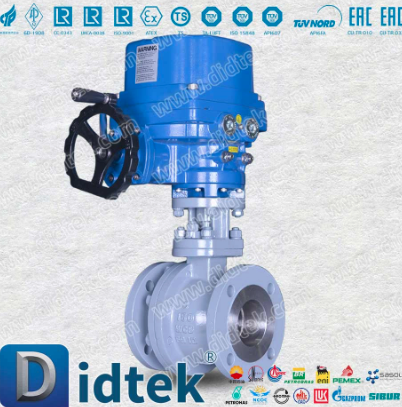
How you operate the valve affects efficiency, speed, and safety. The actuation method determines how quickly the valve opens or closes and whether remote or automated control is possible.
Manual lever: Simple, low-cost, suitable for occasional use. Requires direct access.
Pneumatic: Uses compressed air; fast operation and ideal for high-cycle systems. Reliable even in harsh conditions.
Electric: Allows remote or programmable control. Best for automated processes but uses more energy and requires wiring.
Hydraulic: Provides strong force and precise positioning. Suitable for large valves or high-pressure pipelines.
Factors to consider:
Operation frequency → frequent cycling favors pneumatic or electric.
Accessibility → remote locations may need automated actuation.
Environment → hazardous zones may require explosion-proof or intrinsically safe actuators.
The body design impacts installation, maintenance, and durability. Each design has trade-offs between cost, serviceability, and application suitability.
One-piece: Compact, low-cost, ideal for small lines. Maintenance requires full removal.
Two-piece: Easier to install in tight spaces. Can disassemble one half for minor repairs.
Three-piece: Allows maintenance or seat replacement without removing the entire valve. Excellent for high-maintenance systems.
Top-entry: Large valves benefit from in-line maintenance. Reduces downtime, common in chemical plants or refineries.
Welded body: Permanent, leak-proof construction for high-pressure or corrosive fluids. Cannot disassemble; installation must be precise.
| Body Type | Advantages | Considerations |
|---|---|---|
| One-piece | Low cost, simple | Full removal for maintenance |
| Two-piece | Easier installation | Moderate repair effort |
| Three-piece | Inline maintenance possible | Higher purchase cost |
| Top-entry | Quick service for large valves | Requires specialized tools |
| Welded | Leak-proof, durable | Permanent installation, less flexible |
The seat and seal materials directly impact valve reliability, leak prevention, and chemical compatibility. Choosing the wrong material can lead to frequent maintenance, leaks, or premature failure.
PTFE (Teflon): Excellent chemical resistance. Works in moderate temperatures. Ideal for acids, bases, and general chemicals.
PEEK: Handles higher temperatures and offers good chemical resistance. Suitable for demanding processes like steam or hot oil.
Metal-to-metal: Designed for extreme pressure or temperature. No soft seal; ideal for high-stress applications where soft seals would degrade.
Rubber (EPDM, NBR, Viton): Flexible, seals well at low temperatures. Good for water, mild chemicals, or low-pressure systems.
Considerations when selecting:
Match material to the process media and its chemical properties.
Evaluate wear resistance for abrasive fluids or slurries.
Check temperature range: some materials shrink or expand under heat, affecting sealing.
Consider maintenance frequency: soft seals like PTFE may need replacement sooner than metal-to-metal seats.
The external environment influences valve body, actuator choice, and protective coatings. Neglecting this can reduce valve life and system reliability.
Outdoor installations → corrosion-resistant coatings, stainless steel bodies, weatherproof or sealed actuators.
Hazardous or explosive areas → use explosion-proof or intrinsically safe actuators to prevent ignition.
High vibration or mechanical stress → secure mounting, dampeners, reinforced bodies.
Extreme temperatures → thermal insulation, heat shields, or temperature-resistant materials.
Additional tips:
Combine internal media and external environment when selecting materials.
Ensure actuators are compatible with conditions: for example, pneumatic actuators resist dust better than electric in some outdoor sites.
In corrosive atmospheres, consider coating or alloy upgrades.
Tip: Regular inspection in harsh environments prolongs valve life and prevents unplanned downtime.
Certifications verify quality, safety, and industry compliance. Choosing valves without the proper certifications can create legal, operational, or safety issues.
ANSI/ASME → Confirms pressure and temperature capabilities of flanges and valve bodies.
NACE → Ensures resistance to sour gas or corrosion in chemical/oil & gas industries.
NSF/FDA → Required for food, beverage, and pharmaceutical applications. Guarantees sanitary design and material safety.
ISO → Confirms global manufacturing standards and quality management systems.
A: Media compatibility is essential because the type of fluid or gas determines the best valve body and seal materials, and using the wrong material can cause leaks, corrosion, or premature failure. Corrosive chemicals require stainless steel or specialized alloys, water and steam work well with brass or bronze, and natural gas usually needs carbon steel. Abrasive or slurry fluids may need hardened or lined valves to maintain performance.
A: You should check the valve’s pressure-temperature rating, which defines safe operating limits. It is important to consider normal operating fluctuations and pressure spikes. High-pressure systems often need forged steel or reinforced valves, while extreme temperatures require specialized seat materials like PEEK or metal-to-metal designs to prevent leaks and deformation.
A: The valve size and flow coefficient, or Cv, determine how efficiently fluid passes through the valve. Matching valve size to the pipeline ensures smooth flow, prevents pressure drops, and avoids stress on pumps. Oversized valves can increase cost and turbulence, while undersized valves can restrict flow. Correct Cv optimizes system performance and reduces maintenance needs.
A: Port configuration affects flow and pressure drop. Full port valves allow maximum flow with minimal restriction, reduced port valves lower cost and slightly restrict flow, and V-port valves provide precise throttling control. The choice depends on flow rate, system efficiency, and control requirements.
Selecting the right ball valve can make a noticeable difference in system efficiency, safety, and long-term performance. From understanding your media and operating conditions to choosing proper actuation and materials, every decision impacts reliability and maintenance needs. Don’t let small mistakes lead to costly downtime or reduced flow performance.
At Didtek Valve Group Co., Ltd., we provide a wide range of industrial ball valves designed for diverse applications across chemical, water treatment, food & beverage, and oil & gas industries. Explore our solutions and ensure your system runs smoothly with valves tailored to your exact requirements.