+86-18058825678
- All
- Product Name
- Product Keyword
- Product Model
- Product Summary
- Product Description
- Multi Field Search

- Home
- Our Product
- About Didtek
- Solutions
- Exhibition Show
- Support
- News
 English

Views: 0 Author: Site Editor Publish Time: 2026-06-21 Origin: Site


You want the best check valve for your system. If you need to stop water hammer, reduce noise, and do less maintenance, a non slam check valve may work better than a swing check valve. The main differences are in how each valve closes and how well each stops backflow. Here is a quick comparison:
Feature | Non Slam Check Valves | Swing Check Valves |
|---|---|---|
Closure Mechanism | Spring-assisted, quick response | Disc swings, may close slowly |
Backflow Prevention | Effective, minimizes risk | Prone to backflow |
Water Hammer Risk | Significantly reduced | High risk |
Maintenance Needs | Lower | Higher |
Application Suitability | Ideal for high-risk systems | Suitable for less demanding uses |
Non slam check valves use a spring to help them close fast and quiet. This helps stop hydraulic shock and keeps your system safe. Choosing the right valve makes your system work better and saves you time on repairs.
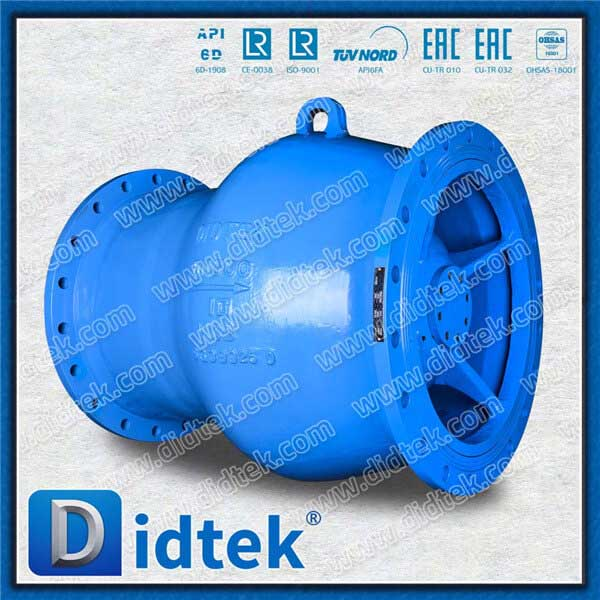
You need to know how each check valve works in your system. A non slam check valve uses a spring to close quickly and quietly. This design stops water hammer and keeps noise low. Swing check valves use a swinging disc that closes when flow stops. This action can be slow and noisy.
Non slam check valves close fast and control disc movement.
This feature prevents water hammer and reduces noise.
Swing check valves may close slowly and slam shut.
You may hear more noise when using swing check valves.
You can see that the closure speed and noise level are important. If you want a quiet system, you should look at the non slam check valve.
You will find both types of check valves in many industries. Each type fits different needs.
In municipal water systems, check valves stop backflow and siphoning.
These valves protect water quality and keep the system safe.
They help maintain system prime and follow local rules.
You may use a swing check valve in less demanding systems. These valves work well where water hammer is not a big problem. You may choose a non slam check valve for high-risk or sensitive systems. This valve fits places where you need silent operation and strong backflow prevention.
Tip: Always match the valve type to your system’s needs. Think about noise, speed, and safety before you decide.
You can improve your system’s performance by choosing the right check valve. You will also reduce maintenance and protect your equipment.
A swing check valve uses a simple design. You will find a disc inside the valve body. When fluid flows in the right direction, the disc swings open. This lets water or gas pass through. If the flow stops or reverses, gravity or back pressure pushes the disc back to its seat. The disc then blocks the flow and prevents backflow.
You do not need any outside power or control for this valve. The movement of the fluid does all the work. This makes swing check valves easy to use and install.
You should know the main benefits and drawbacks before you choose a swing check valve.
Pros:
Simple design means fewer parts to fail.
Easy to install and maintain.
Works well in systems with steady, moderate flow.
Lower initial cost compared to some other check valves.
Cons:
The disc may close slowly, which can cause water hammer.
Not ideal for systems with rapid flow changes.
Can be noisy when closing.
May allow some backflow before fully closing.
Tip: If you want a basic, budget-friendly solution for low-risk systems, a swing check valve can be a good choice.
You will often see swing check valves in places where flow stays steady and water hammer is not a big problem. Common uses include:
Municipal water supply lines
Irrigation systems
HVAC systems
Pump discharge lines
Fire protection piping
These valves fit best in horizontal pipelines. You can use them in vertical lines if the flow goes upward. Always check your system’s needs before you pick a swing check valve.
A non slam check valve has a spring and a disc. The disc opens when fluid moves forward. The spring pushes the disc back when flow stops or reverses. This makes the valve close fast and quiet. You will not hear a loud slam. The DIDTEK Non Slam Silent Axial Flow Check Valve uses this design. It follows strict rules and works in many systems.
STANDARD | DESCRIPTION | PUBLISHER SUPPLIER OF CERTIFICATE |
|---|---|---|
ASME B16.34 | Pressure-temperature ratings, dimensions, materials, and testing for valves | American Society of Mechanical Engineers (ASME) |
API 598 EN 12266-1, 2 | Inspection and pressure test requirements for valves | American Petroleum Institute (API) |
ISO 5208 | Tests for valve integrity and closure tightness | International Organization for Standardization |
You get many good things with a non slam check valve:
It reacts fast to changes in flow.
It stops water hammer well.
It lowers pressure loss.
It makes your system work better.
It is quieter when closing.
It helps your system be more reliable.
It costs less to run over time.
The DIDTEK valve uses strong materials like stainless steel and special alloys. It can handle high pressure and heat. You can count on it for tough jobs.
Note: Non slam check valves keep your system safe and quiet, even when pressure is high.
You must pick the right material for your job. Some fluids need stainless steel or strong alloys. Other materials work for easier jobs. Always check if your valve meets rules like API and ASME. This helps you avoid trouble in hard environments.
Material Type | Application Suitability |
|---|---|
Stainless Steel | Corrosive or high-temperature fluids |
High-strength Alloys | Challenging environments requiring durability |
Other Materials | Suitable for less demanding conditions |
You can use a non slam check valve in many places. Here are some top uses:
Water and wastewater treatment plants
Oil and gas pipelines
HVAC systems
Chemical processing industries
These valves protect equipment and stop backflow. They help your system run smoothly. You get safer and quieter operation.
You should think about how fast a check valve closes. This affects how safe your system is and how loud it gets. Non slam check valves close quickly because they use a spring. This fast closing keeps pumps safe from backflow and stops water hammer. You see this in compressor lines and pump discharge pipes. Reverse flow can hurt equipment. The DIDTEK Non Slam Silent Axial Flow Check Valve closes fast to keep things safe and quiet.
Swing check valves close slower. They use gravity and backflow to move the disc. This can make the disc slam loudly when it shuts. You might hear this in big water pipes or when pumps turn off fast. Water hammer can break pipes and damage equipment. You want to avoid water hammer.
Non slam check valves close right away when flow stops.
They stop pressure shock and lower noise.
Swing check valves may let backflow happen before closing, which is risky.
Tip: If your system changes flow fast or has high pressure, pick a valve that closes quickly to protect your equipment.
You want a valve that needs little care. Non slam check valves have fewer parts and a strong build. You only need to check joints, change rubber seals, and use anti-rust coatings. The spring helps the valve close smoothly, so it does not wear out fast.
Swing check valves are simple and easy to fix. You should look for leaks, wear, or rust. Cleaning is important to get rid of stuff that blocks flow. If you find problems, fix them soon to stop bigger issues.
Non slam check valves need less care because of their design.
Swing check valves need regular checks and cleaning.
Both types last longer if you keep up with maintenance.
Note: DIDTEK’s non slam check valve is made to last, so you spend less time fixing it.
You need to think about the price and how much it costs to install and keep up. Swing check valves usually cost less at first. Cast iron ones can be as cheap as $20. Stainless steel types can cost up to $500. Installing them costs between $100 and $400.
Non slam check valves can cost more, especially for tough jobs. Simple PVC types start at $10. Stainless steel or special alloy valves can cost over $1000. These valves cost more to buy, but they save money by stopping water hammer and needing less care.
Swing check valves: cheaper at first, higher risk of water hammer.
Non slam check valves: cost more at first, but lower risk and less care needed.
Tip: Think about how much the valve costs over its whole life, not just the price today.
You need to pick the right valve for your system. Here is a table to help you compare:
Feature | Swing Check Valves | Non Slam Check Valves |
|---|---|---|
Flow Resistance | Low, good for big pipes | Closes fast, stops backflow |
Durability | Strong, works in tough oil and gas jobs | Fast closing, lasts a long time |
Water Hammer Mitigation | Can help with water hammer, but not always | Made to stop water hammer |
Applications | Water supply, HVAC, factories | Fast reverse flow, pumps shut down often |
Cost-Effectiveness | Cheap to buy and use | Saves money by stopping damage |
You see swing check valves in city water systems and HVAC pipes. They work well where flow stays steady and water hammer is not a big deal. Non slam check valves are best for systems with fast flow changes, like oil and gas pipes or chemical plants. They keep compressors and pumps safe from sudden reverse flow.
Note: For high-pressure or systems that pulse, a non slam check valve gives better protection and lasts longer.
Pick a swing check valve if your system has steady flow. These valves work well when water hammer is not a big risk. You can use them in water supply lines, irrigation, and HVAC systems. They are good if you do not care much about noise. If you want something simple and cheap, this valve is a good choice.
Use them in horizontal pipes with clean water.
They are best for systems with slow flow changes.
Pick them if you want easy setup and simple care.
They work well for low pressure or slow-moving water.
Tip: Swing check valves work well for easy jobs that do not need much.
Choose a non slam check valve if you need fast closing and quiet use. These valves stop water hammer and keep pumps and pipes safe. They are best for high-pressure or fast-moving systems. If your system changes flow direction quickly, this valve keeps things safe.
Use them in pump lines, compressor outlets, and chemical plants.
Pick them for oil and gas pipes or water treatment plants.
Choose them if you want to stop backflow and lower noise.
They work in both vertical and horizontal pipes.
The DIDTEK Non Slam Silent Axial Flow Check Valve works well for tough jobs. You can trust it to be quiet and last a long time.
Note: A non slam check valve keeps your system safe and saves on repairs.
Ask the right questions before you pick a check valve. This helps you avoid mistakes and get the best one for your system.
Common Mistake | Cause | Consequence | Recommendation |
|---|---|---|---|
Excessive pressure drop | Wrong valve type or tight flow path | Higher energy cost, pump problems | Check datasheet for pressure loss and compare valve types |
Debris clogging or sticking | Dirty fluid or small spaces inside the valve | Valve may not open or close right | Match valve design to how clean the fluid is |
Leakage or reverse flow | Bad seat design or dirt on the seat | Backflow, equipment damage | Make sure the valve seals well and is easy to fix |
Premature wear | Wrong way installed or bad material | Shorter life for the valve | Check if the material fits and install it the right way |
Ask yourself these things:
What is the flow rate and pressure in my system?
Does my system have fast flow changes or water hammer?
Is the fluid clean or does it have dirt or solids?
Do I need the valve to be quiet?
How much space do I have and which way will it go?
How often can I check or fix the valve?
What is my budget for buying and using the valve?
If your system is tricky or special, talk to valve experts or companies like DIDTEK. They can help you find the right valve for your job.
You make the best choice when you match the valve to your system. This keeps your equipment safe, saves money, and helps your system work well.
You need to pick a valve that fits your system. Non slam check valves are good for systems that change fast or have high risk. Swing check valves are better for steady systems with low risk. When choosing, think about these things:
What kind of fluid is in your system?
How fast does the fluid move?
What size is the valve and how does it connect?
Is the material strong against rust?
How quickly does the valve open and close?
How long will it last and how much care does it need?
How much will it cost over time?
Valve Type | Advantages | Disadvantages |
|---|---|---|
Non-slam Check | Quiet, closes fast, stops shock | Costs more at first |
Swing Check | Simple, cheap, easy to fix | Loud, can cause water hammer |
Always check your system and ask experts for help. This will help you get the best valve for your needs.
Water hammer is a loud banging noise in pipes. It happens when water stops or changes direction quickly. You should care because it can break pipes and damage equipment.
You can install most non slam check valves in both horizontal and vertical lines. Always check the manufacturer’s guide to make sure you install it the right way.
You should match the valve size to your pipe size. Check the flow rate and pressure in your system. If you are not sure, ask a valve expert for help.
You do not need to do much maintenance. Just check for leaks and keep the valve clean. Non slam check valves last longer because they close smoothly.
You get quiet operation, strong materials, and reliable performance. This valve helps prevent water hammer and works well in tough jobs. DIDTEK also offers many sizes and certifications.


