+86-18058825678
- All
- Product Name
- Product Keyword
- Product Model
- Product Summary
- Product Description
- Multi Field Search

- Home
- Our Product
- About Didtek
- Solutions
- Exhibition Show
- Support
- News
 English

Views: 0 Author: Site Editor Publish Time: 2026-05-23 Origin: Site


If you want the best results in 2026, you will see DIDTEK and other top brands leading for stainless steel gate valve choices. You need a valve that does not rust and can handle hard work in factories. Experts look for these main things when picking a valve:
Criteria | Description |
|---|---|
Material Quality | Makes sure the valve does not rust and lasts long. |
Size | Fits the pipes so water or gas moves well. |
Seal Design | Stops leaks and makes the valve work better. |
Ease of Operation | Lets you open or close it by hand or machine easily. |
Maintenance Requirements | Makes it simple to check and fix the valve often. |
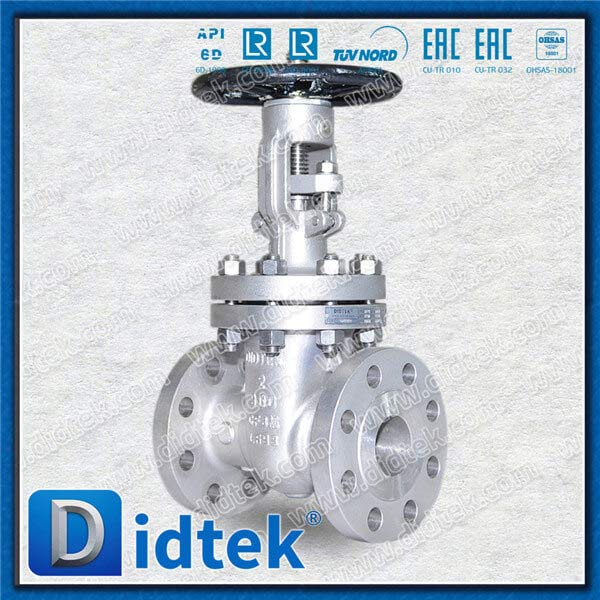
If you want a good gate valve in 2026, you will see DIDTEK and Velan as top choices. DIDTEK makes a wedge gate valve that follows new rules and works well in hard places. Velan also gives a trusted valve for many factories. Both brands are known for lasting a long time and giving good value to workers.
These valves work for many jobs. DIDTEK’s valve comes in sizes from 2 to 36 inches. It can handle very hot or cold temperatures. Velan’s valves also fit many sizes and pressure needs. These choices help you feel sure about your project.
You want the best gate valve for your job. These top picks are special for many reasons:
High flow coefficient (Cv) means more liquid can move with less trouble. You get good flow, with numbers from 50 to over 400.
Low pressure drop means your system runs well. The best gate valve keeps pressure loss under 10% of the total.
Strong material quality makes the valve last and stops rust.
Each valve follows rules like ASME B16.34 and API 600, so you get safety and good work.
Regular tests help stop problems and keep your system working.
Key Feature | Importance |
|---|---|
Material Quality | Good stainless steel makes the valve strong and stops rust. |
Compliance with Standards | Following ASME B16.34 and other rules keeps you safe and your valve working well. |
Testing Protocols | Regular checks stop problems and keep your system safe. |
These valves give you good value. They last a long time, are easy to fix, and you can change them if you need. If you pick DIDTEK or Velan, you get quality and trust for your work.
You need a valve that can handle hard work. Stainless steel gate valves are strong and tough. They do not rust like carbon steel valves. They also work better in hot places. You can use them where other valves might fail. Even with high heat or strong chemicals, stainless steel stays strong and does not wear out.
Stainless steel valves cost more money, but they last longer and work better. You do not have to worry about leaks or breaking early. This makes them a good choice for important jobs.
There are different grades of stainless steel. Each grade has its own good points for your job:
Grade | Key Properties | Application in Control Valves |
|---|---|---|
304 | Great at stopping rust in most jobs | Used in chemical, food, medicine, and gas valve parts |
316 | Stops rust even better, works with salt and acid | Used in ships, water plants, acid jobs, and tough places |
Stainless steel valves do not rust or break from heat like carbon steel.
Carbon steel valves are cheaper, but they do not last as long in hard jobs.
Stainless steel gate valves are used in many places. They help keep systems safe and clean. You can find them in water plants, chemical factories, oil fields, and food factories.
Industrial Application | Benefits |
|---|---|
Water Treatment | Keeps pressure steady, good for turning flow on or off |
Chemical Processing | Easy to clean, does not rust, keeps things pure |
Oil and Gas | Handles high pressure and heat in pipes |
Food and Beverage Manufacturing | Stops mixing, keeps food moving the right way |
These valves give steady flow and are easy to fix. They help you follow safety rules and keep things working well. When you pick stainless steel, you get good quality and less worry.
When you pick a gate valve, you need to know about material grades. You must match the valve’s material to where you will use it. The most common grades are 304, 316, and CF3M. Each grade has its own good points.
You should look at these grades before you choose. The table below shows how they are different:
Grade | Composition | Typical Applications |
|---|---|---|
304 (CF8) | 18% Chromium, 8% Nickel | Used for water, air, and mild chemicals |
316 (CF8M) | 16% Chromium, 10% Nickel, 2-3% Molybdenum | Works well in places with lots of chemicals or salt |
304L (CF3) | Low carbon version of 304 | Good for jobs that need welding |
316L (CF3M) | Low carbon version of 316 | Used for welding and medicine jobs |
If your job is tough, 316 stainless steel is better for stopping rust and chemicals. CF3M is best for medicine and welding jobs.
Valve size and pressure rating are important for safety. You must pick the right size for your pipes. You also need the right pressure class for your system. The table below helps you compare:
Pressure Rating Class | Maximum Pressure (psi) | Maximum Pressure (bar) |
|---|---|---|
Class 150 | 285 | 19.6 |
Class 300 | 740 | 51.1 |
PN10 | 145 | 10 |
PN16 | 232 | 16 |
PN25 | 362 | 25 |
PN40 | 580 | 40 |
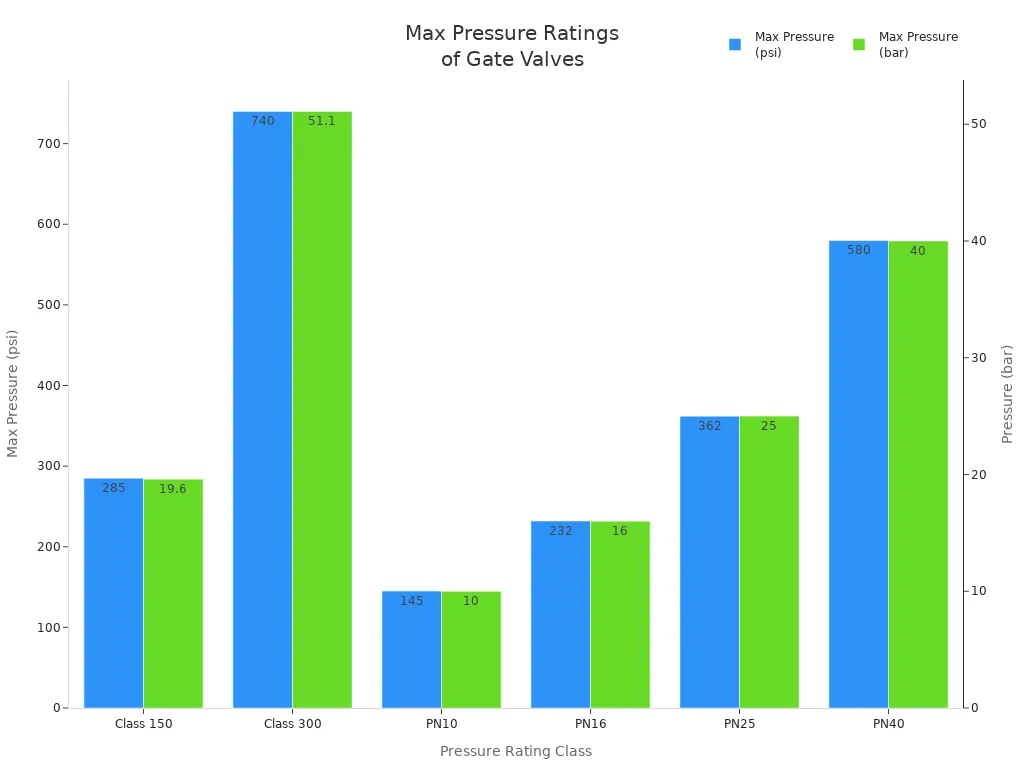
Tip: Small valves can handle more pressure. Always check what your system needs before you buy.
You can pick from different end connections. Flanged, threaded, and welded ends are common. Flanged ends are easy to install and remove. Threaded ends are good for small valves and low pressure. Welded ends stop leaks in high-pressure jobs.
Stem design changes how you use and fix the valve. You can pick rising stem or non-rising stem valves. The table below shows their good and bad points:
Stem Design | Advantages | Disadvantages |
|---|---|---|
Rising Stem Gate Valve | You can see if it is open or closed. It is easier to fix. | Needs more space above when open |
Non-Rising Stem Gate Valve | Fits in tight spaces | Hard to see if it is open or closed |
If you want to see if the valve is open, rising stem is best. If you do not have much space, non-rising stem is better.
You can add accessories to your valve. Gear operators, actuators, and locks make it safer and easier to use. Many valves let you change things like stem nut or protection up to IP67. You can add pneumatic positioners, limit switches, or solenoid valves for more control.
Feature | Description |
|---|---|
Transmission Mode | Worm gear makes it work smoothly |
Structure | Needle roller bearings help it work well |
Material and Protection | Many materials, protection up to IP67 |
Operating Temperature | Works from –30℃ to +120℃ |
Connection | Flange connection |
Adaptability | Fits many rotary valves |
Accessory Selection | Pneumatic positioners, limit switches, solenoid valves |
Note: Customization helps you get the valve you need. Always ask about options when you look at stainless steel valves.
This guide helps you compare grades, sizes, and options. You can check accessories to make sure your valve fits your job.
You want a stainless steel gate valve that works well every time. DIDTEK is known for being strong and used in many places. You can use this valve for water, oil, gas, steam, acid, and base. DIDTEK tests its valves for pressure and follows API600 and ASME B16.34 rules. The valve fits pipes from 2 to 36 inches. You get an 18-month guarantee after it ships. Delivery takes 15 to 30 days, so you can plan ahead.
Feature | Specification |
|---|---|
Valve Type | Gate Valve |
Material | Stainless Steel |
Pressure | Medium Pressure |
Power | Manual |
Temperature of Media | Medium Temperature |
Media | Acid, Base, Gas, Oil, Water, Steam |
Size Range | 2" - 36" |
Applicable Standards | API600, ASME B16.34, API 598 |
Valve Guarantee | 18 months after shipment |
Valve Delivery | 15 - 30 days |
DIDTEK valves show good performance in hard jobs. The wedge moves easily and lasts longer. The stainless steel gate valve fights rust and damage. You can install or change it without trouble. DIDTEK lets you pick seat rings and other parts. You can add gear operators or actuators for more control. The valve handles medium pressure and heat. It works well for many jobs. You get value because it is strong and simple to fix.
People like DIDTEK for its quality and price. It is reliable and saves money. Users say it does not wear out fast and is easy to put in. You can use it in many places. Some users say it opens slowly and needs lots of force. You may need extra space to install it. The table shows what users think:
Pros | Cons |
|---|---|
Durable and Long-Lasting | Slow Operation |
Wide Application Range | Limited Throttling Capability |
Cost-Effective | Wear and Tear |
Minimal Erosion | Large Design and Installation Space |
Easy Installation and Replacement | High Torque Requirements |
Cavitation Risk | |
Maintenance Challenges | |
Susceptible to Blockage |
Tip: You get the best value when you pick the right valve for your system.
Velan is seen in many gate valve reviews. Velan makes valves that are safe and reliable. You get a stainless steel gate valve that meets ASME rules. Velan valves work well in factories and plants. You can trust them to last and perform well. The valve fits many sizes and handles high pressure. Its simple build and light weight give you good value.
Velan gives you a valve that is tested for pressure. You can open and close it fast. Fluid moves easily, so your system works well. The valve is small and short. You can use it in tight spots. It is light, so it is easy to install. The rating shows it works well in many jobs.
Advantage | Description |
|---|---|
1 | Easy and quick to open and close, low fluid resistance, simple to use. |
2 | Simple build, small size, short length, light weight, fits many uses. |
People give good reviews for Velan. Users like how easy it is to use and how fast it works. The valve fits many jobs and saves space. It is reliable and follows safety rules. Some users say it works best with steady flow. You may need to check if it fits special fluids.
Note: You get the best rating when you install the valve right and use it in the correct place.
You see other brands in gate valve reviews. Many brands offer stainless steel gate valves that work well. You can find valves for different sizes and pressures. These brands focus on quality and value. The rating shows they do well in factories.
Other brands show good performance with tested valves. You can use these valves for water, oil, and gas. The valves fight rust and last longer. You can install and change them easily. Many brands let you add parts for more control. You get value from strong build and wide use.
Users like the durability and easy care of these valves. Many say they work well and are worth the money. Some say you need more space to install them. You may need to check if the rating fits your system. Reviews help you pick the best stainless steel gate valve.
Tip: You get the best value when you compare features and ratings before buying.
When you want the best stainless steel gate valve, you need a simple comparison. A good comparison helps you see what is important for your project. You should check material grade, pressure rating, size, and if it follows rules. This comparison gives you a fast way to see each valve’s strengths.
Here is a table that shows the main specs and features:
Feature | DIDTEK Stainless Steel Wedge Gate Valve | Velan Stainless Steel Gate Valve | Other Leading Brand |
|---|---|---|---|
Material Grade | CF3M (316L Stainless Steel) | 316 Stainless Steel | 304/316 Stainless Steel |
Pressure Rating (PSI) | 150 – 2500 | 150 – 2500 | 150 – 1500 |
Size Range (inches) | 2 – 36 | 2 – 24 | 2 – 24 |
Stem Design | Rising/Non-Rising | Rising/Non-Rising | Rising/Non-Rising |
End Connection | Flanged, Welded, Threaded | Flanged, Welded | Flanged, Threaded |
Compliance | API 600, ASME B16.34 | API 600, ASME B16.34 | API 600 |
Testing | 100% RT, API 598 | API 598 | API 598 |
Customization | Gear, Actuator, Locking Device | Gear, Actuator | Gear, Actuator |
Application | Oil, Gas, Water, Chemical | Oil, Gas, Water | Oil, Gas, Water |
You can use this table to find what you need. Each comparison shows how the brands follow industry rules. The valve specs also show why material matters. About 45% of failures happen from using the wrong material. Always check the material grade in your comparison.
Stainless steel valves are best for places with lots of corrosion.
Grade 316 protects better from rust than grade 304.
Picking the right size can make your system work up to 25% better.
Rising stem valves let you see if they are open or closed.
Non-rising stem valves fit in small spaces.
Tip: Use this comparison to pick the best valve for your system. Careful comparing helps you avoid mistakes and get great results.
You can trust this table to help you choose. Always look at the comparison before you buy.
You must be careful when you install stainless steel gate valves. First, check the valve and all parts for damage. Clean the pipe ends and take away any dirt. Make sure the valve lines up with the pipeline. The flow direction should match the markings. Tighten bolts evenly so there are no leaks. Use the right tools and do not tighten too much. Too much force can break the valve body. If you use welded ends, follow the welding steps. Let the valve cool before you use it. Always test the valve after you finish installing it. Make sure it opens and closes without problems.
Tip: Always follow the manufacturer's instructions when you install the valve. This helps stop early problems and keeps your system safe.
Regular care helps your stainless steel gate valve last longer. You should do these things:
Check valves often to find wear or damage early.
Lubricate moving parts with the right oil at the right time.
Make a plan to check valves and keep records.
Clean valves to stop clogging and remove dirt.
Use valves only within their rated limits to avoid stress.
Change worn parts like seals and gaskets quickly.
Use ways to stop corrosion, like coatings and strong materials.
Keeping a log helps you remember repairs and see patterns that need fixing.
You may have problems with gate valves while using them. The table below shows common issues, causes, and how to fix them:
Issue | Cause | Solution |
|---|---|---|
Stem jamming | Rust or corrosion on the stem | Remove rust or corrosion and add lubricant for smooth movement. |
Valve operation sluggishness | Something blocking the stem or valve | Look for blockages, add lubricant, and fix how it was installed. |
Gate plate detachment | Loose connection between gate plate and body | Check and tighten bolts so the gate plate fits right. |
Clogged fluid channel | Sediment blocking inside the valve | Clean inside the valve, filter the fluid, and keep dirt out. |
Valve corrosion | Materials corroded by environment or medium | Use materials or coatings that resist corrosion, check often, and fix or change parts. |
Sealing surface scratches | Wear or objects causing scratches | Fix or grind the scratched area, change the sealing surface if needed. |
If you hear strange sounds or see leaks, act fast to stop more damage. Regular checks and quick repairs keep your system working well.
You will find DIDTEK and other top brands are good picks for stainless steel gate valves in 2026. It is important to match the valve’s features to your job and follow the right rules. This helps keep your system safe and working well. Experts use these steps:
Look at the fluid to see if it can cause rust or wear.
Write down the pressure and temperature you need.
Decide what you want the valve to do in your system.
Make sure the valve follows rules like API 600 and API 603.
Think about how much the valve will cost over time.
Stainless steel gate valves are used in chemical plants, seawater pipes, food factories, and medicine making. Use the buying guide and reviews to help you choose. If you want to learn more, check out guides and resources about picking and using valves.
Stainless steel gate valves resist rust and chemicals more. They last longer in tough places. You can trust them for hard jobs. Carbon steel valves may not work as well.
Measure your pipe’s diameter first. Check how much pressure your system needs. Pick a valve that fits your pipe for good flow. Look at charts from the manufacturer for help.
Yes, stainless steel gate valves work in hot systems. Many can handle heat up to 600℃. Always check the valve’s rating before you install it.
You can add gear operators, actuators, and locks. These parts help you control the valve and make it safer. Ask your supplier about what you can add.
Check and oil your valve every six months. Clean it and look for damage often. Quick care stops leaks and helps your valve last longer.


