+86-18058825678
- All
- Product Name
- Product Keyword
- Product Model
- Product Summary
- Product Description
- Multi Field Search

- Home
- Our Product
- About Didtek
- Solutions
- Exhibition Show
- Support
- News
 English

Views: 0 Author: Site Editor Publish Time: 2025-09-08 Origin: Site


Industrial facilities such as oil refineries, gas plants, chemical factories, and power stations operate under demanding conditions where safety is not just a priority—it is an absolute necessity. Equipment failures, unexpected leaks, or sudden pressure spikes can escalate quickly into emergencies, causing damage to property, harm to people, or even catastrophic environmental consequences. To address these risks, industries rely on specialized safety systems that can respond instantly when something goes wrong.
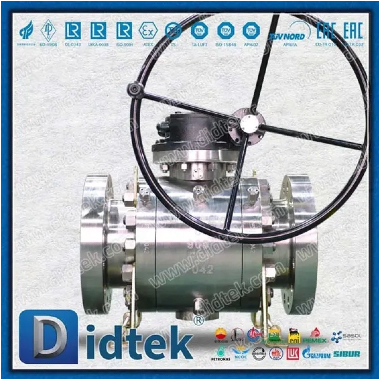
One of the most important components of these safety systems is the Emergency ShutDown Ball Valve (ESD Ball Valve). This valve is designed to act as the last line of defense, providing rapid isolation of pipelines and equipment when a dangerous event occurs. By understanding how these valves work, where they are applied, and why they are essential, it becomes clear why ESD valves are considered indispensable in modern industrial operations.
An emergency shut down valve is a type of quarter-turn valve that uses a rotating ball with a bore (hole) through it to control fluid flow. In normal operation, the valve allows fluids—such as oil, natural gas, steam, or chemicals—to pass through freely. When an emergency occurs, the valve can rotate 90 degrees to block the flow almost instantly.
What sets an ESD ball valve apart from ordinary valves is its integration with safety systems. These valves are often connected to control systems, sensors, or pneumatic actuators that can trigger them automatically without human intervention. For example, if a gas detector senses a leak, or if pressure sensors detect an abnormal rise, the emergency shut down system will immediately command the valve to close.
Several types of valves are used in industrial operations, including gate valves, globe valves, and butterfly valves. However, ball valves are frequently chosen for emergency shut down applications because of their unique advantages:
Quick Action – A ball valve can fully open or close with just a 90-degree turn, making it ideal for situations where every second matters.
Tight Sealing – The spherical design provides excellent sealing performance, minimizing leakage even under high pressure.
Durability – Ball valves are robust, capable of handling high pressures, corrosive fluids, and extreme temperatures.
Simple Operation – With fewer moving parts compared to other valve types, ball valves are reliable and easier to automate.
These features make ball valves particularly effective when used as emergency shut down devices in hazardous environments.
Emergency shutdown valves do not operate in isolation. They are part of a larger safety framework commonly referred to as Emergency Shut Down Systems (ESD Systems) or Safety Instrumented Systems (SIS).
The system begins with sensors placed throughout the facility. These devices detect abnormalities such as gas leaks, high temperatures, excessive pressure, or fire.
When a sensor detects a dangerous condition, the information is sent to a control unit. This unit evaluates the data and decides whether an emergency shut down is necessary.
If a shutdown is triggered, the control unit signals the actuator connected to the ESD valve. Actuators can be pneumatic, hydraulic, or electric, and they rotate the valve ball to the closed position almost instantly.
Once closed, the ball valve isolates sections of the pipeline or equipment, preventing the spread of hazardous materials and protecting personnel and infrastructure.
This seamless integration between detection, control, and mechanical action ensures that the response is both fast and reliable, reducing the risk of escalation.
Emergency shut down ball valves are used in a wide variety of industries where hazardous fluids or gases are present. Some of the most common applications include:
Oil and Gas Industry
Isolation of pipelines, offshore platforms, and storage tanks.
Rapid shut down in case of leaks, blowouts, or pressure surges.
Chemical and Petrochemical Plants
Control of hazardous chemicals during processing.
Protection against runaway reactions or toxic gas releases.
Power Generation Facilities
Isolation of steam lines, fuel supplies, or cooling systems.
Emergency response to overheating or mechanical failures.
Pharmaceutical and Food Processing
Ensuring product safety in sterile environments.
Preventing contamination when equipment malfunctions.
Marine and Offshore Operations
Emergency shut down systems for ships, oil rigs, and subsea equipment.
Protection against spills or fire hazards in remote locations.
As industrial demands evolve, modern ESD valves are designed with advanced features to improve reliability and performance:
High Pressure and High Temperature Resistance – Capable of withstanding extreme operating conditions.
Fire-Safe Design – Special seals and materials that maintain functionality during fire exposure.
Anti-Static and Blowout-Proof Design – Ensures safety during unexpected events.
Fail-Safe Actuation – Valves can be designed to automatically close (fail-close) when power or pressure is lost.
Compliance with International Standards – Many ESD ball valves are built to meet API 6D, ISO, or ASME standards for safety and performance.
The use of ESD ball valves provides numerous benefits to industrial operators:
Protection of Human Life – The foremost priority is safeguarding employees and nearby communities from exposure to hazardous materials.
Asset Protection – By quickly isolating pipelines and equipment, ESD valves reduce the risk of fire, explosion, or costly damage.
Environmental Safety – Prevents large-scale leaks and spills that could harm ecosystems.
Regulatory Compliance – Many industries are required by law to implement emergency shut down systems, making ESD valves a necessity.
Operational Reliability – Enhances overall confidence in plant operations by minimizing downtime during emergencies.
To ensure reliability, ESD valves must be regularly maintained and tested. Some common practices include:
Routine Inspections – Checking for wear, corrosion, or damage.
Functional Testing – Simulating emergency conditions to verify quick and complete shut down.
Seal Replacement – Ensuring tight shutoff by replacing worn seals or seats.
Actuator Maintenance – Inspecting pneumatic or electric actuators for proper functionality.
Without proper maintenance, even the best-designed valve can fail at the moment it is needed most. Regular upkeep ensures that the valve will perform reliably when an actual emergency occurs.
As industries continue to modernize, ESD ball valves are also evolving:
Smart Valves – Integration with IoT and digital monitoring systems for real-time performance tracking.
Advanced Materials – Use of corrosion-resistant alloys and composites for longer service life.
Energy-Efficient Actuation – Development of actuators that consume less power while maintaining high-speed response.
Compact Designs – Smaller, lighter valves that fit easily into constrained spaces without sacrificing performance.
These innovations will make emergency shut down systems even more effective in protecting people, assets, and the environment.
Emergency ShutDown Valves are vital components of industrial safety systems. They serve as the last line of defense, capable of isolating hazardous fluids and gases in seconds to prevent accidents from escalating into disasters. With their quick action, tight sealing, and robust design, these valves provide unmatched reliability in critical environments.
From oil and gas fields to chemical plants and power stations, ESD valves play a critical role in safeguarding lives, protecting infrastructure, and ensuring compliance with strict safety regulations. Their importance will only grow as industries face increasing demands for safety, efficiency, and environmental responsibility.
By understanding their role, applications, and benefits, it becomes clear that Emergency ShutDown Valves are not just pieces of equipment—they are the guardians of industrial safety.


