+86-18058825678
- All
- Product Name
- Product Keyword
- Product Model
- Product Summary
- Product Description
- Multi Field Search

- Home
- Our Product
- About Didtek
- Solutions
- Exhibition Show
- Support
- News
 English

Views: 0 Author: Site Editor Publish Time: 2026-06-11 Origin: Site


You use a GOST gate valve to control the flow in pipes and machines. These valves follow strict Russian and world rules, so you can trust how they work and fit. Makers use strong materials like carbon steel and stainless steel. This helps the valves work well in many places. GOST certification shows these valves follow local laws, especially in Russia. This makes them good and safe for your projects.
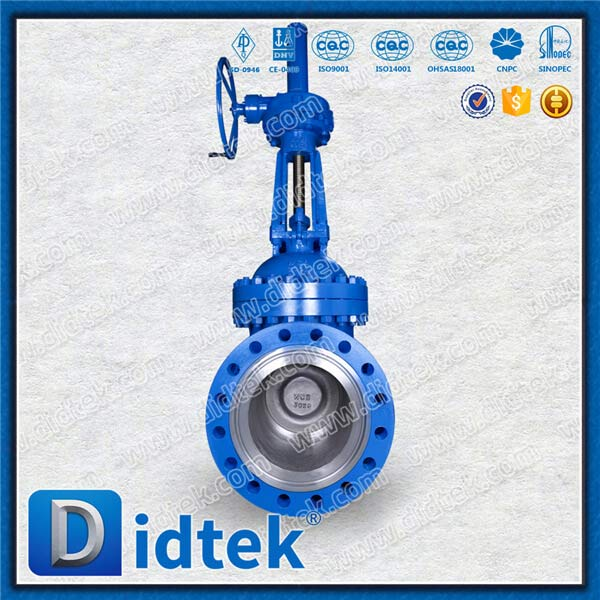
A GOST gate valve helps control liquids or gases in pipes. It follows Russian GOST rules for safety and quality. Many companies use these valves because they work well in hard places. The DIDTEK Stellite Seat GOST Standard Gate Valve is a good example. It uses new designs and strong materials to help you control flow easily. You can find these valves in oil refineries, chemical plants, and water systems. They let you stop or start flow with a simple move. If you pick a GOST gate valve, it will fit and work with other equipment that uses the same rules.
You should know the main rules before picking a gate valve. GOST, API, and ASME are three big standards. Each one has its own rules for how a gate valve looks, connects, and works. The table below shows how these rules are different:
Standard | Design | Face to Face | Flange | Test |
|---|---|---|---|---|
API | API 600 | ASME B16.10 | ASME B16.5 | API 598 |
GOST | GOST 5763-02 | GOST 3706-93 | GOST 33259-2015 | GOST 33257-15 |
Each standard covers different parts of the gate valve. GOST rules are used in Russia and nearby countries. API and ASME rules are common in the United States and other places. When you choose a gate valve, check which rule fits your project.
You also need to look for important certificates. These show the gate valves are safe and good quality. Here are some main certificates you should know:
API 6D Standard: This covers design, pressure relief, fire safety, material tracking, and maintenance.
ASME B16.34 Standard: This gives rules for pressure and temperature, wall thickness, and testing.
ISO Quality Management Certification: This makes sure the factory follows good production steps.
CE Certification: This proves the valve is safe for use in Europe.
If you pick a GOST gate valve with these certificates, your system will be safe and work well. It also makes it easier to use the valve in projects around the world.
When you look at a gate valve, you see a strong and simple design. Manufacturers use different materials to make these valves tough and reliable. Here are some of the most common materials:
Cast iron
Carbon steel
Stainless steel
Bronze
Other alloys
For many industrial uses, you often find cast steel and stainless steel. The DIDTEK Stellite Seat GOST Standard Gate Valve uses WCB material for its body. WCB stands for "Wrought Carbon Steel." This material helps the valve handle high pressure and high temperature. You can trust it in power plants and other tough places. The seat of the valve uses Stellite metal. Stellite gives excellent resistance to wear and corrosion. This means your valve will last longer and work well, even in harsh conditions.
You control a gate valve by turning a handwheel or using an actuator. This action moves the gate up or down inside the valve body. When you open the valve, the gate lifts and lets fluid flow. When you close it, the gate drops and blocks the flow. Gate valves use a linear motion. The gate slides straight into the flow path.
You can choose between rising stem and non-rising stem designs:
Rising stem gate valves let you see the stem move up as you open the valve. This gives you a clear sign if the valve is open or closed.
Non-rising stem gate valves keep the stem inside the valve body. These work well in tight spaces, but you need an indicator to know the valve's position.
Some gate valves come with gear operators. These make it easier to turn large valves. Gear operators give you more control and reduce the effort needed. You can also add accessories like actuators for remote control, locking devices for safety, and extended stems for special uses like cryogenic service.
Tip: Gear operators help you move the valve slowly and safely. They also protect the valve from damage and keep you safe while working.
A gost gate valve stands out because of its special features. You get a valve that is built for tough jobs and long life. Here are some unique qualities:
The construction is robust. Steel parts give great corrosion resistance. This keeps the valve free from contamination, even in harsh environments.
The design supports both flexible and solid wedge options. A flexible wedge can handle changes in temperature and pressure. A solid wedge gives a tight seal for shut-off.
You can choose from different pressure ratings. Here is a table with common values:
Pressure Rating Type | Value |
|---|---|
Medium Pressure | PN10-16 |
Low Pressure | PN1.0/PN1.6 |
PSI | 250PSI |
The valve resists contamination. The smooth surfaces and strong materials stop dirt and chemicals from building up inside.
Manual operation means you do not need outside power. This keeps the valve working, even if the power goes out.
When you pick a gate valve with these features, you get a product that works well in oil, gas, water, and chemical systems. The DIDTEK Stellite Seat GOST Standard Gate Valve gives you all these benefits. You can trust it for safe and reliable flow control.
There are two main stem designs for gate valves. Each one has its own good points. The rising stem gate valve shows you the stem moving up and down. This helps you know if the valve is open or closed. The non-rising stem keeps the stem inside the valve body. You need a special indicator to see if it is open or closed. Rising stem valves work best above ground. Non-rising stem valves can go above or below ground. Here is a table to compare both types:
Feature | Rising Stem Design | Non-Rising Stem Design |
|---|---|---|
Stem Movement | Rises and falls with the gate | Rotates as the wedge rises and falls |
Visual Indication | Provides visual indication of valve position | No visual indication unless an indicator is installed |
Space Requirement | Requires more vertical space (above-ground only) | Takes up less vertical space (can be below ground) |
Lubrication | Allows for lubrication of the stem | Lubrication is not as accessible |
Installation | Only for above-ground installations | Available for both above and below ground installations |
Tip: If you need a gate valve underground, pick the non-rising stem. It saves space and works well.
Gate valves have two main wedge designs. The flexible wedge can change shape a little. This helps it seal tight when pressure or temperature changes. It works well in big valves and lasts longer. The solid wedge gives a strong seal but does not change shape much. The flexible wedge is better for tough jobs. The solid wedge is simple and easy to use.
There are many special gate valves for different jobs. These come in many sizes, materials, and pressure ratings. Some use stainless steel to stop rust. Others use carbon steel or ductile iron for strength. You can also find bronze and polymer composite types. The table below shows some common models:
Model | Size | Material | Pressure Rating | Standard | Availability |
|---|---|---|---|---|---|
GV-100 | 2 inch | Stainless Steel | 150 PSI | GOST | In Stock |
GV-200 | 3 inch | Carbon Steel | 300 PSI | GOST | Pre-order |
GV-300 | 4 inch | Ductile Iron | 150 PSI | GOST | In Stock |
GV-400 | 6 inch | Bronze | 200 PSI | GOST | Limited Availability |
GV-500 | 8 inch | Polymer Composite | 150 PSI | GOST | Pre-order |
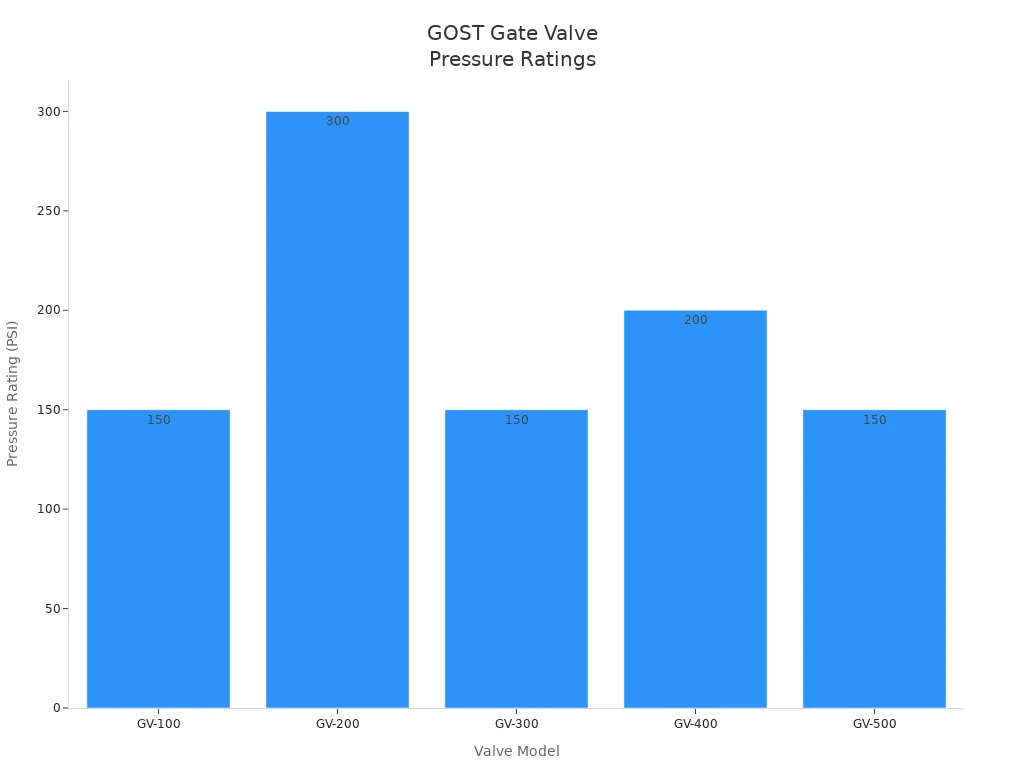
You can pick the right gate valve by checking size, material, and pressure rating. Special gate valves help you with different fluids, temperatures, and places to install them. You will find the best one for your project if you know these choices.
Gate valves are used a lot in oil and gas work. They help control the flow of oil, gas, and other products. You use them to stop pipelines for repairs or emergencies. Gate valves can handle high pressure and hard jobs. They help keep things safe and moving well. Their strong build stops leaks and keeps your equipment safe.
Gate valves are important in chemical and power plants. You need valves that follow strict rules and work in hot or cold places. GOST rules make sure you meet local laws. These valves work from -20℃ to 300℃, so they fit most plant needs. They stop leaks, even with strong chemicals. Here are some reasons to use gate valves:
GOST rules keep your system safe.
They work in many temperatures.
Good leak ratings stop spills.
You also need to check safety and how well they work. The table below lists important codes:
Standard Code | Description |
|---|---|
GOST 33259-2015 | Lists main rules for industrial valves, like design, build, materials, and tests. |
GOST 21345-2005 | Sets rules for safety valves, like design, materials, tests, and labels. |
GOST R 53301-2009 | Gives rules for ball valves, like design, build, materials, and tests. |
GOST 24856-2014 | Sets rules for check valves to stop backflow. |
GOST 12815-80 to GOST 12822-80 | Lists rules for flanges, bolts, and gaskets for good sealing. |
Gate valves help control water in treatment plants and pipes. They let you shut off parts for fixing or upgrades. When open, they keep pressure drop low, so water moves easily. This gives you better control and saves energy. Here are some ways gate valves help:
Control water in plants and pipes.
Shut off areas for repairs.
Keep pressure drop low for smooth flow.
Gate valves are used in many other jobs. You find them in mining, paper making, and food factories. Their simple build makes them easy to fix and quick to use. You can add machines to control them better. The table below shows key features:
Feature | Description |
|---|---|
Unobstructed Passage | Lets fluid move freely, making repairs easier. |
Low Maintenance | Simple build means less fixing over time. |
Easy Automation | Can use machines for better control. |
Swift Operation | Opens and closes fast for quick jobs. |
Reduced Pressure Loss | Less resistance helps save energy. |
Gate valves are used in many places because they work well and fit many jobs. A gost gate valve helps you do tough work with confidence.
You now know a GOST gate valve helps control flow. It also follows strict rules for safety and quality. When you pick a valve, think about the type you need. You should also look at what it is made of. Check if it can handle the right temperature and pressure. Choosing the right valve stops expensive problems. Certified valves, like DIDTEK’s Stellite Seat GOST Standard Gate Valve, are trusted and work well.
Certification Type | Description |
|---|---|
API 6D | Standard for pipeline valves |
ISO 9001:2008 | Quality management system certification |
PED 97/23EC | Pressure Equipment Directive compliance |
GOST stands for Russian standards. You get a gate valve that meets strict rules for safety and quality. This helps you trust the valve in tough jobs.
You check your pipe diameter and pressure needs. Look at the valve’s size range and pressure rating. DIDTEK offers sizes from 2 to 36 inches.
Yes, you can. GOST gate valves handle high pressure. DIDTEK’s Stellite Seat GOST Standard Gate Valve covers ASME CL 150 to 2500.
You can add actuators, gear operators, locking devices, or extended stems. These help you control the valve remotely or use it in special conditions.


