+86-18058825678
- All
- Product Name
- Product Keyword
- Product Model
- Product Summary
- Product Description
- Multi Field Search

- Home
- Our Product
- About Didtek
- Solutions
- Exhibition Show
- Support
- News
 English

Views: 0 Author: Site Editor Publish Time: 2026-06-20 Origin: Site


A piston check valve is a tool that lets fluid go one way. It stops fluid from going back the other way. People use this valve in many factories and big buildings. It helps protect machines and keeps things safe. About 26.3% of these places use piston check valves. You can see this in the table below.
Check Valve Type | Market Share Percentage |
|---|---|
Piston Check Valves | 26.3% |
Spring-Loaded Check Valves | 38.5% |
This valve is known for being strong and working well in tough places.
A piston check valve helps control fluid direction in pipes. It lets liquid or gas move forward. It stops anything from going backward. The valve uses a spring-loaded disc and a piston. When pipe pressure gets high, the piston lifts. This lets fluid pass through. If pressure drops or tries to go backward, the piston closes fast. This keeps your system safe and stops backflow.
Industry standards say a piston check valve acts like a lift check valve. It uses a spring-loaded disc. This design closes the valve faster. It lowers the risk of hammer-stop. Your equipment gets better protection because the valve reacts quickly to flow changes.
A real example is the Didtek 3'' 150LB Duplex 2205 Piston Check Valve. This valve uses strong materials and smart design. It handles tough jobs in factories and plants. It meets strict standards and works well in many places.
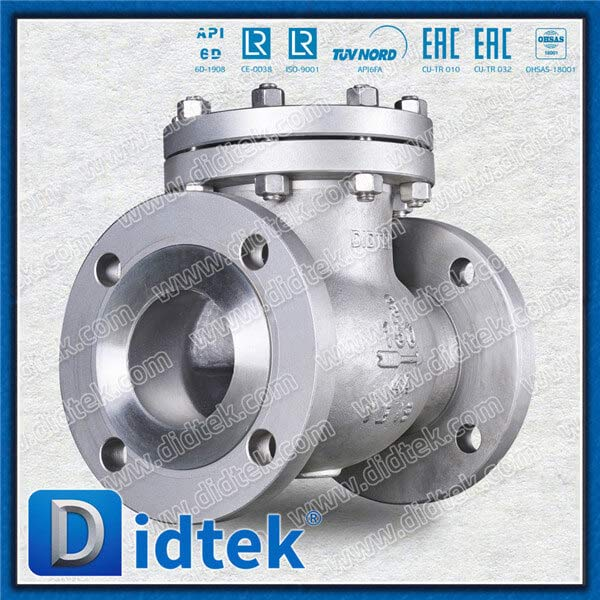
You will see several important features in a piston check valve:
The piston lifts off its seat for forward flow. Fluid moves with little resistance.
When flow slows or stops, the piston closes the valve. This stops fluid completely.
If flow tries to reverse, back pressure pushes the piston onto the seat. This keeps your system safe from backflow and contamination.
Tip: Piston check valves handle rapid flow changes better than other types. You can use them where water hammer is a problem. They also seal better than swing check valves.
Here is a table showing common materials in piston check valves and their uses:
Material | Application Description |
|---|---|
Bronze | Smaller lines, water, plumbing, low-pressure steam |
Carbon Steel | High-pressure, high-temperature general industrial |
Stainless Steel | Corrosive fluids, food and beverage, pharmaceutical, hygienic |
Alloy Steels | Extreme temperatures, pressures, or highly aggressive media |
The Didtek 3'' 150LB Duplex 2205 Piston Check Valve uses Duplex 2205. This is a type of alloy steel. It gives strength and resists corrosion. This makes it good for harsh environments.
You can trust a piston check valve for:
Handling fast flow changes without slamming shut
Lowering the risk of water hammer
Giving a tight seal to stop leaks
When you pick a piston check valve, you get a tool that protects your system. It keeps your operations running smoothly.
You can see how a piston check valve works by looking at the way it responds to pressure changes. When fluid moves through the pipe, the pressure on the upstream side rises. This pressure pushes the piston upward, letting the fluid flow forward. The valve stays open as long as the pressure upstream is higher than the pressure downstream. If the flow slows down or stops, the piston drops back onto the seat. This action blocks the passage and keeps fluid from moving backward.
Note: The piston check valve uses a simple principle. It opens when the pressure is right and closes quickly when the flow changes. This protects your system from backflow and keeps everything running safely.
You control the flow direction with the piston check valve. The piston moves up when fluid flows in the correct direction. This allows liquid or gas to pass through the valve. If the flow stops or tries to reverse, gravity and reverse pressure push the piston down. The piston sits tightly on the valve seat and blocks any backflow.
Here is a table that shows how the valve reacts to different conditions:
Condition | Action |
|---|---|
Attempt at reverse flow | Back pressure pushes the piston onto the seat |
Decrease in pressure | Piston moves to close the valve |
You can also see how the valve prevents backflow by following these steps:
When flow rate drops or reverses:
Downstream pressure may become higher than upstream pressure.
The piston moves downward toward the valve seat.
If the valve has a spring, it helps the piston return quickly.
The piston touches the seat and forms a tight seal.
This process keeps your system safe. You do not have to worry about contamination or damage from unwanted flow. The piston check valve gives you reliable control and fast response to changes in pressure and direction.
The piston and disc are important parts inside the piston check valve. The piston moves up and down when fluid flows. If fluid goes the right way, the piston lifts up. This lets fluid move through the valve. The disc is attached to the piston. It helps make a tight seal when the valve closes. The piston reacts fast to pressure changes. This gives you good performance. The disc is smooth, so it helps stop leaks. This keeps your system safe.
The valve body and bonnet keep the inside parts safe. The body holds all the pieces together. It also guides the fluid flow. The bonnet covers the top and seals the valve. These parts need to be strong, especially for high pressure. Factories use carbon steel, stainless steel, or alloy steels. These materials do not rust easily. They can handle tough jobs and hard conditions. You can see some common materials in the table below:
Material | Application Description |
|---|---|
Carbon Steel | High-pressure, high-temperature general industrial |
Stainless Steel | Corrosive fluids, food and beverage, pharmaceutical, hygienic |
Alloy Steels | Extreme temperatures, pressures, or highly aggressive media |
ASTM A105 | Carbon steel for high-pressure applications |
ASTM A182 F11/F22/F91 | Alloy steel for extreme conditions |
ASTM A182 F316/F304 | Stainless steel for corrosive environments |
Picking the right material means your valve lasts longer.
The spring and seat help the valve seal well. The seat sits between the inlet and outlet. It makes a tight seal with the piston when closed. The seat is made smooth and flat to stop leaks. The spring helps push the piston back to close the valve. When flow slows or goes backward, the spring pushes the piston down. You can change the spring’s strength for your system. This makes the valve close fast and stops backflow.
The seat makes a tight seal with the piston.
Smooth finishing helps stop leaks and works better.
The spring pushes the piston to close quickly.
Tip: A good spring and seat help your system work well. You get better safety from leaks and backflow.
Piston check valves are used in many industries. These valves help protect machines and keep systems safe. They are important where backflow can cause problems or make things dirty. Here are some ways they are used:
Oil and Gas Industry: Piston check valves stop backflow in pipes. This keeps pumps and compressors from breaking.
Power Generation: These valves are put in thermal and nuclear plants. They stop reverse flow and protect important equipment.
Chemical Processing: Piston check valves handle strong and harmful fluids. The right materials help them last longer in hard places.
Water Treatment Systems: These valves keep water moving the right way. This stops dirty water from getting into clean water in city and factory systems.
Marine and Offshore Engineering: You find these valves in ships. They help control water, fuel, and cooling systems.
The table below shows how piston check valves are used in different industries:
Industry | Usage Description |
|---|---|
Oil and Gas | Stops backflow and keeps the system safe during work. |
Water Treatment | Helps the system work well and stops dirty water. |
Chemical Processing | Makes the system work better and keeps it safe in many jobs. |
Piston check valves are also used outside big factories. They work in office buildings, heating and cooling systems, and fire safety setups. You see them in water pipes, heating lines, and even in watering systems. These valves work by themselves, so you do not need to turn them on or off. They give you good protection and help things run well.
You can put piston check valves in many ways. You can choose to put them sideways or up and down, depending on your pipes. The Didtek 3'' 150LB Duplex 2205 Piston Check Valve lets you pick what works best. You can set it for up, down, or even at an angle like 45 or 37 degrees. This helps you fit the valve in small or tricky spots.
Configuration | Description |
|---|---|
Horizontal | The valve is put in sideways. |
Vertical | The valve is put for up or down flow. |
Tip: Piston check valves give you more choices than swing check valves. This makes them a good pick for many systems.
You might wonder how piston check valves compare to swing and ball check valves. Each type works in its own way and fits different jobs. Here is a simple look at their designs:
Valve Type | Design Characteristics |
|---|---|
Lift Check | Flow pressure opens the disc. The flow goes up against the disc, then down to the outlet. Gravity helps close the valve. |
Piston Check | It works like a lift check but has a spring-loaded disc. The spring closes the valve faster. This lowers backflow and hammer-stop risk. |
Swing Check | Fluid moves straight through. A disc opens with pressure and shuts when pressure drops or reverses. |
Piston check valves respond faster than swing check valves. Swing check valves can close slowly and slam shut. This can cause water hammer. Ball check valves are good for low-pressure jobs. They may not work as well as piston check valves in high-pressure jobs. If you need to move thick or sticky fluids, piston check valves work better than ball check valves.
Tip: Pick piston check valves if you want quick action and strong backflow protection.
Piston check valves have many good points that make them special. You can count on them for hard jobs and tough places.
They seal well and stop leaks, even with high pressure.
Low pressure loss lets fluid move easily and saves energy.
Simple and strong design makes them easy to fix and very reliable.
They resist water hammer and protect pipes from sudden pressure changes.
Fast response to flow changes keeps your system steady.
You can trust piston check valves in high-pressure and high-temperature places. The forged Y-pattern design makes them extra strong and long-lasting. This design also lowers flow resistance and stops turbulence. It helps your system work better. Unlike swing and lift check valves, piston check valves can handle tough jobs without losing power.
Note: If you want a valve that lasts, works fast, and keeps your system safe, piston check valves are a smart pick.
You use a piston check valve to let fluid move one way. It stops fluid from going back the other way. This valve works quickly and seals very well. That makes it great for hard jobs. You can find these valves in oil and gas plants. They are also in water treatment and power plants.
Main benefits include:
Great sealing that keeps leaks away
Little pressure is lost as fluid moves
Simple and strong build
Stops water hammer from hurting pipes
Reacts fast when flow changes
When picking a piston check valve, look at these things:
What kind of fluid will go through
How much pressure the valve needs to handle
The temperature the valve will face
How much fluid needs to pass through
Where and how you will put the valve in
Standard Type | Size Range | Pressure Class Range |
|---|---|---|
Piston Check Valves | 1/4 NPS - 24 NPS | CLASS 150 - 4500 |
Choose a trusted brand like Didtek for good quality. Good materials and strong standards help keep your system safe and working well.
A piston check valve lets fluid move one way. It stops fluid from going back the other way. You use it to keep your system safe from harm and dirt.
You can put a piston check valve in pipes that go sideways or up and down. Make sure the arrow on the valve points the same way the fluid moves.
You can look for leaks or see if fluid goes backward. If fluid only moves forward and the valve closes tight, your piston check valve is working right.
Material | Best Use |
|---|---|
Tough places | |
Stainless Steel | Fluids that can cause rust |
Carbon Steel | When you need high strength |
You get strong results, a tight seal, and good quality. Didtek valves follow rules for the industry and let you install them in different ways.


