+86-18058825678
- All
- Product Name
- Product Keyword
- Product Model
- Product Summary
- Product Description
- Multi Field Search

- Home
- Our Product
- About Didtek
- Solutions
- Exhibition Show
- Support
- News
 English

Views: 0 Author: Site Editor Publish Time: 2026-01-28 Origin: Site


When engineers ask what the ASTM code for valves is, many expect one clear answer.In practice, standards focus on materials, not valve designs.In this article, you will learn how ASTM codes work, including ASTM B381 Ball Valve options.
You will also see why high-quality ASTM B381 Ball Valve solutions from Didtek matter.
ASTM’s core responsibility is to standardize materials used across industrial equipment, not to define finished products. For valves, ASTM establishes rules for carbon steel, stainless steel, alloy steel, and special materials such as titanium. These material standards are shared across valves, flanges, and fittings to ensure system-wide compatibility.
This approach is particularly important for industrial ASTM B381 Ball Valve applications, where titanium forgings must meet strict chemical and mechanical requirements before being machined into valve bodies. By focusing on material integrity rather than geometry, ASTM enables manufacturers to design valves for demanding environments while maintaining global material consistency.
Valve-type standards describe how a valve functions, while material standards describe what it is made of. ASTM belongs firmly in the second category. It classifies materials based on manufacturing method and service environment.
For example, an ASTM B381 Ball Valve is categorized by its forged titanium material rather than by whether it is a ball, gate, or globe valve. Valve design and pressure class are addressed by other standards. This separation allows flexibility in design while preserving strict material control.
A common misunderstanding is assuming ASTM codes define valve pressure limits or dimensions. They do not. ASTM B381 confirms the quality of titanium forgings, not the operating pressure of the valve. Pressure ratings must always be verified against applicable ASME standards.
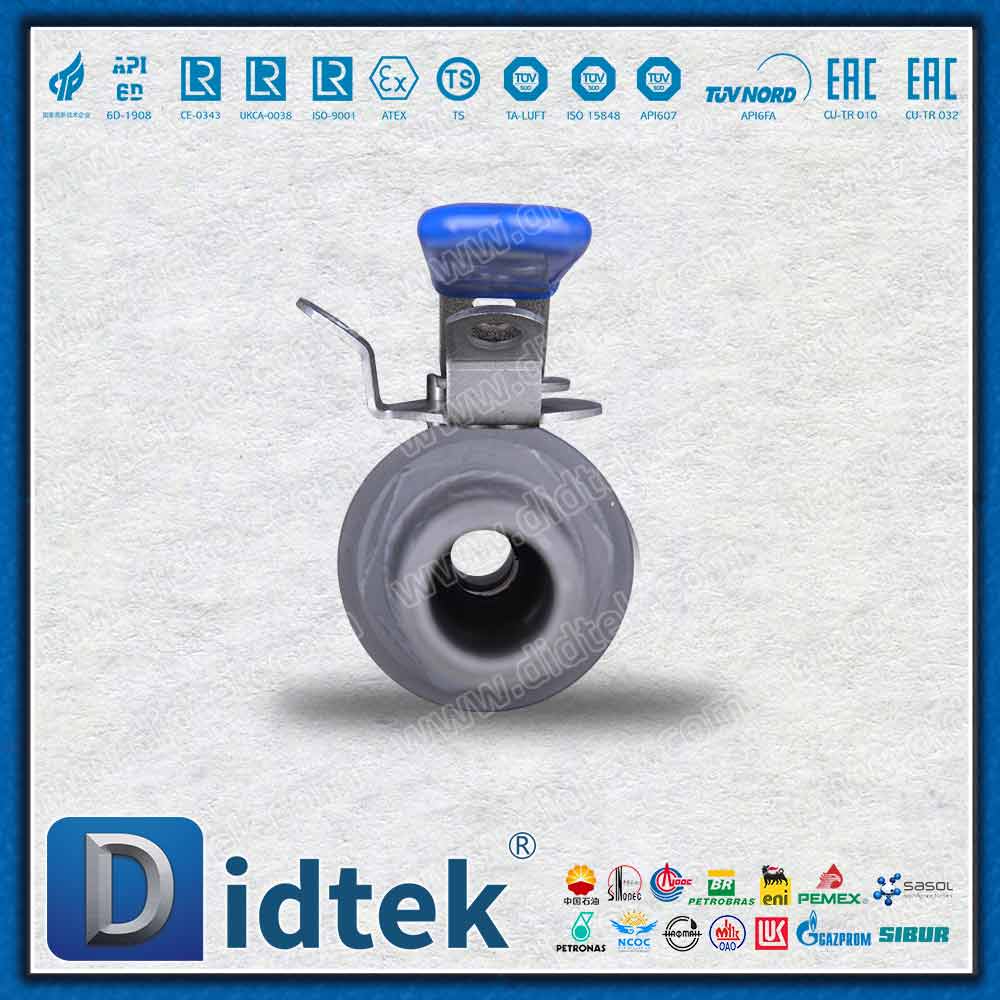
Every industrial valve relies on materials that must perform predictably under pressure, temperature, and corrosion exposure. ASTM material standards provide a baseline for mechanical strength and chemical stability. This allows engineers to evaluate valves from different suppliers using consistent criteria.
In applications involving aggressive media or seawater, an industrial ASTM B381 Ball Valve may be chosen because titanium offers superior corrosion resistance compared to carbon or stainless steel. ASTM B381 ensures that the titanium forging meets minimum strength and purity requirements before further processing.
Valve size and operating conditions influence whether cast or forged materials are used. Forged materials, including titanium forgings under ASTM B381, are preferred where strength, reliability, and low defect rates are critical.
Forged construction is common for high-performance ball valves intended for severe service. The material standard defines the forging quality, while the valve design determines sealing and flow behavior.
Material compliance alone does not guarantee valve performance. ASTM standards must be combined with functional and pressure standards. A high-quality ASTM B381 Ball Valve still requires proper design, testing, and certification to perform reliably in service.
ASTM valve materials cover a wide range of metals and service conditions, reflecting the diverse environments in which industrial valves operate. Rather than assigning a single ASTM code to all valves, ASTM standards classify materials based on chemical composition, mechanical properties, manufacturing method, and intended service temperature. This approach allows engineers to select valve materials that align precisely with operating requirements.
Common ASTM standards include carbon steel grades for general and high-temperature service, low-temperature steels designed to maintain toughness in cold environments, and stainless steels for corrosion resistance. In more demanding applications, special alloys such as titanium are specified to address extreme corrosion, weight reduction, or long-term durability concerns. Each ASTM material standard defines minimum strength, impact resistance, and heat treatment requirements, ensuring consistent quality across manufacturers.
The table below summarizes commonly used ASTM standards for valve materials, including special alloys. It provides a practical reference for understanding how different ASTM codes correspond to typical service conditions and application needs, helping engineers make informed material selections early in the valve specification process.
Material Type | ASTM Code (Cast) | ASTM Code (Forged) | Typical Application |
Carbon Steel | ASTM A216 WCB | ASTM A105 | General and high-temperature service |
Low-Temperature Steel | ASTM A352 LCB/LCC | ASTM A350 LF2 | Cold and cryogenic environments |
Stainless Steel | ASTM A351 CF8/CF8M | ASTM A182 F304/F316 | Corrosive environments |
Titanium Alloy | — | ASTM B381 | Seawater, chemical, offshore service |
These standards form the material foundation for both conventional and specialized valve designs.
Cast valve bodies are typically selected for larger diameters or applications that require complex internal geometries. The casting process allows molten metal to flow into detailed molds, making it possible to produce intricate flow paths and structural features that would be difficult or uneconomical to achieve through forging. As a result, cast valves are widely used in medium- to large-size pipeline systems where cost efficiency and design flexibility are important.
However, casting may introduce internal defects such as porosity if not properly controlled. For applications that demand exceptional corrosion resistance, reduced weight, or higher material integrity, cast materials may be replaced by forged alternatives. In high-end ball valve designs, forged titanium materials such as ASTM B381 are sometimes selected to meet these more demanding performance requirements.
Several ASTM standards are commonly associated with cast valve bodies, each targeting a specific service condition. ASTM A216 applies to carbon steel cast valves used in general and high-temperature applications. ASTM A352 focuses on low-temperature service, ensuring adequate impact toughness in cold environments. ASTM A351 covers stainless steel castings, which are often selected for corrosive or hygienic media.
Each of these standards defines chemical composition, mechanical properties, and heat treatment requirements. By matching the correct ASTM code to the operating environment, engineers can reduce material-related risks and improve overall valve reliability.
Cast ASTM valves are widely used in water treatment facilities, petrochemical plants, power generation systems, and general industrial pipelines. Their ability to accommodate larger sizes and complex shapes makes them suitable for high-flow applications.
In contrast, for offshore or highly corrosive environments, engineers may specify forged titanium ball valves manufactured under ASTM B381. These alternatives provide improved corrosion resistance and structural integrity when standard cast materials reach their performance limits.
Tip: In corrosive media, upgrading material selection often reduces lifecycle cost even if initial valve price is higher.
Forged valve bodies are produced by shaping solid metal under high pressure, which refines the internal grain structure and minimizes the presence of voids or inclusions. This manufacturing process results in higher mechanical strength, improved fatigue resistance, and greater consistency compared to casting. Forged valves therefore offer higher reliability, especially under cyclic pressure or temperature loads.
Because of these characteristics, forged valves are commonly chosen for high-pressure, high-temperature, or safety-critical applications where material failure is not acceptable.
ASTM A105 is the most widely used standard for forged carbon steel valves in general and high-temperature service. ASTM A350 addresses low-temperature applications where impact toughness is critical. ASTM A182 covers forged stainless steel and alloy steel materials for corrosive or elevated-temperature environments.
ASTM B381 specifically covers forged titanium and titanium alloy materials. This standard is used for specialized valve applications where corrosion resistance, strength-to-weight ratio, or long-term durability is a priority.
Forged ASTM valves are commonly found in oil and gas production, LNG facilities, offshore platforms, and chemical processing plants. Their superior structural integrity makes them suitable for compact, high-pressure valve designs.
Titanium-based ball valves are increasingly used in environments exposed to seawater, chlorides, or aggressive chemicals. In these cases, forged materials under ASTM B381 help extend service life while maintaining stable valve performance.
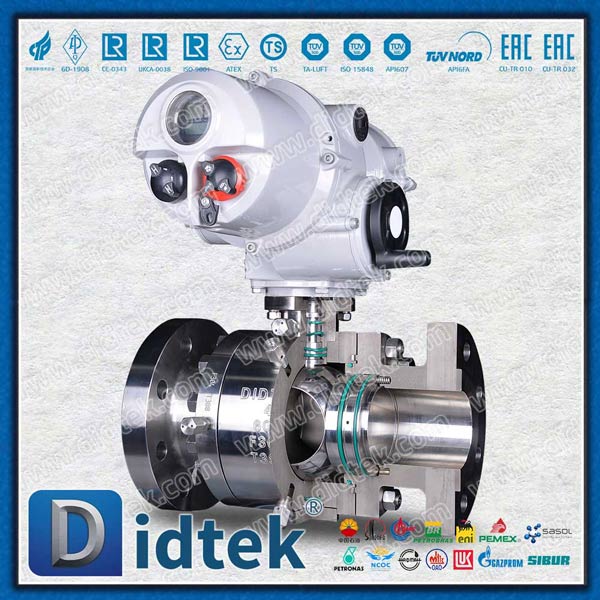
While most ASTM standards focus on material specifications, some address valve function rather than composition alone. These functional standards define test methods, performance criteria, or service-specific requirements that apply to certain valve types or operating conditions.
Such standards are typically used in conjunction with material standards, ensuring that valves not only use compliant materials but also perform safely and reliably in specialized or high-risk applications.
ASTM Code | Application |
ASTM F1792 | Gaseous oxygen service valves |
ASTM F1985 | Pneumatic-operated control valves |
ASTM F1802 | Excess flow valve testing |
Functional standards are often combined with material standards such as ASTM B381 in critical systems.
Functional standards are specified when safety risks are high. In such cases, material quality and operational behavior must both be tightly controlled.
ASTM and ASME serve different but complementary roles in valve standardization. ASTM defines material quality by specifying chemical composition, mechanical properties, and heat treatment requirements. These standards ensure that valve bodies and pressure-containing components have predictable strength and durability.
ASME, on the other hand, focuses on how valves perform under pressure and temperature. It defines pressure classes, allowable stress limits, and design rules that determine where and how a valve can be safely used. During valve selection, both standards must be considered together. A valve made from ASTM-compliant material may still fail if it is applied beyond ASME pressure-temperature limits.
API standards play a critical role in valve inspection, testing, and functional requirements, particularly in oil and gas applications. While ASTM ensures material integrity and ASME defines pressure ratings, API standards govern aspects such as fire testing, leakage acceptance, and operational performance.
By combining ASTM material standards with API testing and inspection requirements, engineers can better control quality risks. This integrated approach helps ensure that valves not only meet material specifications but also perform reliably under real operating conditions.
In real projects, valve specifications rarely rely on a single standard. A complete specification often includes ASTM for material selection, ASME for pressure and temperature ratings, and API for testing and service validation.
This layered standards framework applies to both conventional carbon steel valves and specialized designs, such as titanium ball valves used in corrosive or offshore environments. Using multiple standards together reduces ambiguity and improves consistency across suppliers and installations.
The first step is to clearly define operating pressure, temperature range, and fluid characteristics. Media that are corrosive, abrasive, or subject to extreme temperatures place higher demands on valve materials.
In highly corrosive environments, standard carbon steel may not provide sufficient service life. In such cases, special alloys, including titanium materials governed by ASTM B381, may be justified to improve corrosion resistance and reliability.
Valve size and pressure class strongly influence whether casting or forging is the preferred manufacturing method. Cast valves are commonly used for larger sizes, while forged valves offer higher strength and lower defect risk for smaller or high-pressure applications.
Forged titanium valves are often selected for severe service where material integrity and long-term stability are critical. The chosen construction method directly determines which ASTM material standard applies.
After selecting the ASTM material standard, it is essential to verify compatibility with connected piping, fittings, and applicable regulations. Mismatched materials can lead to galvanic corrosion, installation challenges, or inspection issues.
Ensuring full compliance at this stage helps prevent costly rework and unplanned maintenance later in the project lifecycle.
Note: Material upgrades should always be evaluated based on total lifecycle cost, including maintenance, downtime, and service life, rather than initial purchase price alone.
There is no single ASTM code for valves, only material-based standards like ASTM B381.Combined with ASME and API rules, they guide safe valve selection.A high-quality ASTM B381 Ball Valve improves corrosion resistance and durability.Didtek's products deliver reliable performance and long-term value for demanding systems.
A: There is no single ASTM code for valves. ASTM standards define valve materials, not valve designs or pressure ratings.
A: ASTM codes help engineers choose suitable materials for valves based on temperature, pressure, and corrosion requirements.
A: They ensure consistent material quality, safety, and performance across industrial valve applications.
A: ASTM B381 applies when a ball valve requires titanium material for high corrosion resistance and long service life.


