+86-18058825678
- All
- Product Name
- Product Keyword
- Product Model
- Product Summary
- Product Description
- Multi Field Search

- Home
- Our Product
- About Didtek
- Solutions
- Exhibition Show
- Support
- News
 English

Views: 0 Author: Site Editor Publish Time: 2026-02-06 Origin: Site


Many engineers think a V ball valve equals a ball valve.The difference between V ball and ball valve is often misunderstood.In this article, you will learn howshutoff and flow control differ, and why products from Didtek are designed for both needs.
The core difference between a V ball valve and a standard ball valve is their intended function. A standard ball valve is optimized for fully open or fully closed service. A V ball valve is designed to regulate flow accurately across a wide operating range. This single difference explains most performance gaps observed in real systems.
Standard ball valves are commonly installed in pipelines where fast and tight isolation is required. They are widely used in water, oil, gas, and steam services. V ball valves are preferred in process control applications such as chemical dosing, slurry handling, and wastewater treatment. In these cases, precise and repeatable control is more important than simple shut-off.
Selecting the wrong valve type often leads to unstable operation. Using a standard ball valve for throttling may cause vibration, noise, and rapid seat damage. Using a V ball valve where only isolation is needed may increase cost without adding value. Understanding this difference allows engineers to align valve performance with system requirements.
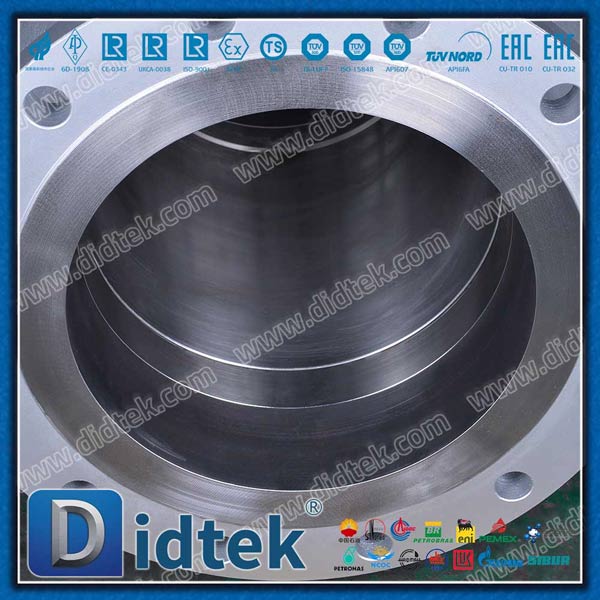
A standard ball valve uses a spherical ball with a round bore through its center. When the valve opens, the bore aligns with the pipeline and creates a straight-through flow path. This design minimizes pressure drop and turbulence. When closed, the solid portion of the ball blocks the flow completely, providing reliable shut-off.
Standard ball valves operate with a quarter-turn motion. This allows quick operation and simple automation. However, their flow characteristic is quick-opening. Small changes in valve position near closed result in large changes in flow, making accurate regulation difficult.
The main advantage of a standard ball valve is its excellent sealing capability. With soft or metal seats, it can achieve very low leakage rates. These features make it a dependable isolation valve in many industrial systems, including those supplied by long-established manufacturers like Didtek.
A V ball valve uses a ball with a V-shaped notch instead of a round bore. As the ball rotates, the exposed flow area changes gradually. The geometry of the V notch defines how flow increases with valve movement, enabling controlled modulation.
The V port opens progressively from the narrow end of the notch. This produces a more linear or equal-percentage flow characteristic. Flow changes are smoother and more predictable, even at partial openings. This behavior supports stable process control.
Because of their predictable flow response, V ball valves are classified as control valves. They are commonly paired with actuators and positioners in automated systems. In many cases, they replace globe valves when compact size and higher flow capacity are required.
The most obvious difference lies in bore shape. A round port delivers either full flow or no flow. A V port creates a variable flow area. This directly affects how each valve behaves during partial opening.
Seat design also differs. Standard ball valves use symmetrical seats optimized for tight shut-off. V ball valves use contoured seats that match the V-notch geometry. This supports consistent contact during modulation.
Standard ball valves excel in sealing but perform poorly in regulation. V ball valves trade some shut-off simplicity for superior control accuracy. This trade-off defines their application boundaries.
Structural Comparison
Feature | Standard Ball Valve | V Ball Valve |
Bore shape | Round | V-shaped |
Primary function | Shut-off | Flow control |
Seat design | Symmetrical | Contoured |
Control capability | Limited | High |
Standard ball valves exhibit a quick-opening flow curve, where most of the flow increase happens early in the valve rotation. This behavior is suitable for isolation duties but problematic for control. Small position changes can cause large flow variations, making fine adjustment difficult. When used for throttling, this often leads to unstable control, pressure fluctuations, and increased vibration. Over time, these effects can accelerate seat wear and reduce sealing reliability, especially in systems that require frequent partial opening.
V ball valves are designed with engineered flow characteristics that support accurate regulation. Many models provide equal-percentage or near-linear flow response, meaning flow changes proportionally with valve position. This allows operators and control systems to achieve predictable adjustments across a wide operating range. As a result, V ball valves improve process stability, simplify control tuning, and support consistent performance in automated applications.
Because the flow area changes gradually, V ball valves maintain stable behavior at partial openings. This reduces turbulence, noise, and cavitation compared to throttling with a standard ball valve. Repeatable positioning also minimizes uneven wear on seats and internal surfaces. Over long-term operation, this stability translates into better control accuracy and extended service life.
Standard ball valves perform best with clean liquids and gases. When fibers, solids, or slurry are present, particles can become trapped between the ball and seat, causing scratches, leakage, or sticking. V ball valves handle these challenging media more effectively because their design is intended for controlled flow rather than simple on-off operation.
The sharp edge of the V notch creates a shearing action during operation. This action cuts through fibers and breaks up solids, reducing clogging and buildup. In slurry and viscous services, this feature helps maintain stable flow and prevents sudden blockages that could disrupt process control or damage equipment.
In abrasive applications, material selection is critical. Designs using Semi Ni55 Seat V-Ball Valve or Ni60 Ball V-Ball Valve materials significantly improve resistance to erosion and scouring. These material options are commonly used in heavy-duty control valves, including industrial solutions offered by manufacturers such as Didtek, where durability and consistent performance are required in harsh operating conditions.
Media Handling Comparison
Aspect | Standard Ball Valve | V Ball Valve |
Clean fluids | Excellent | Excellent |
Slurry handling | Poor | Good |
Fiber cutting | No | Yes |
Wear resistance | Limited | Enhanced |
Note: Media characteristics should always guide valve selection.
Standard ball valves are ideal for fast and reliable isolation duties. They are widely used in pipelines carrying oil, gas, water, and steam where the main requirement is to fully open or fully close the flow. Their straight-through design creates very low pressure drop when open, which helps maintain system efficiency. Tight sealing performance also reduces leakage risk, making them economical and dependable for general service and emergency shut-off points.
V ball valves are preferred in applications that require accurate and repeatable flow control. Typical examples include chemical processing, mining slurry systems, wastewater treatment, and pulp and paper plants. In these environments, media may be abrasive, viscous, or contain solids. The V-shaped port allows smooth modulation and stable control, even under changing process conditions, which improves product consistency and system reliability.
In automated industrial plants, V ball valves are often integrated with pneumatic or electric actuators to regulate flow, pressure, or temperature in control loops. Standard ball valves remain essential at isolation points, such as upstream and downstream of control equipment. Many industrial valve portfolios, including those from Didtek, offer both types to address isolation and control requirements within the same system.
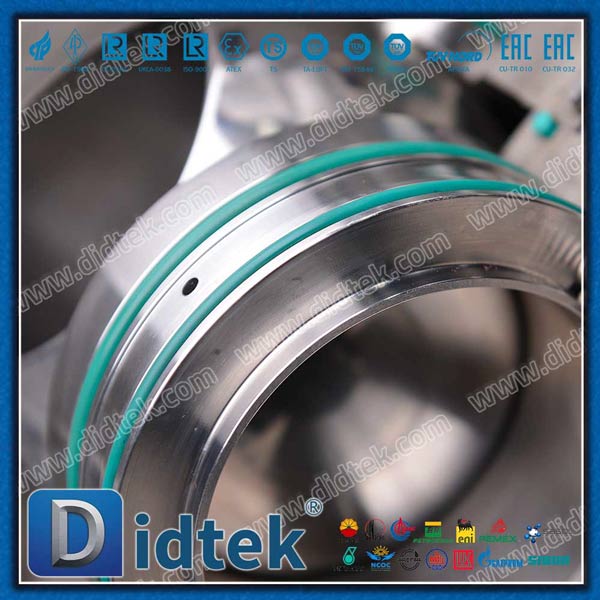
V ball valves typically have a higher initial cost than standard ball valves. This is due to precision machining of the V notch and the use of specialized seats. However, the purchase price alone does not reflect the overall value or long-term performance of the valve.
When a standard ball valve is used for throttling, seats often wear unevenly and require frequent replacement. V ball valves are designed for control service, so wear is more uniform. This reduces maintenance frequency, unplanned downtime, and spare parts consumption.
In continuous control applications, V ball valves often deliver a lower total cost of ownership. Reduced maintenance needs and improved process stability offset the higher upfront cost, making them more economical over the valve’s service life.
Cost and Lifecycle Comparison
Factor | Standard Ball Valve | V Ball Valve |
Initial cost | Lower | Higher |
Control service life | Short | Long |
Maintenance frequency | High in throttling | Lower |
Lifecycle cost | Higher | Lower |
Tip: Evaluate lifecycle cost, not just purchase price.
If the application only requires on-off operation, a standard ball valve is generally the most appropriate option. It is designed primarily for isolation rather than regulation, ensuring reliable shutoff when the valve is fully closed.
Standard ball valves offer a simple internal structure, which contributes to high durability and low risk of mechanical failure. They provide tight sealing performance, minimal leakage, and low pressure drop in the fully open position. Due to their cost efficiency and ease of maintenance, they are widely used in utility services, pipelines, and systems where flow adjustment is not a critical requirement.
For applications that demand accurate and stable flow control, a V ball valve is the preferred choice. The V-shaped port allows for a more linear and controllable flow characteristic, especially at partial openings, where standard ball valves typically perform poorly.
This makes V ball valves suitable for automated control systems and process applications that require continuous modulation. They perform well in situations involving varying flow rates, pressure control, or proportional regulation. Although V ball valves involve higher initial cost and more complex design, their ability to deliver consistent control can significantly improve overall system performance.
When selecting between a V ball valve and a standard ball valve, engineers should evaluate the specific demands of the application. Important considerations include the properties of the process media, the required level of control accuracy, and the operating pressure and temperature range.
In addition, maintenance requirements and long-term reliability should be taken into account. Selecting a valve that aligns with actual operating conditions helps reduce maintenance frequency, improves operational stability, and extends service life. A systematic evaluation of these factors ensures the most effective valve selection for the system.
The difference between a V ball and a ball valve is purpose and performance. Standard ball valves focus on shut-off. V ball valves enable precise flow control. Understanding this improves safety and efficiency. Didtek's products offer reliable options for both isolation and control needs.
A: The difference between V ball and ball valve is function. One controls flow. The other provides shut-off.
A: A V ball valve offers precise flow control using a V-shaped port and stable modulation.
A: They regulate flow in slurry, chemical dosing, and wastewater processes with better stability.
A: Yes. V ball valves cost more upfront but reduce wear and lifecycle costs.


