+86-18058825678
- All
- Product Name
- Product Keyword
- Product Model
- Product Summary
- Product Description
- Multi Field Search

- Home
- Our Product
- About Didtek
- Solutions
- Exhibition Show
- Support
- News
 English

Views: 0 Author: Site Editor Publish Time: 2026-06-10 Origin: Site


You will notice a clear difference when you choose a DIN gate valve. DIN sets strict rules for how each valve works and fits into your system. These DIN rules help you get the right size, pressure, and performance every time. When you follow DIN, you meet high standards for safety and quality. The DIN gate valve stands out because it always delivers reliable results.
You might wonder why DIN is important for gate valves. DIN means Deutsches Institut für Normung. This is the German Institute for Standardization. This group makes rules so products fit and work together. The table below shows how DIN affects industrial valves:
Aspect | Details |
|---|---|
Organization | Deutsches Institut für Normung (DIN) is the German Institute for Standardization. |
Role in Standardization | Contributes to the development of standards for various industries, including industrial valves. |
Recognition | DIN standards are widely recognized and adopted in Germany and internationally. |
Collaboration | Works with international standards bodies to align with global norms. |
Influence | Ensures German expertise contributes to comprehensive standards in industrial valves. |
If you pick din gate valves, you get products made by strict rules. These rules control size, shape, and how well the valve works. They help your valves stay safe and last longer. DIN valve designs focus on careful engineering. You will see these valves in chemical, pharmaceutical, and mechanical jobs because they are dependable.
DIN standards help you in many ways:
You get strong materials like stainless steel that do not rust easily.
European valve standards need hard tests and checks, so your valves work even in tough places.
You can trust the test results and reports, which show how each valve works.
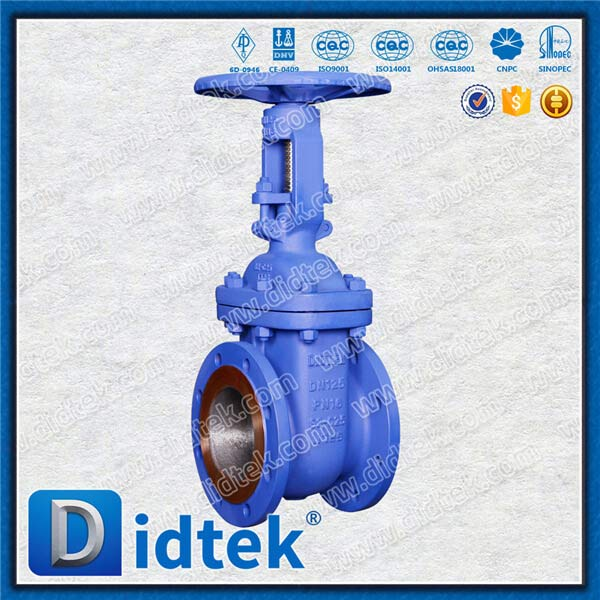
DIN 3352 is the main set of rules for din gate valves. This standard tells you how to make and test these valves. The table below shows the main things you need:
Requirement | Description |
|---|---|
Valve Patterns | Includes designs such as rising stem and non-rising stem options. |
Pressure/Temperature Ratings | Specifies detailed ratings for various valve sizes and materials. |
End Connections | Covers specifications for flanged, butt-weld, and threaded connections. |
Sealing Performance | Emphasizes tight shutoff capabilities with options for different seal types. |
Structural Integrity | Ensures integrity through rigorous design and testing requirements. |
DIN 3352 also talks about quality checks. Each step in making a din valve has strict checks:
Quality Assurance Aspect | Description |
|---|---|
Procurement | Adherence to quality programs |
Production | Compliance with procedures |
Welding | Follow quality standards |
Assembly | Quality checks in place |
Testing | Rigorous testing protocols |
Packaging | Quality assurance in packaging |
You can feel sure that every din gate valve meets these high rules. Each valve is designed carefully, uses strong materials, and passes hard tests. This means you get a valve that works well and keeps your system safe.
You might see other rules like ANSI, BS, and JIS for gate valves. Each system has its own way to measure and build valves. Here is how din gate valves are different:
Dimensions: DIN gate valves use millimeters for size. ANSI valves use a class system.
Pressure Ratings: DIN valves use the PN system (like PN16). ANSI valves use classes (like Class 150).
Flange Connections: DIN flanges follow DIN rules, so the bolt holes and sizes are different from ANSI flanges.
Design and Construction: DIN valves focus on precision and high-quality materials. ANSI valves are built for tough conditions.
Applications: DIN valves are common in European factories. ANSI valves are used more in North America.
It is important to pick the right standard for your system. DIN valve choices give you good performance, especially if you work in places that use European rules. The world market for valves is growing, and more companies want valves that meet strict rules. If you choose din gate valves, you make sure your equipment is safe and high quality.
You need to know the exact size of each valve before you install it. DIN standards give you clear rules for measuring every part. You can find the length, height, and width in millimeters. This helps you match the valve to your pipeline without guessing. DIN makes sure the valve fits tightly and works smoothly. You see these measurements in the product manual or technical sheet. Engineers use these numbers to plan the system and avoid mistakes.
DIN also controls the flange size and bolt hole pattern. You get a valve that connects easily to other DIN parts. This saves you time and prevents leaks. If you work in a factory or water plant, you can trust DIN to give you the right dimensions every time.
Pressure ratings tell you how much force the valve can handle. DIN uses the PN system to show this. PN stands for Pressure Nominal. You see numbers like PN 10 or PN 40. Each number means a different pressure limit. The table below shows the most common ratings for DIN gate valves:
PN Rating | Pressure (bar) | Approx. psi |
|---|---|---|
PN 10 | 10 bar | 145 psi |
PN 16 | 16 bar | 232 psi |
PN 25 | 25 bar | 363 psi |
PN 40 | 40 bar | 580 psi |
PN 63 | 63 bar | 913 psi |
PN 100 | 100 bar | 1450 psi |
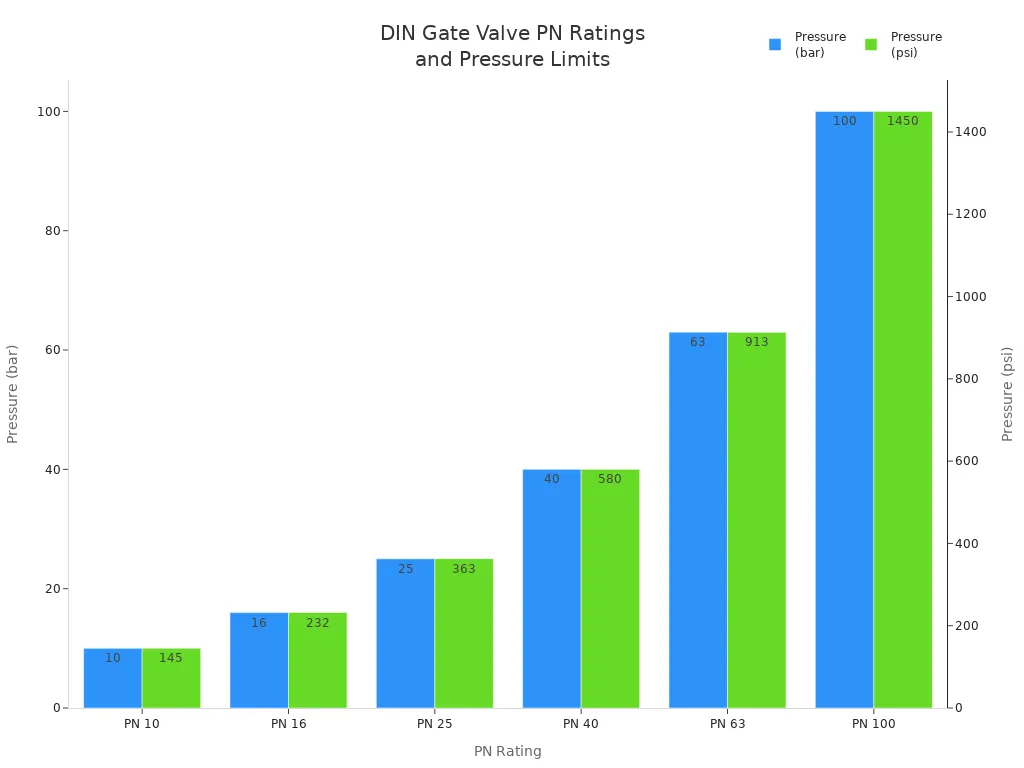
You must pick the right PN rating for your job. If you work with high-pressure steam, you need a valve with a higher PN number. If you handle water or low-pressure fluids, a lower PN works well. DIN makes it easy to choose because the ratings are clear and reliable.
Pressure ratings help you stay safe. You avoid accidents and leaks by using the correct valve. DIN gate valves use strong materials and careful design to meet these ratings. You can trust the valve to work in tough places like oil refineries or chemical plants.
Tip: Always check the PN rating before you install a valve. This keeps your system safe and running smoothly.
You want your valve to work well and last a long time. DIN gives you rules for installing each valve. You need to follow these steps for the best results:
Conduct a pre-installation inspection to identify any issues with the valve.
Ensure sealing surfaces are clean and free from imperfections to prevent leaks.
Inspect all key components of the valve for damage or wear.
Securely tighten all bolts and nuts to avoid misalignment.
Properly align the valve with the pipeline during installation to prevent stress on components.
DIN makes sure the valve fits with other DIN parts. You do not need to worry about mismatched sizes or shapes. If you use DIN gate valves, you get easy installation and fewer problems. You save time and money because the valve works right the first time.
You see DIN valves in many industries. Water treatment plants, oil and gas sites, and factories all use DIN because it is dependable. You can trust the valve to handle pressure and fit your system.
You want a valve that works well and lasts long. DIN standards help you pick the right materials for each job. The table below shows what materials are used in DIN gate valves and how strong they are:
Material | Suitable Conditions | Durability Impact |
|---|---|---|
Cast Iron | Low-pressure and low-temperature applications | Good for low-stress environments |
Carbon Steel | Medium and low-pressure, medium and low-temperature | Versatile for various industrial pipelines |
Alloy Steel | High-temperature and high-pressure conditions | Excellent for demanding applications in petrochemical and power industries |
Corrosion-Resistant Alloys | Highly corrosive media | Effective in resisting corrosion, ensuring longevity |
ANSI and BS valves use similar materials. Both DIN and ANSI valves can be made from cast iron, carbon steel, stainless steel, and bronze. You can choose the best material for your needs and where you will use the valve.
DIN gives clear rules for flange connections. This means the valve fits tightly with other DIN parts. The flange size and bolt pattern match DIN standards. This helps stop leaks and makes installation easier. DIN valves use strong materials and careful design for good sealing. Clean sealing surfaces and proper alignment keep your system safe.
Tip: Always check the flange and sealing surfaces before you install the valve. This helps stop leaks and keeps your valve working longer.
You want your valve to work well and not break down. DIN gate valves have features that help in tough places. The table below shows some design features that make the valve work better:
Design Feature | Description |
|---|---|
Pressure-Seal Bonnet | Uses inside pressure to seal itself, good for high-pressure systems. |
Extended Bonnet | Longer stem passage stops frosting in cold jobs, making it easier to use. |
Electric Actuator | Gives exact control in automated systems, great for big jobs. |
Pneumatic Actuator | Responds fast, good for quick actions in process control systems. |
Reliability depends on installing the valve the right way and keeping it maintained. About half of valve problems happen because of mistakes during installation. If you do regular maintenance, your valve can last up to 40% longer. The material you pick also helps the valve last and fight rust. DIN standards help you get a valve that works well and lasts in your system.
DIN gate valves are used in many places. They help control flow and keep systems safe. The table below shows where DIN gate valves are used and what they do:
Industry | Typical Applications |
|---|---|
Chemical Processing | Moving different fluids and gases |
Oil and Gas | Turning flow on or off for safe shut-off |
Pharmaceutical | Managing fluid flow when making medicine |
Power Generation | Controlling steam inside boilers |
Food and Beverage | Stopping corrosion from acids in food and drinks |
DIN gate valves are good for jobs needing strong parts and tight seals. They work well with high pressure or harsh chemicals.
DIN gate valves give you many benefits at work. They help keep your plant safe and running well. Here are some advantages:
Reliable shut-off lets you stop flow for repairs or emergencies.
Low pressure drop saves energy and keeps flow steady.
Handles high heat and pressure, so it works in tough places.
Works with many fluids, even ones that can cause rust.
Controls flow both ways, so you can design your system easily.
Lasts a long time, so you spend less on repairs.
Fits big pipes, great for jobs needing lots of flow.
Helps stop spills and leaks quickly in emergencies.
Tip: DIN gate valves make your plant safer and more efficient, especially for hard jobs.
You need to pick the best valve for your project. Think about these things:
Make sure the valve works with your fluids.
Check the temperature and pressure your system needs.
Look at pressure ratings and how well flow moves.
Pick materials that fit your environment.
Choose if you want manual, electric, or pneumatic operation.
DIN gate valves are a smart choice for systems using European rules. They work well and are easy to install.
You can spot big differences with a DIN gate valve. DIN standards help make the valve strong and easy to use. These valves work well under high pressure and in big pipes. They also do not rust easily. Top makers say you should check for quality certificates and test results. You should also look at the materials used in the valve.
Pick trusted brands so you know the valve is good.
Check that the valve matches your system and follows DIN rules.
If you need a valve that works well in hard places, ask Didtek for help.
DIN stands for Deutsches Institut für Normung. This group sets German standards for products. You get valves that fit and work well in many systems when you choose DIN.
You see DIN gate valves measured in millimeters and rated by PN numbers. ANSI valves use inches and class ratings. You must match the valve standard to your system for the best fit.
You should not mix DIN gate valves with non-DIN flanges. The bolt patterns and sizes are different. Always check the flange type before installation.
You find DIN gate valves in water plants, oil and gas sites, and chemical factories. These valves work well in places that need strong, reliable shut-off.
Tip: Check your fluid type, pressure, and temperature. Pick the right material and pressure rating. Ask a trusted supplier like Didtek for help if you are unsure.


