+86-18058825678
- All
- Product Name
- Product Keyword
- Product Model
- Product Summary
- Product Description
- Multi Field Search

- Home
- Our Product
- About Didtek
- Solutions
- Exhibition Show
- Support
- News
 English

Views: 0 Author: Site Editor Publish Time: 2026-06-04 Origin: Site


You need safe and efficient systems to keep oil and gas working well. A gate valve for oil and gas is important for controlling flow and shutting things off. Many places use these valves. About 22.7% of all oil and gas valves are gate valves. Gate valves stop leaks and pressure surges. These problems can cause serious accidents. Didtek gives advanced solutions for your industry’s tough needs.
Gate valves stop:
Leaks
Pressure surges
Major blowouts
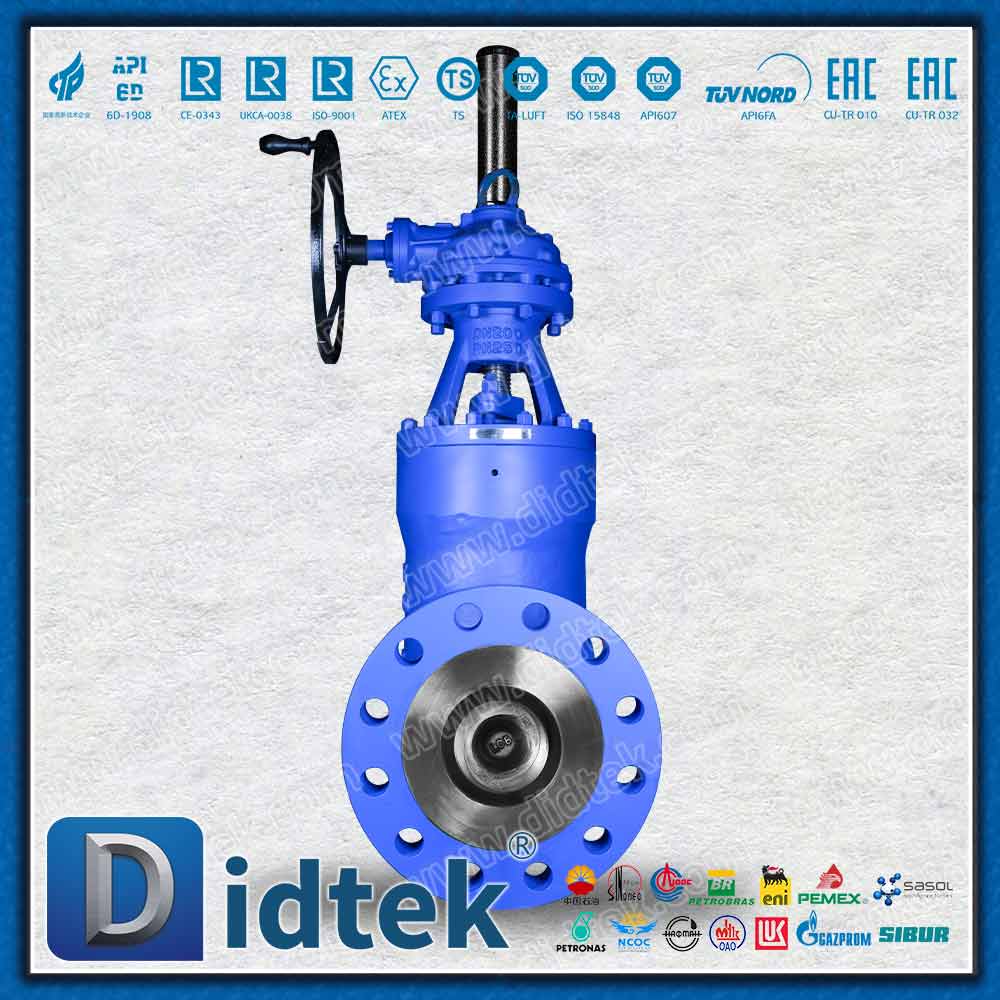
You will find that a gate valve for oil and gas uses a simple but strong design. This valve has a disc, also called a gate, which moves up and down to control the flow of fluid. Industry standards, such as those from the American Petroleum Institute (API) and the American Waterworks Association (AWWA), guide how these valves are made and used. The main parts of a gate valve include the body, gate, stem, seat, and actuator or handwheel.
Tip: The choice of material for your gate valve depends on the job. You might see valves made from stainless steel, carbon steel, chrome, or special alloys like Hastelloy and Alloy 20. These materials help the valve handle high pressure, temperature, and even harsh chemicals.
Here is a quick look at the key components and their functions:
Component | Function |
|---|---|
Gate | Blocks or allows fluid flow, giving you full shut-off when lowered. |
Stem | Connects the gate to the actuator or handwheel for vertical movement. |
Actuator/Handwheel | Drives the vertical movement of the gate to open or close the valve. |
The design of a gate valve allows for low turbulence flow. This means the fluid moves smoothly through the valve, which is important in oil and gas pipelines. The full-bore design also lets you handle thick or slurry fluids without clogging.
When you operate a gate valve, you turn the handwheel or use an actuator. This action moves the stem, which raises or lowers the gate inside the valve. If you raise the gate all the way, fluid flows freely with almost no resistance. If you lower the gate, it blocks the flow completely. This makes the gate valve perfect for on/off control.
You fully open the valve by raising the gate, allowing fluid to pass through.
You close the valve by lowering the gate, stopping the flow.
This simple mechanism works well in many pressure systems.
A gate valve for oil and gas stands out because it gives you a tight seal and reliable shut-off. You can use it to isolate sections of a pipeline during maintenance or emergencies. The valve’s strong build and choice of materials mean it lasts a long time, even in tough environments. Unlike globe or butterfly valves, a gate valve is not meant for throttling. You should use it only for full open or full closed positions to avoid wear.
Note: Gate valves meet strict industry standards to ensure safety and performance in oil and gas operations.
You need a good way to control oil and gas flow. A gate valve for oil and gas helps you do this. You can use these valves in many places. They work in drilling, pipelines, refineries, and petrochemical plants. You also see them in crude oil and liquid pipelines. These valves help move crude oil and petroleum products.
When you open a gate valve for oil and gas, fluid moves smoothly. The gate lifts out of the way, so nothing blocks the fluid. This means there is almost no pressure drop. This is important when you want to move lots of oil or gas fast and safely. You also stop turbulence, which can hurt your system.
Gate valves let fluid move easily. You get little pressure drop and good flow.
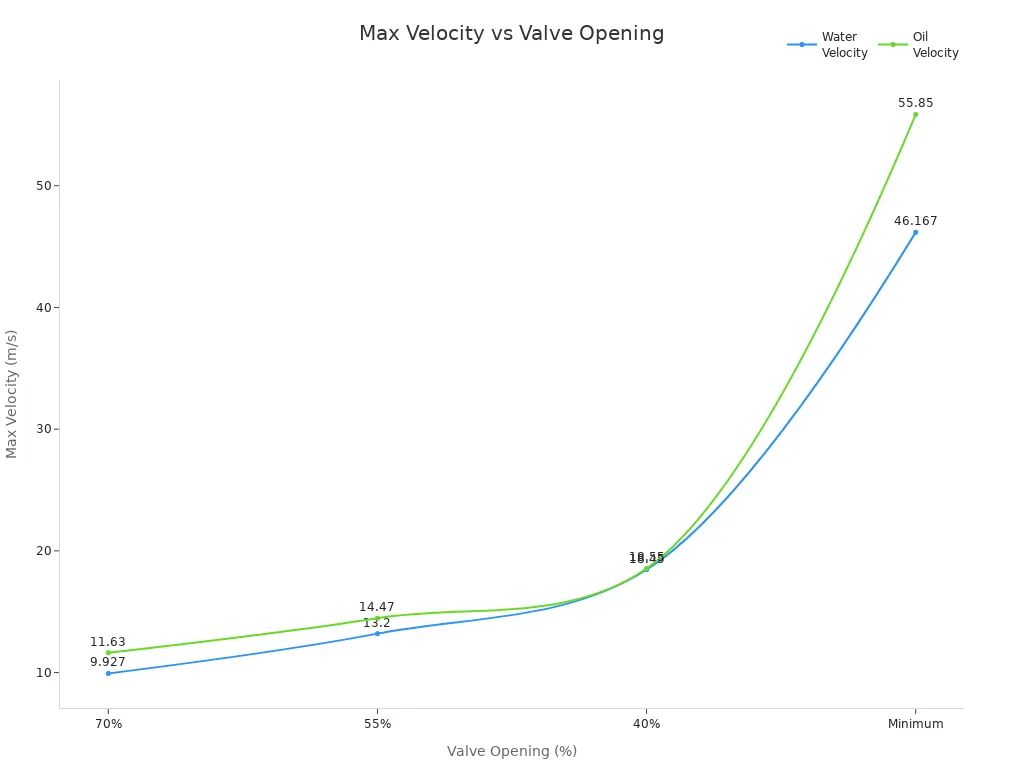
Here is a table that shows how fast water and oil can move with these valves:
Valve Opening (%) | Maximum Velocity (Water) (m/s) | Maximum Velocity (Oil) (m/s) |
|---|---|---|
70 | 9.93 | 11.63 |
55 | 13.20 | 14.47 |
40 | 18.45 | 18.55 |
Minimum | 46.17 | 55.85 |
You want a valve that lasts many years. Gate valves in oil and gas pipelines last 15 to 20 years. This is longer than most other valves. Here is a quick look:
Valve Type | Average Lifespan (Years) | Service Type |
|---|---|---|
Gate Valves | 15–20 | On/Off Service |
Globe Valves | 10–15 | Throttling Service |
Didtek has many types of gate valves for you. You can pick wedge, slab, long stem, pressure seal, electric, or pneumatic gate valves. Each one helps you get a good shut-off and easy flow in your pipelines.
Oil and gas work can be very tough. A gate valve for oil and gas must handle high pressure and heat. You can choose valves for your needs, like pressure, temperature, and fluid type.
Here is a table that shows the pressure and temperature ranges for these valves:
Aspect | Details |
|---|---|
Pressure Rating Standards | API, ANSI, and ISO standards |
Rating Classifications | Class 150, 300, 600, 900, 1500, 2500 psi |
High-Pressure Applications | Class 1500 or 2500 for gas transmission |
Temperature Factor | Maximum pressure drops as temperature rises |
Didtek’s wedge, slab, and pressure seal gate valves work well in hard jobs. You get pressure classes from ASME 150 to ASME 2500 and API 5000 to API 10000. The temperature range is -150 to 662°F (-101 to 350°C). These valves use braided graphite gaskets and ENP coated seats with thermoplastic inserts. You also get spring-loaded floating seats and metal-to-metal seating with HVOF Tungsten Carbide coating. These things help keep a tight seal and stop leaks, even when pressure or temperature changes.
You can count on Didtek’s gate valves for strong shut-off and safe work in tough oil and gas places.
You need a gate valve for oil and gas that meets strict rules and keeps your system safe. With the right valve, you get safety, good work, and long life.
You want equipment that lasts and works well in tough places. A gate valve for oil and gas gives you both. These valves use strong materials and smart designs. You can trust them to handle high pressure and harsh chemicals. The valve body holds pressure and gives a clear path for fluid. The bonnet keeps the inside parts safe and stops leaks. The gate moves up and down to control flow. The stem connects the gate to the handle or actuator. Sealing packing keeps fluid from leaking out.
Here is a table showing the main parts and what they do:
Component | Function |
|---|---|
Valve Body | Holds pressure and lets fluid flow through. |
Bonnet | Protects inside parts and stops leaks. |
Gate | Moves to open or close the flow. |
Stem | Connects the gate to the handle or actuator. |
Sealing Packing | Stops leaks around the stem. |
You get excellent shut-off with these valves. They give you a tight seal and stop leaks. You also see low pressure drop, which means fluid moves easily. These valves work in both directions. You can use them for many years because they last a long time. Their strong build helps them work well, even in hard jobs. If you need to stop flow fast, these valves do the job. This keeps your system safe and running smoothly.
Tip: Reliable valves help you avoid accidents and keep your work safe.
You can make your system smarter with automation. Didtek offers electric and pneumatic gate valves. These let you control flow with a button or from far away. You can connect these valves to control systems like PLCs or SCADA. Sensors can watch how the valve works and tell you if something needs fixing. This helps you plan repairs before problems happen.
You may need a special valve for your project. Didtek gives you OEM and ODM services. You can get a valve made just for your needs. These custom valves fit your system and meet all rules. You do not need special tools to change parts. You save time and money. You also get fast delivery because you skip extra research and design steps.
Benefits of automation and customization:
Easy control from a distance
Quick shut-off in emergencies
Custom fit for your project
Fast setup and less downtime
A gate valve for oil and gas gives you strong performance, long life, and smart options for your work.
Ball valves are used a lot in oil and gas work. These valves have a ball inside that turns to let fluid move or stop it. You can open or close a ball valve with just a quick turn. This means they work very fast. Ball valves also seal tightly, so leaks are rare. They do not need as much fixing as gate valves. Their simple shape helps you save time and money.
Here is a table that shows how gate valves and ball valves are different:
Feature | Gate Valve | Ball Valve |
|---|---|---|
Operation Speed | Slower due to multi-turn design | Fast with quarter-turn operation |
Maintenance Needs | Higher maintenance due to wear | Lower maintenance, more reliable |
Sealing Capabilities | Less effective for sealing | Excellent sealing for fluids |
Suitability for Applications | Not ideal for throttling | Suitable for oil and gas applications |
Tip: Ball valves are great for jobs with lots of use and high pressure. You can often swap them out instead of fixing them.
Gate valves need to be checked and fixed more often.
Ball valves, like one-piece and two-piece types, almost never need repairs.
Three-piece ball valves let you change parts without taking out the whole valve.
Globe valves help you control how much fluid moves. You use them when you want to change the flow, not just start or stop it. Globe valves have a disc that moves up and down to adjust the flow. They work well in hot places and do not need much fixing.
Here is a table that shows how globe valves and gate valves are used:
Valve Type | Application Type | Key Features |
|---|---|---|
Globe Valve | Wellhead Throttling | Regulates flow with needle discs for precise adjustments, suitable for high temperatures and minimal maintenance. |
Gate Valve | Pipeline Shutoff | Preferred for mainline isolation, handles high pressure and frequent cycles, reducing pressure drop significantly. |
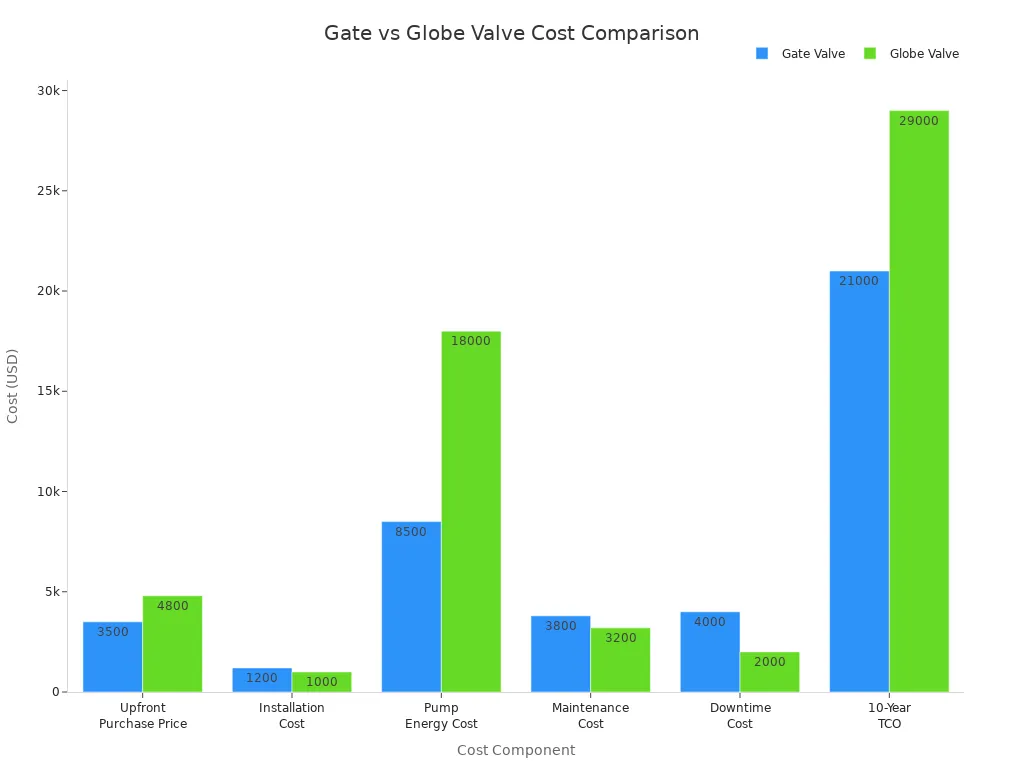
Globe valves can cost more to use over time. Gate valves use less energy and cost less to own. Look at the chart below to see the cost difference:
You should think about what your system needs before picking a valve. Check these important things:
Factor | Description |
|---|---|
Temperature Extremes | Valves must withstand temperature variations to maintain operational integrity. |
Corrosive Environments | Use corrosion-resistant materials in areas prone to corrosion to enhance lifespan. |
Underground Installations | Consider soil conditions and moisture levels; durable coatings and sealing mechanisms are vital. |
Water Quality | Select valves resistant to chemical corrosion for aggressive water compositions. |
Pressure Fluctuations | Understand system pressure dynamics to choose valves with appropriate pressure ratings. |
Custom gate valves can work better and last longer. You can ask for special materials, seals, or designs for your job. This helps your valve stay strong and work well, even in hard places.
You make the best choice when you pick a valve that fits your system’s pressure, temperature, and flow needs.
Gate valves help keep oil and gas work safe. They make sure you can stop flow quickly. These valves last a long time and are easy to use. Didtek uses new technology like graphene coatings and smart sensors. This makes the valves work better. The valves follow strict rules like API 600 and ISO 5208. If you pick the right gate valve and make it fit your needs, your system works well and lasts longer.
You use a gate valve to start or stop the flow of oil or gas. The valve gives you a tight seal. This helps you keep your system safe and running well.
You look at your system’s pressure, temperature, and fluid type. You also check if you need automation or special materials. Didtek can help you pick the right valve for your job.
Yes, you can use gate valves for both oil and gas. These valves work well in pipelines, refineries, and storage tanks. You get strong shut-off and easy flow control.
A gate valve can last 15 to 20 years in oil and gas work. You get long service life if you use the right valve and keep it well maintained.
Didtek gate valves use strong materials and advanced designs. You get options for automation and custom solutions. The valves meet strict industry standards and go through careful testing.


