+86-18058825678
- All
- Product Name
- Product Keyword
- Product Model
- Product Summary
- Product Description
- Multi Field Search

- Home
- Our Product
- About Didtek
- Solutions
- Exhibition Show
- Support
- News
 English

Views: 0 Author: Site Editor Publish Time: 2026-05-25 Origin: Site


The word “cast steel” means how the valve is made and what it is made from. It does not mean how the valve works. In a cast steel gate valve, the body and bonnet are made by casting. After that, they are shaped to fit size and sealing needs. The main job of this valve is to turn flow on or off. It lets things move when open and stops them when closed.
You use cast steel gate valves to control liquids or gases in factories. Didtek has a cast steel gate valve that is strong and works well. If you know the features and benefits, you can make better choices for your building. This helps your system work well and last longer.
Cast steel gate valves use strong materials. These materials help the valve work in tough places. Didtek makes each valve with care and checks quality. The main materials are ordinary carbon steel and alloy steel. These materials make the valve strong and flexible. You can see their features in the table below:
Material Type | Description | Mechanical Properties |
|---|---|---|
Steel casting with less than 2% carbon. | Good weldability and workability. Suitable for many conditions. | |
Alloy Steel | Flexible for design and manufacturing. | Superior mechanical properties. Adaptable to heat treatment. |
Stainless steel gate valves are also available for special places. Stainless steel does not rust and works well in chemical plants. Didtek offers cast steel gate valves with flanged and threaded types. Flanged valves connect strongly and handle high pressure. Threaded valves fit small spaces and are easy to install.
You can pick from different designs for cast steel gate valves. Each design fits a certain need. The main designs are solid wedge, flexible wedge, and split wedge. The table below shows how each works and where you use them:
Design Type | Description | Applications |
|---|---|---|
Solid Wedge | Single piece. Provides tight seal. Less adaptable to temperature. | General industry, low-pressure systems |
Flexible Wedge | Handles thermal expansion. Better sealing performance. | Medium to high-pressure pipelines |
Split Wedge | Two pieces adjust independently. Enhances sealing in tough conditions. | High-pressure, fluctuating flow systems |
These designs give good sealing and low pressure loss when open. The valve design helps shut off flow and control it well.
Sealing is very important in cast steel gate valves. The wedge-shaped gate makes a tight seal with the valve seat. This stops fluid from leaking when the valve is closed. When the gate is all the way down, it fits tightly in the seats. This keeps your system safe and shuts off flow well.
The main parts of a cast steel gate valve are body, gate, stem, bonnet, and actuator. The body holds pressure and connects to pipes. The gate moves up and down to start or stop flow. The stem connects the actuator or handwheel to the gate. The bonnet covers the valve and keeps parts sealed. Seals and gaskets stop leaks between moving and fixed parts.
Didtek tests each cast steel gate valve to meet standards like ASME, API, and ISO. These standards make sure the valve works well and lasts long. You can use carbon steel or stainless steel gate valves for different fluids and places. Didtek’s valves are reliable and easy to take care of.
Tip: Pick the right type and material for your system. Flanged valves are best for big pipelines. Threaded valves fit small spaces and are quick to install.
When you use a cast steel gate valve, you move the gate up or down. This is called linear motion. The gate moves in a straight line inside the valve body. This makes it simple to open or close the valve all the way.
The way a cast steel gate valve works is by moving the gate up and down. This controls how fluids flow through the valve. When the valve is open, the gate is out of the way. This lets liquids or gases move straight through. When the valve is closed, the gate blocks the flow. This design is best for turning flow on or off, not for making small changes.
When the valve is open, the gate lifts up. This gives a clear path for liquids or gases. There is very little resistance. The valve is good for systems that need full on or full off. It is not made for adjusting flow a little at a time.
When the valve is open, the gate is not in the way. This makes a straight path with low resistance.
When the valve is closed, the gate pushes against the seats. This stops the flow.
Gate valves are made to turn flow on or off, not to keep it partly open.
The gate in a cast steel gate valve moves across the flow. This helps the valve shut tightly. When you close the valve, the gate pushes down hard on the seats. This stops all flow and keeps leaks from happening.
When you open the valve, the gate moves out of the way. This means the flow does not slow down much. You get strong shut-off and easy flow. This is important for high-pressure or hot systems.
If you look at other valves, you will see that cast steel gate valves have different Cv values. These numbers change with the size and design of the valve. You can check the table below to see how Cv values compare:
Valve Type | Typical Cv Range (by size) | Notes |
|---|---|---|
Cast Steel Gate Valve | Varies by manufacturer | Ask the supplier for exact numbers |
Stainless Steel Gate Valve | Varies by manufacturer | Works like cast steel gate valves |
Globe Valve | Lower than gate valves | Slows down flow more |
You can use a stainless steel gate valve if you worry about rust. Both cast steel and stainless steel gate valves give strong shut-off and work well.
Tip: Pick a valve that fits your system’s needs. Good flow control and tight shut-off help your equipment last longer and stay safe.
You want a valve that will last for years. Cast steel gate valves are very strong. They use tough materials like ASTM A216 WCB and ASTM A217 WC6/WC9. These materials help the valve work in many places. They can handle heat and high pressure. You can see how the materials compare in the table below:
Material Grade | Strength Characteristics | Typical Applications |
|---|---|---|
ASTM A216 WCB | Good strength and ductility at moderate temperatures | General service, non-corrosive media |
ASTM A217 WC6/WC9 | Enhanced strength at high temperatures | High-temperature applications, steam power plants |
ASTM A351 CF8/CF8M | Excellent corrosion resistance | Chemical, food, and pharmaceutical industries |
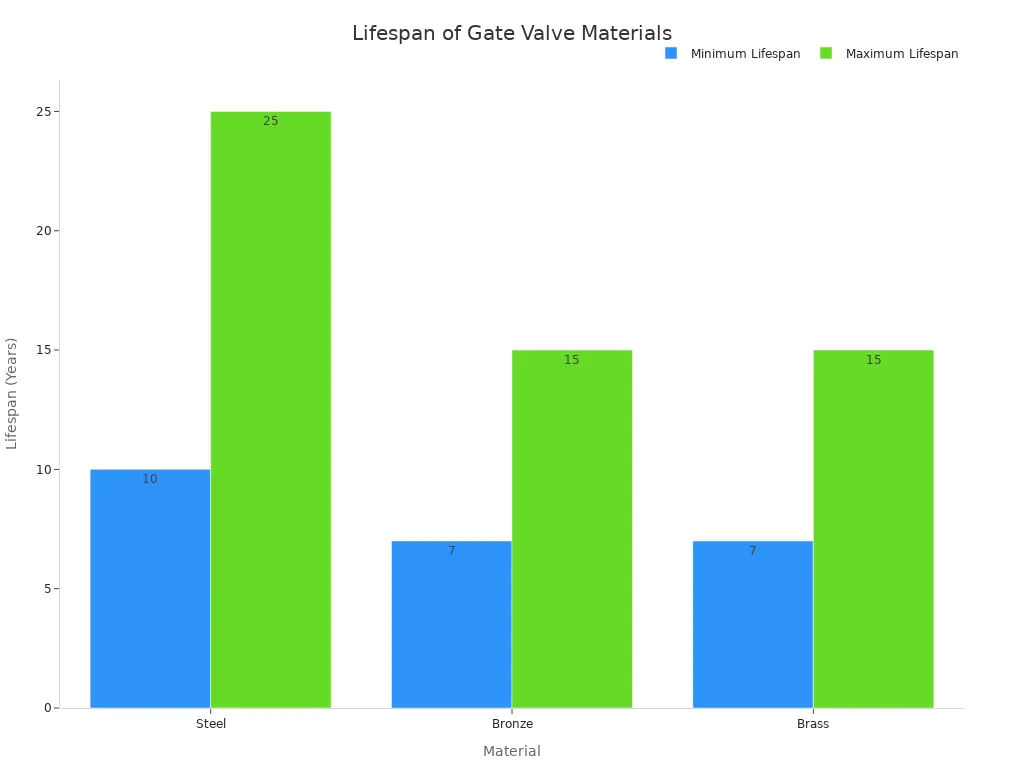
Cast steel gate valves last a long time. Steel valves can work for 10 to 25 years. This is longer than bronze or brass valves. You do not need to replace them often.
You need a valve that works when pressure is high. Cast steel gate valves give strong shut-off in these places. They work better than cast iron valves. Cast iron is not good for high pressure. Forged steel valves are even stronger, but they cost more. Here is a quick look at how these valves compare:
Valve Type | Strength | Toughness | Wear Resistance | High-Pressure Suitability | Cost Comparison |
|---|---|---|---|---|---|
Cast Steel | Excellent | Excellent | Excellent | Suitable | Higher |
Cast Iron | Moderate | Moderate | Moderate | Not Suitable | Economical |
Forged Steel | Superior | Superior | Superior | Preferred | Most Expensive |
Cast steel gate valves work in oil, gas, and power plants. They handle high pressure and heat. You can trust them to stop leaks and keep things safe.
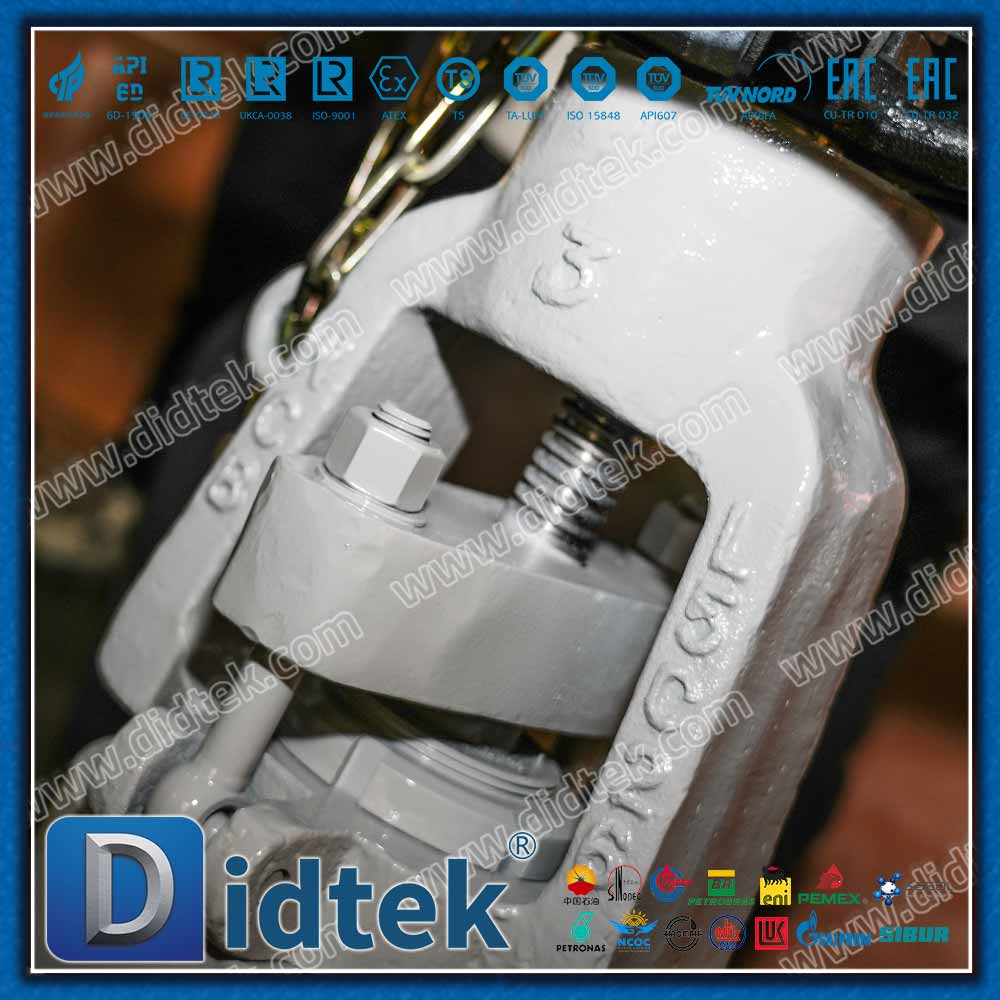
You want a valve that is easy to care for. Cast steel gate valves need only simple checks. Look for leaks, clean the valve, and add oil to moving parts every few months. Change seals and gaskets if they look worn. Checking your valve often helps it last longer and work better.
Didtek tests every cast steel gate valve before you get it. They check the coating, strength, leaks, and fire safety. Didtek will help you if you need help with setup or service.
Tip: Pick a stainless steel gate valve if you need extra rust protection. For most jobs, a carbon steel gate valve is strong and saves money.
Key advantages of cast steel gate valves:
Full flow with low resistance
Works both ways and seals both ways
Tight shut-off keeps things safe
Lasts in tough places
Needs little care
You can trust these valves to keep your system safe and working for a long time.
Cast steel gate valves are used in many industries. These valves help control flow and shut off systems. People use them when safety and good performance are important. Here are some places where these valves are used:
Petroleum: These valves help stop or start flow in pipelines.
Chemical: They are needed to control flow in chemical plants.
Thermal Power Plants: They turn flow on or off in power systems.
Marine Transportation: They help control flow in ships.
You can look at the table to see how each industry uses these valves:
Industry | Application Description |
|---|---|
Petroleum | Used to stop or start flow in pipeline systems. |
Chemical | Needed to control flow in chemical processes. |
Thermal Power Plants | Important for turning flow on or off in power systems. |
Marine Transportation | Used to control flow in ship systems and keep things working well. |
For hard jobs, people pick low alloy steel gate valve or forged steel gate valve. These valves work well when it is very hot or in big pipes.
Cast steel gate valves control many types of media. They can handle water, oil, gas, and steam. You need strong valves for systems with high pressure or heat.
Water: These valves are used in water plants and pipes.
Oil: They are used in oil pipes and refineries.
Gas: They help move and process gas.
Steam: These valves are used in steam systems in power plants.
You choose the right material for your system. For hot places, you use chromium molybdenum steel. For cold places, you use low temperature steel gate valve. The table shows the best temperature ranges for each material:
Material | Temperature Range |
|---|---|
ASTM A216 WCB | -29 to 425 °C |
ASTM A217 WC6 | -29 to 538 °C |
ASTM A352 LCB | -46 to 343 °C |
ASTM A217 WC9 | -29 to 570 °C |
Tip: Pick cast steel gate valves for systems that need strong shut-off and good performance. These valves work well when pressure and temperature are high.
You have learned that cast steel gate valves help control flow in lots of systems. These valves shut off flow tightly and work well when pressure or temperature is high. You can use them to stop flow in pipelines, control flow, and in places like water, oil, or power plants.
They let liquids or gases move in a straight line with little slowing down
They are good for turning flow on or off
They are used in many jobs, like cleaning water and making oil
Didtek gives you good quality and help, so these valves are a smart pick if you want them to last a long time.
You use a cast steel gate valve to start or stop the flow of liquids or gases in a pipeline. This valve works best when you need a full open or full closed position.
Check your pipeline size and pressure needs. Match the valve size to your pipe diameter. You can ask Didtek for help if you are not sure.
Yes, you can use this valve for water, gas, oil, or steam. Just make sure you pick the right material for your media and temperature.
You should check your valve every few months. Look for leaks, clean moving parts, and replace seals if needed. Regular care helps your valve last longer.
Yes! Didtek gives you support for installation and maintenance. You can contact their team for help or advice at any time.


