+86-18058825678
- All
- Product Name
- Product Keyword
- Product Model
- Product Summary
- Product Description
- Multi Field Search

- Home
- Our Product
- About Didtek
- Solutions
- Exhibition Show
- Support
- News
 English

Views: 0 Author: Site Editor Publish Time: 2026-09-08 Origin: Site


Specifying the right valve for midstream and long-distance pipelines remains a high-stakes balancing act. Procurement teams must navigate regulatory compliance, operational safety, and lifecycle reliability. Every engineering decision impacts the entire energy grid. The API 6D standard defines rigid requirements for pipeline and piping valves. It remains distinctly separate from standard process valves. Choosing the wrong specification can lead to catastrophic pressure failures or stalled pigging operations deep underground.
We provide procurement engineers and project managers with an evidence-based framework for confident decision-making. You will learn how to evaluate, specify, and source an api 6d ball valve for critical oil and gas applications. We will explore rigorous testing protocols, structural design imperatives, and strict vendor evaluation criteria. This ensures your next pipeline project operates safely, maintains regulatory compliance, and avoids expensive operational downtime.
Standard Specificity: API 6D is exclusively designed for pipeline applications, prioritizing structural integrity under pipeline stresses, piggability, and reliable isolation.
Design Imperatives: The API 6D trunnion ball valve is the industry standard for high-pressure, large-diameter applications, offering lower operating torque and robust sealing.
Mandatory Testing: Compliance requires rigorous hydrostatic and pneumatic testing, including specific cavity relief and seat leakage protocols (DBB/DIB).
Application Fit: Selection between fully welded and bolted body designs depends strictly on installation environment (e.g., buried vs. above-ground).
Vendor Evaluation: Verified API monograms, Material Test Reports (MTRs), and demonstrated engineering support are non-negotiable shortlisting criteria.
Mixing up process valves (API 608) with pipeline valves (API 6D) often leads to structural failures in midstream applications. Many buyers incorrectly assume they can interchange these standards to save money. They cannot. Process valves serve entirely different operational environments than vast pipeline networks.
API 6D focuses heavily on external pipeline stresses caused by soil movement and thermal expansion. It dictates full-bore designs to facilitate internal cleaning and inspection. It also mandates specific cavity pressure relief mechanisms to prevent explosions from trapped fluids. API 608 valves typically operate in refineries under lower structural stress. They do not require the rigorous pigging compatibility seen in midstream lines. Understanding this critical technical distinction prevents costly procurement mistakes.
The pipeline isolation valve acts as the ultimate failsafe for pipeline integrity. Operators rely on it for mainline blocking and emergency shutdowns (ESD). Sectionalizing long-distance pipelines demands absolute sealing reliability. If a pipe section ruptures miles away, the isolation unit must close rapidly. It must seal perfectly to prevent massive hydrocarbon release into the environment.
We establish our compliance baseline through ISO 14313 harmonization. API 6D closely mirrors this international standard. This structural alignment ensures global acceptability for international oil and gas projects. Project managers can deploy these units across different regulatory jurisdictions worldwide without redesigning their entire piping strategy.
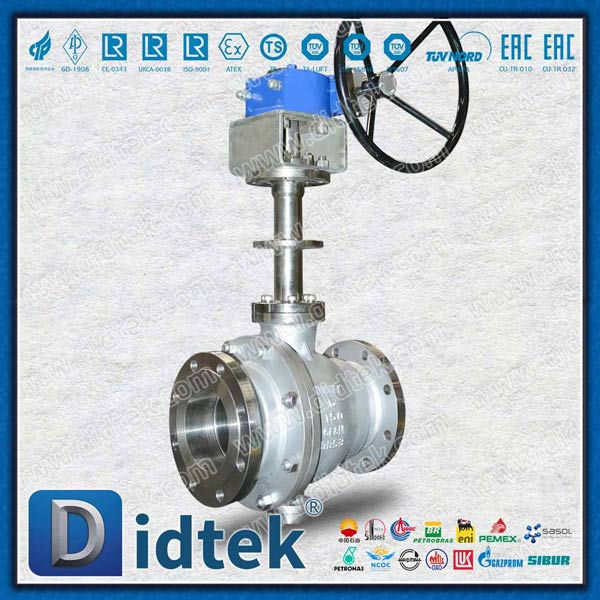
Engineers must first choose between floating and trunnion designs. An API 6D trunnion ball valve is mandatory for high-pressure pipelines. You will typically see this requirement starting at Class 600 and in large-diameter systems. Floating designs push the ball directly into the downstream seat to create a seal. This requires immense operating torque at high pressures and rapidly destroys soft seats. Trunnion designs anchor the ball mechanically at the top and bottom. They handle intense line pressure via the trunnion bearings rather than the seat. This significantly reduces friction, extends seat life, and allows operators to use smaller, more efficient actuators.
Installation environment strictly dictates your body design choice. You must choose appropriately between bolted and fully welded configurations to avoid future operational headaches.
Bolted or split body designs work best for above-ground installations. Manifolds, metering skids, and pumping stations frequently use them. Maintenance teams can perform in-line repairs easily. They unbolt the body, replace worn seats or damaged seals, and resume operations without cutting the pipe.
Fully welded bodies remain a structural necessity for buried installations and subsea applications. They eliminate potential leak paths from body joints entirely. Underground pipelines face severe soil shifting, heavy moisture, and corrosive elements. A fully welded unit requires zero maintenance underground. However, it demands much higher initial manufacturing precision because internal repairs are impossible after final assembly.
Table 1: Bolted Body vs. Fully Welded Body Configuration Analysis
Design Feature | Bolted / Split Body Design | Fully Welded Body Design |
|---|---|---|
Primary Installation Setting | Above-ground, manifolds, compressor stations | Buried, subsea, harsh underground terrains |
Maintenance Accessibility | In-line repairable; easy parts replacement | Zero maintenance required; non-repairable in-line |
Potential Leak Path Risk | Moderate (relies on multiple body joint gaskets) | None (features a continuous welded body seam) |
Manufacturing Precision | Standard industrial tolerances acceptable | Extremely high precision needed before final weld |
Bore sizing directly affects piggability. Long-distance pipelines require frequent internal inspection and cleaning to maintain flow efficiency. Full-opening (full bore) designs allow unobstructed passage for intelligent cleaning tools and inspection pigs. Reduced bore designs trap these tools and halt pipeline flow completely. You must specify full bore dimensions to maintain seamless, cost-effective maintenance operations.
Buyers must look far beyond the initial design drawings. You must scrutinize the Factory Acceptance Testing (FAT) documentation rigorously. The trust factor relies entirely on verifiable test results. A robust FAT ensures the equipment can withstand extreme field conditions before it ever leaves the manufacturing facility.
Compliance dictates strict hydrostatic testing protocols. Hydrostatic shell tests typically run at 1.5 times the maximum design pressure. Seat testing runs at 1.1 times the design pressure. Inspectors monitor acceptable hold times meticulously during these phases. They watch for any pressure drop indicating a microscopic structural leak or casting defect.
Double Block and Bleed (DBB) and Double Isolation and Bleed (DIB) capabilities confuse many procurement engineers. You need to understand the functional difference. DBB means the seats provide a seal against pressure from both ends of the unit simultaneously. You can bleed the body cavity between the seats to check for leaks. DIB goes a step further for critical safety isolation. DIB-1 features two bidirectional seats. DIB-2 features one bidirectional and one unidirectional seat. These advanced features allow operators to safely bleed the cavity and verify absolute internal seat integrity while the pipeline remains under full operational pressure.
Cavity relief testing represents a non-negotiable safety requirement. Trapped liquid hydrocarbons expand rapidly under thermal changes, such as direct sunlight exposure. This expansion causes catastrophic, explosive pressure buildup inside the closed body cavity. Self-relieving seats vent this excess pressure back into the pipeline automatically, preventing the shell from fracturing.
Standard Factory Acceptance Testing (FAT) Protocol Sequence:
Visual and Dimensional Inspection: Verifying bore size, face-to-face dimensions, and overall structural integrity against technical drawings.
Hydrostatic Shell Test: Pressurizing the assembled body with water to 1.5x design pressure to confirm ultimate shell strength and detect casting flaws.
Hydrostatic Seat Test: Pressurizing each seat to 1.1x design pressure to ensure zero leakage under maximum expected operating conditions.
Low-Pressure Air Test: Pumping low-pressure air (typically 80 psi) to detect micro-leaks easily missed by dense hydrostatic fluids.
Cavity Relief Verification: Artificially pressurizing the central body cavity to confirm automatic seat venting mechanisms function properly.
Long-distance transmission lines rely heavily on these units as reliable mainline block valves. Consistent actuation remains paramount over hundreds of miles. Operators utilize gas-over-oil, electric, or pneumatic actuators depending on available remote power sources. They also require fail-safe mechanisms. If remote power fails during a storm, the actuator must move the closure member to a predetermined safe position automatically to protect the system.
Buried natural gas pipelines introduce severe implementation risks. Underground installations face constant external corrosion, heavy soil stress, and a complete lack of maintenance access. Fully welded bodies mitigate these risks perfectly. Manufacturers install specialized extended stems so operators can actuate them from above ground safely. Advanced anti-corrosion coatings, like heavy-duty fusion-bonded epoxy, prevent external degradation over a decades-long lifespan.
Pumping and compressor stations use high-cycle designs. These bustling facilities require rapid opening and closing to regulate pressure zones. Absolute zero-leakage is critical for facility safety here. A leaking seal in a high-pressure compressor station creates severe explosive hazards for on-site personnel. High-cycle demands require specialized seat materials like PEEK and hardened trunnion bearings to prevent premature wear.
Harsh environments dictate aggressive, specialized material selection. Sour gas applications demand strict NACE MR0175 compliance. This standard prevents deadly sulfide stress cracking in carbon and alloy steels when exposed to hydrogen sulfide. Arctic environments require low-temperature carbon steels. Selecting a pipeline ball valve for super-low temperature natural gas networks ensures brittle fracture does not occur under extreme thermal shock or freezing ambient conditions.
Verifying the API Monogram protects your project from counterfeit components and disastrous field failures. Instruct your buyers to check a manufacturer's active certification status rigorously. You can verify this directly via the official API Composite List online. A lapsed or fraudulent certification exposes your operation to immense legal and physical risks. Procuring API 6D ball valves from unverified, budget sources is a dangerous gamble you cannot afford to take.
Material traceability ensures metallurgical integrity from the foundry to the final installation. You must demand EN 10204 3.1 or 3.2 Material Test Reports (MTRs) for all pressure-containing parts. These documents prove the precise chemical composition and mechanical properties of the steel used. Without a valid 3.1 or 3.2 certificate, you cannot guarantee the body will hold the rated pipeline pressure.
Lead times and project management capabilities separate excellent vendors from average ones. Evaluate vendors based on their raw material access, forging capabilities, and in-house testing capacity. Relying on external third-party testing labs often causes severe, unpredictable delivery delays. You should analyze a supplier's historical delivery accuracy for large-bore, high-pressure orders. Late deliveries cause cascading schedule failures in pipeline construction projects. A vendor with strong internal engineering support can adapt designs quickly if your pipeline terrain or fluid specification changes mid-project.
Pipeline isolation requires absolute alignment between rigid industry standards, rigorous factory testing, and harsh operational realities. Deploying the right equipment prevents environmental disasters and ensures continuous, profitable hydrocarbon flow.
Specify exact body styles based on installation terrain. Use bolted designs above ground for easy maintenance and fully welded designs for buried pipelines.
Match advanced seating configurations like DBB or DIB to your specific fluid handling and isolation requirements.
Demand comprehensive FAT documentation, including hydrostatic and cavity relief tests, before ever accepting delivery.
Verify all API monograms and material test reports independently to guarantee metallurgical integrity.
Encourage your technical buyers to cross-reference project specifications with verified vendor capabilities proactively. Request detailed technical drawings and testing protocols for your next RFQ. Proactive specification always proves safer and more efficient than reactive pipeline repair.
A: API 6D specifies valves for midstream pipeline applications, focusing heavily on piggability, inline structural stresses, and long-distance transmission. API 6A governs wellhead and upstream equipment. They handle raw, extremely high-pressure extraction fluids directly at the drill site. You cannot interchange them due to vastly different pressure ratings and structural requirements.
A: Trapped liquid hydrocarbons expand significantly when heated by the sun or sudden ambient temperature changes. This thermal expansion creates immense, uncontrolled pressure inside the closed body cavity. Without automatic relief mechanisms venting this fluid back into the line, the trapped pressure will rupture the shell or crush the seats.
A: No. They are strictly designed for on/off isolation applications only. Using them for flow control or throttling exposes the soft internal seats to high-velocity fluid flow. This causes rapid seat erosion, completely destroying their ability to provide a safe, zero-leakage seal when fully closed.
A: Piggable means the internal bore allows internal pipeline inspection and cleaning tools, known universally as "pigs," to pass through freely. The bore must be full-opening, matching the inner diameter of the connected pipeline perfectly to prevent the inspection tool from getting stuck during transit.
A: Not by default. Fire-safe design remains an additional, essential requirement for handling flammable fluids. You must specify strict compliance with API 607 or API 6FA. These standards ensure the internal seating provides an acceptable secondary metal-to-metal seal if extreme heat destroys the primary soft seats during a fire.


