 English


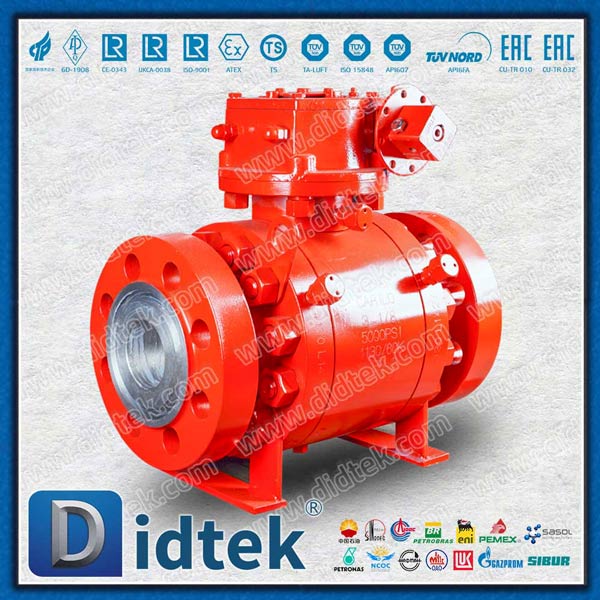




Applicable Standards:
Ball Valve design according to API6D,BS5351,ASME B16.34
Face to face ASME B16.10,AP6D
End Flanges ASME B16.5/ASME B16.47
Butt welded ends ASME B16.25
Fire Safety API607,API6A
Inspection and test API 598,API6D
Material: F304
Size Range: 2"~48"
Pressure Rating: ASME CL, 150, 300, 600
Temperature Range: -196°C~600°C
Design Description:
- Structure : 2 pieces or 3 pieces body
- High shut-off sealing mechanism and low torque operation
- Block and bleed function
- Self-cavity pressure relief
- Fire safe design
- Blow out proof stem construction
- Anti-static design
- Locking device (for lever handle operation)
- ISO 5211 actuator mounting
- Emergency grease injection (option)
- PN design can be available
| Brand | DIDTEK |
| Structure | Ball |
| Valve Material | Didtek provide cast steel, stainless steel, special alloy, CI, DI etc |
| Valve Type | Didtek Produce Ball Valve |
| Valve Test | 100% quantity tested before delivery |
| Valve Guarantee | 18 months after shipments and 12 months after installed |
| Valve Structure | Ball Valve |
| Valve Delivery | 15 - 30 days |
| Valve Sample | Sample Available by Didtek Valve |
| Valve Color | Customer request |
| Valve Packing | Plywood Case for Ball Valve |
| MOQ | 1 Set |
| Valve Certificate | API6D/CE/ISO9001/ISO14001 |
| Place of Origin | Zhejiang, China (Mainland) |
| Delivery Detail: | Shipped in 15-30 days after payment |
| Port | Shanghai Or Ningbo |
| Payment Terms | L/C,D/A,D/P,T/T, Western Union |
Application & Function:
Didtek Forged Trunnion Metal Seated Ball Valve are suitable to stand the harsh service conditions often present in industrial and petroleum industry. These valves are recommended for tight shut-off in high pressure and arduous fluid applications.
Didtek Forged Trunnion Metal Seated Ball Valve designed the Side-Entry Trunnion-Mounted Ball Valves to assure bi-directional sealing of the valve with two independent floating seats. The design of these seats minimizes the torque required to operate the valve without losing the sealing power. This power is assured by zero differential pressure to the valve’s maximum rated pressure. In addition, these repairable valves are manufactured to seal off both seats at the same time and to allow bleeding of the entrapped cavity pressure (DBB) with the ball in the closed position. The DBB feature allows for verifying that the seats are properly sealing.
Advantages
Enhanced safety in fire-risk environments: By meeting API 607 fire-safe standards, this valve helps ensure system integrity during fire incidents—limiting leakage and supporting plant safety, regulatory compliance and insurance requirements.
Longevity and reliability from metal-seated design: Compared to soft-seated valves, metal seats offer superior wear resistance, higher temperature tolerance, reduced maintenance and longer lifecycle.
Reduced downtime and lifecycle cost: Fewer seat replacements, minimal interruption from fire-related damage, and gear operator ease of maintenance contribute to lower total cost of ownership.
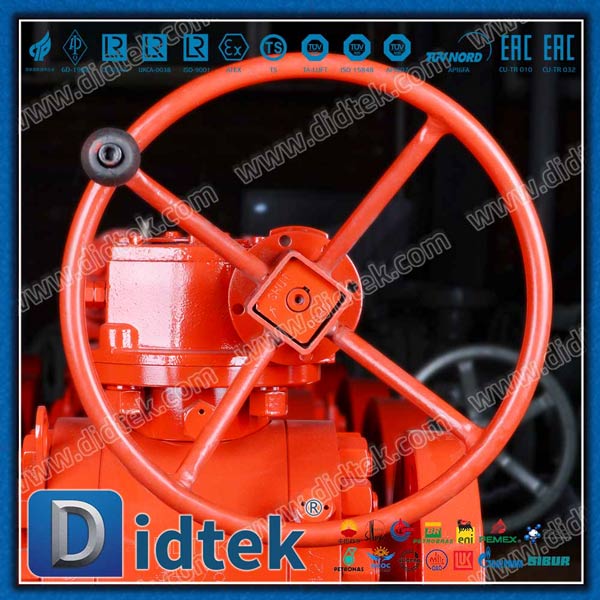
Precise control and robust actuation: The gear-box operator allows smooth, controlled movement (open/close) even under high differential pressure or high torque situations, improving operational comfort and safety.
Versatility across demanding applications: From high temperature/steam services, abrasive media, chemical attack, to fire-exposed systems, this design supports broader service conditions than standard ball valves.
Compliance and peace of mind: Fire-safe certification and industrial quality design support regulatory, safety and insurance expectations—giving end-users confidence in valve performance under extreme conditions.
FAQ
Q1. What does “fire-safe” mean for this valve?
A: “Fire-safe” means that the valve has been designed and (or) tested to maintain its pressure-containing capability, limit leakage and retain operational integrity during and after exposure to a fire event per recognized standards like API 607.
Q2. What is the scope of API 607 certification?
A: API 607 specifies fire type testing for quarter-turn valves and other valves with non-metallic seating under pressure during and after fire exposure. It is widely used for ball valves, including those with metal-seated designs when specified.
Q3. Can a metal-seated valve be fire-safe by design?
A: Yes. While API 607 historically applied to soft-seated quarter-turn valves, many manufacturers apply the principles or equivalent fire-test standards (such as ISO 10497) to metal-seated valves.
Q4. Why use a gear operator instead of a manual lever?
A: A gear-operator provides higher mechanical torque, making it easier to actuate large diameter valves, valves under high pressure or differential pressure, or valves in difficult locations. It improves safety and ergonomics.
Q5. What media and temperature ranges can the valve handle?
A: While specifics depend on seat/trim material and body rating, metal seats and F304 body typically allow high temperature service, abrasive or corrosive media, and fire-exposure environments. For example, fire-safe valves certified to API 607 may undergo fire exposure at ~750-1000 °C or higher.


