+86-18058825678
- All
- Product Name
- Product Keyword
- Product Model
- Product Summary
- Product Description
- Multi Field Search

- Home
- Our Product
- About Didtek
- Solutions
- Exhibition Show
- Support
- News
 English

Views: 0 Author: Site Editor Publish Time: 2025-12-31 Origin: Site


Did you know that a small component like a check valve can prevent major system failures? These seemingly simple devices are crucial for fluid control in numerous industries.
In this article, we’ll explore the various types of check valves and their applications. You’ll learn how to select the right check valve for your system to prevent backflow, protect equipment, and maintain efficiency.
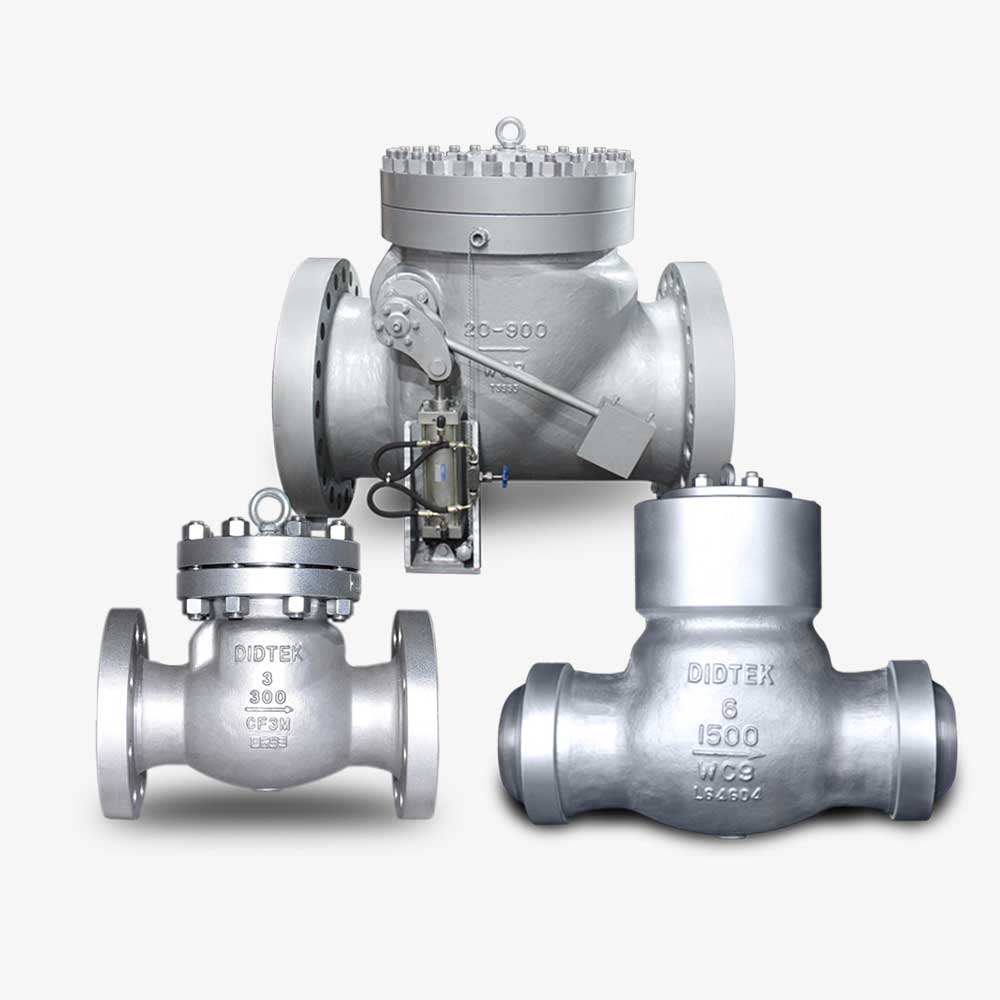
A check valve is a one-way valve that allows fluid to flow in one direction while automatically preventing reverse flow. The primary function of a check valve is to protect systems from backflow, which can cause contamination, equipment damage, or process failure.
The key components of a check valve include:
● Valve Body: The outer casing that holds all other components.
● Seat: The surface where the sealing element rests when the valve is closed.
● Disc (or Sealing Element): The part that moves to open or close the valve.
These components work together to ensure that when fluid flows in the intended direction, the valve opens to allow passage. When the flow reverses, the valve closes to stop backflow.
Check valves operate based on the principle of pressure differential. When fluid flows forward, the pressure forces the valve to open, allowing the fluid to pass through. If the flow stops or reverses, backpressure causes the valve to close, preventing reverse flow.
There are different mechanisms for closing the valve, including:
● Gravity: In gravity-operated check valves, such as the swing check valve, gravity pulls the disc back into place to close the valve when flow stops.
● Spring: Spring-assisted check valves use a spring to help close the valve when the flow direction reverses, allowing for faster response times.
Each check valve type relies on these principles in slightly different ways, making them suitable for specific applications.
Design and Function: The swing check valve uses a hinged disc that swings open when the fluid flows in the forward direction. It relies on gravity or backpressure to return the disc to its seat when the flow reverses. This design allows for minimal resistance to flow.
Advantages:
● Provides a low-pressure drop, allowing fluids to flow more freely with minimal energy loss.
● Simple operation due to the straightforward mechanism of the hinged disc.
Applications:
● Water Treatment Systems: Commonly used to regulate fluid flow in municipal and industrial water treatment plants, preventing the backflow of treated water.
● Large Pipelines: Especially useful in pipelines where the flow is stable and steady, such as those found in drainage systems and sewage lines.
● Sewage and Irrigation Systems: Ideal for large infrastructure that deals with consistent flow rates.
Tip: Swing check valves work best in horizontal piping systems where gravity assists in the valve's operation.
Design and Function: Ball check valves utilize a spherical ball inside the valve body. When fluid flows in the forward direction, the ball is lifted off its seat, allowing the fluid to pass. When flow reverses, the ball is pushed back to the seat, creating a seal that prevents backflow.
Advantages:
● Low maintenance: The simple design with no moving parts except the ball makes it less prone to wear.
● Durability: The ball is resistant to corrosion, ensuring long-lasting performance, even in harsh environments.
Applications:
● Pump Systems: Commonly found in sump pump applications where it prevents backflow into the pump.
● Wastewater Treatment: Ball check valves handle slurries or sewage with suspended solids effectively.
● Chemical Processing: Ideal for systems that require a simple yet effective valve to prevent contamination from backflow.
Tip: Ball check valves are ideal for systems that handle dirty or particulate-laden fluids, where other valve types may clog or fail.
Design and Function: A lift check valve operates by lifting a disc or piston vertically when fluid flows in the intended direction. The disc or piston returns to the seat when the flow stops or reverses, sealing the valve to prevent backflow. These valves are often used in high-pressure environments.
Advantages:
● Reliable sealing in high-pressure systems, making them suitable for heavy-duty applications.
● Versatility: Can be used in both vertical and horizontal pipelines, although they are most commonly installed in vertical systems.
Applications:
● Steam Systems: Common in boiler feedwater lines to prevent reverse flow and protect equipment.
● Petroleum & Gas Pipelines: Used in the oil and gas industry to prevent damage to compressors and pumps from backflow.
● Industrial Process Lines: Especially useful in chemical processing plants where high-pressure conditions are common.
Tip: When using lift check valves in vertical installations, ensure the pressure is sufficient to lift the disc properly and maintain effective sealing.
Design and Function: Diaphragm check valves use a flexible diaphragm that flexes open when fluid flows in the intended direction. Upon reverse flow, the diaphragm returns to its original position, sealing the valve and preventing backflow. These valves are ideal for applications requiring sanitary conditions.
Advantages:
● Quiet operation: Diaphragm valves operate without the clanging or slamming often associated with other types of check valves.
● Tight sealing: Particularly beneficial in systems where leakage cannot be tolerated, such as in food or pharmaceutical industries.
Applications:
● Pharmaceutical Processing: Ideal for preventing contamination in clean systems.
● Food and Beverage: Ensures the sanitary flow of liquids in food-grade processing systems.
● Chemical Dosing Systems: Used in low-pressure chemical transport where contamination needs to be strictly avoided.
Tip: Diaphragm check valves are highly effective in maintaining hygiene and preventing cross-contamination in sensitive industries like food processing.
Design and Function: The dual plate check valve features two spring-loaded plates that quickly open when fluid flows forward and snap shut when the flow reverses. This valve design allows for quick closure and reduced water hammer, which can damage pipes and equipment.
Advantages:
● Compact design, making it ideal for installations with space constraints.
● Fast closing mechanism reduces the risk of water hammer, which can cause costly damage to piping systems.
Applications:
● HVAC Systems: Helps maintain the efficiency of heating and cooling systems by preventing backflow and reducing water hammer.
● Refineries and Industrial Plants: Used in environments where high-flow rates are common and space is limited.
● Power Generation: Essential for managing backflow in power plants to protect turbines and other sensitive equipment.
Tip: Dual plate check valves are excellent in applications requiring fast and reliable closure, particularly in high-flow systems.
Design and Function: Silent check valves are designed to reduce the noise generated by fluid flow. They feature internal cushioning devices that soften the impact of the closing disc, preventing water hammer and reducing noise.
Advantages:
● Noise reduction: These valves are specifically engineered to prevent the loud banging sounds associated with traditional check valves.
● Prevents pressure surges: By minimizing water hammer, they protect sensitive equipment from pressure spikes.
Applications:
● Noise-Sensitive Environments: Used in locations where minimizing operational noise is critical, such as in hospitals or office buildings.
● Municipal Water Supply: Ensures the safe and quiet operation of backflow prevention systems in municipal water distribution systems.
Tip: Silent check valves are perfect for installations where noise control is a priority, and where water hammer could damage the system.
Valve Type | Design Features | Advantages | Applications | Limitations |
Swing Check Valve | Hinged disc that swings open and closed. | Low-pressure drop, simple design. | Water treatment, drainage systems, large pipelines. | Not ideal for high-velocity flows. |
Ball Check Valve | Spherical ball moves to block or allow flow. | Low maintenance, durable. | Pump discharge, wastewater systems, chemical processing. | Can cause higher pressure drops. |
Lift Check Valve | Vertical movement of disc or piston. | Reliable sealing in high-pressure systems. | Steam systems, chemical processing, oil & gas pipelines. | Requires proper alignment. |
Diaphragm Check Valve | Flexible diaphragm that responds to fluid pressure. | Quiet operation, tight sealing. | Pharmaceutical, food processing, low-pressure chemicals. | Not suitable for high-pressure systems. |
Dual Plate Check Valve | Two spring-loaded plates that snap shut. | Compact design, reduces water hammer. | HVAC systems, refineries, industrial pipelines. | More expensive and requires periodic maintenance. |
Silent Check Valve | Uses cushioning devices to reduce water hammer. | Noise reduction, prevents pressure surges. | Noise-sensitive environments, municipal water systems. | Can be complex to install. |

When selecting the right check valve, consider the following criteria:
● Media Type: The type of fluid (liquid, gas, slurry) can impact the valve choice. For example, slurry systems require ball check valves due to their ability to handle solid particles.
● Flow and Pressure Requirements: Different valve types perform better in specific pressure and flow rate conditions. For instance, lift check valves are ideal for high-pressure systems, while swing check valves are more suitable for low-flow environments.
● Material Compatibility: The valve material (e.g., stainless steel, brass, PVC) should be compatible with the fluid to prevent corrosion or degradation. For aggressive chemicals, stainless steel is often the best choice.
● High-Pressure Systems: For systems that operate under high pressure, like steam boilers or oil pipelines, lift and piston check valves are the best options.
● Sanitary Applications: In industries like food processing and pharmaceuticals, diaphragm check valves are essential for ensuring clean and contaminant-free fluid flow.
● Space-Constrained Systems: For installations where space is limited, wafer check valves provide a compact solution without compromising on functionality.
● Water Hammer: A surge of pressure caused by the sudden closing of a valve. Water hammer can damage pipes and equipment. To minimize this issue, use silent check valves or valves with built-in cushioning mechanisms.
● Reverse Flow: If a check valve fails to close properly, reverse flow can occur, causing damage to pumps and other equipment. Regular inspections and timely replacement can prevent this.
● Valve Failure: Over time, valves may fail due to wear and tear, particularly in systems with high-frequency operation. It’s crucial to select durable check valves and replace them as needed.
● Regular Inspections: Periodically check the valve for signs of wear, corrosion, or damage. A simple inspection can prevent system failure.
● Cleaning: For valves exposed to contaminants or solids, like ball check valves, cleaning is essential to ensure smooth operation.
● Replacement: When signs of damage or decreased performance appear, replace the valve promptly to avoid costly repairs.
Choosing the right check valve is crucial for ensuring system safety, efficiency, and protecting equipment. Proper valve selection prevents backflow, minimizes wear, and ensures reliable system operation. Regular maintenance is equally important to ensure long-term performance. For top-quality check valves, Didtek Valve Group Co., Ltd. provides reliable solutions that enhance efficiency and protect systems. Their products are designed to meet diverse industrial needs, offering excellent performance and durability.
A: A check valve is a one-way valve that allows fluid to flow in one direction while preventing backflow. It works by using pressure to open the valve in the forward direction and close it when flow reverses.
A: Choosing the right check valve is essential for system efficiency, preventing backflow, and protecting equipment from damage caused by reverse fluid flow.
A: Common types include swing check valves, ball check valves, lift check valves, diaphragm check valves, dual plate check valves, and silent check valves. Each is suited for different applications.
A: Consider factors such as media type, flow rate, pressure requirements, and material compatibility to select the appropriate check valve for your system.
A: Silent check valves reduce noise and prevent water hammer, making them ideal for noise-sensitive environments like municipal water systems.
A: Regular maintenance is recommended to inspect for wear, clean components, and ensure the valve operates smoothly, particularly in high-frequency use systems.


