+86-18058825678
- All
- Product Name
- Product Keyword
- Product Model
- Product Summary
- Product Description
- Multi Field Search

- Home
- Our Product
- About Didtek
- Solutions
- Exhibition Show
- Support
- News
 English

Views: 0 Author: Site Editor Publish Time: 2026-09-08 Origin: Site


Specifying the wrong fire testing standard can lead to failed safety audits, severe insurance liabilities, or catastrophic plant risks. Engineers and procurement teams face immense pressure to select compliant piping hardware under strict deadlines. A common point of confusion arises from the overlap and subtle distinctions between API 607, API 6FA, and general "fire safe" marketing claims found in vendor catalogs. Relying on vague product descriptions instead of rigorous, certified test results directly compromises facility safety. This guide provides a clear, evidence-based framework for evaluating, specifying, and sourcing certified fire safe ball valves. You will learn how to decode complex testing standards, spot misleading vendor claims, and match the correct valve credentials to your specific process conditions. Armed with this knowledge, your team can navigate procurement confidently while ensuring maximum operational safety.
"Fire safe by design" is not equivalent to "fire safe certified." Independent third-party witness testing is mandatory for compliance.
API 607 is the standard for soft-seated, quarter-turn valves, making it the default for most downstream refining and petrochemical applications.
API 6FA is designed for API 6A and 6D valves, often applied to metal-seated valves or upstream/wellhead applications.
Procurement should always verify the manufacturer's scaling qualifications; a test on one valve size/pressure class only qualifies a specific range of related valves.
We must distinguish standard industrial valves from those engineered specifically to prevent feeding a fire. When a blaze engulfs a pipeline facility, ambient temperatures skyrocket within minutes. Ordinary soft seals melt rapidly under this extreme thermal stress. This catastrophic failure releases flammable process media directly into the environment. It fuels the inferno and escalates the danger exponentially. A true fire safe design relies on robust, carefully engineered mechanical redundancies. These redundancies ensure containment even when primary elastomeric components vaporize completely.
Core mechanical requirements include:
Secondary Metal-to-Metal Seal: Primary soft seats consist of materials like PTFE or PEEK. These plastics degrade rapidly under extreme heat. As the soft seat burns away, pipeline pressure pushes the ball downstream. The ball presses firmly against a precision-machined metal lip on the valve body. This action creates a critical secondary metal-to-metal seal. It maintains reliable shutoff and stops the flow of hazardous fluids.
External Leakage Prevention: Containing the internal media represents only half the battle. You must also prevent external atmospheric leaks through the valve stem and body joints. Engineers utilize high-temperature graphite packing within the stem area. They also deploy specialized body gaskets between valve housing segments. Spiral wound stainless steel and graphite gaskets excel in this application. They maintain strict structural integrity and contain media under immense thermal expansion and contraction.
Anti-Static Devices: Flowing fluids routinely generate invisible static electricity inside the pipeline. Volatile media lines require robust grounding mechanisms to prevent static spark ignition. Anti-static devices typically feature spring-loaded metal pins. These pins ground the rotating ball and the valve stem directly to the stationary valve body. This continuous electrical continuity safely dissipates dangerous static buildup into the piping system ground.
Best Practice: Always verify the secondary metal lip dimensions during factory acceptance testing. A poorly machined lip will fail to seal properly once the primary seat disappears.
Common Mistake: Do not assume standard graphite packing automatically equals fire safety. The packing must work in tandem with the secondary metal lip to achieve full containment.
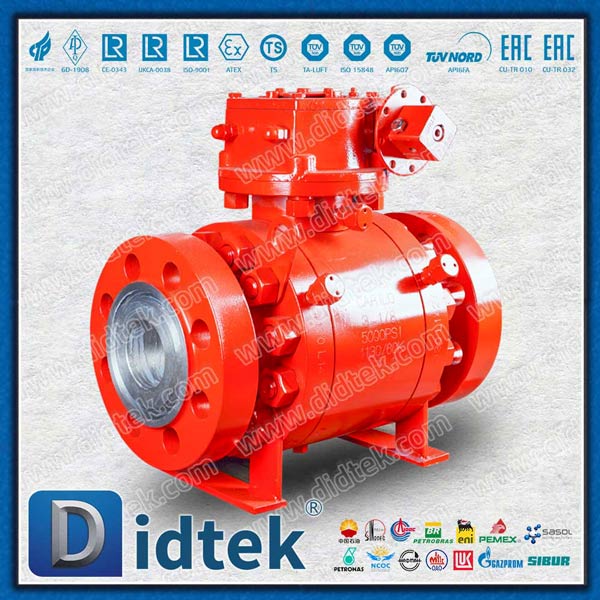
Facility requirements dictate your exact testing standard. You must evaluate both compliance mandates and application fit. Engineers often struggle to choose between API 607 and API 6FA. Deconstructing the specific parameters of each standard clarifies the decision process.
The API 607 standard specifically targets quarter-turn valves featuring non-metallic, soft seating mechanisms. The rigorous test involves a 30-minute sustained burn. Flame temperatures range aggressively from 750°C to 1000°C. Afterward, technicians subject the glowing valve to forced water cooling. This simulates the sudden thermal shock of fire hose intervention. Success demands strict adherence to limits on through-seat leakage during the burn phase. It also strictly limits external leakage post-cooling. An API 607 ball valve dominates downstream petrochemical environments. Refineries rely on them for reliable emergency isolation.
Conversely, the API 6FA standard primarily targets API 6A and API 6D valves. These are often metal-seated designs or specialized upstream configurations. The thermal exposure closely matches the 607 protocol. However, it differs slightly in critical cooling protocols. Test pressures and operational testing requirements post-burn also vary significantly. When sourcing an API 6FA ball valve, you align closely with rugged, upstream extraction demands. Wellheads and heavy crude pipelines depend on this specific certification.
Global procurement teams often reference ISO 10497 for international equivalence. This international standard acts as a crucial bridge. It aligns very closely with API protocols. Utilizing ISO 10497 streamlines cross-border sourcing efforts. It allows facilities to maintain unified safety baselines across multiple international sites.
Standard Comparison Chart: API 607 vs. API 6FA
Feature/Parameter | API 607 Requirements | API 6FA Requirements |
|---|---|---|
Primary Scope | Soft-seated quarter-turn valves | API 6A and API 6D valves |
Typical Application | Downstream refining, plant utilities | Upstream pipelines, wellheads |
Thermal Exposure | 750°C to 1000°C for 30 minutes | 750°C to 1000°C for 30 minutes |
Post-Burn Cooling | Mandatory forced water cooling | Varies; specific cooling rate protocols apply |
Aligning the chosen standard with your operational environment remains absolutely critical. You must match the engineering solution to the exact field conditions. Improper specification compromises the entire safety loop.
Default to API 607 for plant utilities and downstream refining processes. These specific downstream areas heavily utilize soft-seated quarter-turn components. The soft seats offer excellent daily bubble-tight shutoff. Conversely, specify API 6FA for harsh pipeline and wellhead applications. Upstream environments demand the heavier-duty architecture found in API 6D designs. The media often contains abrasive sands or high-pressure crude.
Your selected seat material directly dictates your necessary certification path. Soft seats require API 607 testing because they intentionally melt during the fire. The physical test proves the engineered secondary metal lip functions correctly under duress. Metal seats behave completely differently during a fire scenario. They do not melt away or vaporize. Thus, metal-seated valves typically follow API 6FA protocols. They rely on the primary metal seal maintaining integrity despite massive thermal expansion.
Understanding API scaling rules prevents disastrous procurement errors. You must verify manufacturer scaling qualifications carefully.
Recognize transparent assumptions: Buyers often wrongly assume one certificate covers a vendor's entire catalog. This is a dangerous misconception.
Understand base testing limits: Testing a single 2-inch Class 300 valve does not blindly approve all sizes. It only qualifies a highly specific range of related valves.
Verify adjacent sizes: API scaling rules dictate that the tested prototype only qualifies valves one size smaller and two sizes larger.
Check pressure class boundaries: The certification generally qualifies the tested pressure class and one class higher. It rarely qualifies lower pressure classes.
Demand specific documentation: Always confirm the exact size and pressure class you intend to buy falls cleanly within the qualified scaling range.
We must audit vendors carefully and methodically. Avoiding non-compliant products requires a skeptical, highly evidence-based approach. The industrial market contains both premium manufacturers and budget operators.
Many vendor catalogs boldly claim a valve is "designed to" fire safe standards. This phrase carries zero legal weight. It represents mere marketing fluff designed to boost sales. True compliance requires the specific word "certified." You must reject vague marketing claims immediately. Demand hard, undeniable documentation. The legal and safety distinction between these two phrases is critical. A "designed to" valve has never actually faced a 1000°C inferno.
Self-certification by the manufacturer is never enough. You need concrete proof from independent, recognized authorities. Look for official stamps and signatures from respected bodies. Organizations like DNV, Lloyd’s Register, or TÜV provide the necessary validation. Their inspectors physically stand and watch the burn test unfold. They ensure the procedure followed the strict API protocol without deviations. Their signature transforms a manufacturer's claim into a proven, trustworthy fact.
Holding a valid certificate alone remains insufficient. The physical valve delivered to your site must match the tested prototype exactly. This means rigorously checking Material Test Reports (MTRs) upon arrival. Ensure strict heat traceability for every major pressure-retaining component. The metallurgical properties, casting quality, and design dimensions must align perfectly with the original test subject. Even a minor change in body casting material negates the fire safe guarantee.
Best Practice: Always cross-reference the heat numbers stamped on the valve body with the provided MTR documents.
Common Mistake: Never accept a generic certificate of compliance in place of an actual third-party witness report.
Procurement represents just the first step in the lifecycle. Experience-based rollout lessons reveal what actually happens after installation. Maintenance teams must uphold the certified standards diligently.
A certified fire safe ball valve operates differently than a standard one. The specialized graphite packing creates significant mechanical friction. This friction sharply increases the baseline operating torque of the valve stem. When sizing automated pneumatic or electric actuators, you must factor in this increased torque requirement. Failing to do so results in underpowered actuation. The valve may stall mid-stroke during a critical emergency shutdown.
Standard operating procedures must remain ruthless regarding exposed equipment. If a localized fire occurs, you cannot salvage the exposed valves. Even if they appear structurally intact, extreme thermal stress alters their internal metallurgy. The severe heat ruins the temper of springs and distorts body bolting. You must remove, isolate, and replace them entirely. Never attempt to rebuild or reuse a fire-exposed valve in a pressure system.
Plant turnarounds present a hidden, significant danger. Technicians sometimes substitute non-OEM packing or generic O-rings to save time. This action legally voids the fire safe certification instantly. You must mandate the use of exact OEM replacement parts. Any deviation from the original tested design nullifies the safety guarantee. A slightly cheaper graphite ring could cause catastrophic external leakage during a real emergency.
Specifying these critical safety assets requires deep, methodical diligence. You must align your process media, seat material, and API standards precisely. Missteps in this specification process expose facilities, personnel, and local communities to unacceptable hazards. True safety relies on verified facts, not marketing assumptions.
When evaluating potential vendors, always start with hard evidence. We recommend requesting a sample MTR for your intended product immediately. Ask for the current API test certificate matching your specific size and pressure class. Finally, demand the corresponding third-party witness report. These three critical documents form your ultimate defense against non-compliant procurement. They ensure your facility remains secure under the most extreme conditions imaginable.
A: Generally, no. While thermal exposures are similar, the structural and performance scopes differ. API 607 targets soft-seated, quarter-turn valves, whereas API 6FA targets API 6A and 6D upstream equipment. Any substitution requires strict engineering sign-off and verification of cross-compatibility.
A: No. A trunnion design provides excellent high-pressure performance but does not guarantee fire safety. Without the engineered secondary metal lip, specialized graphite seals, and anti-static devices, a standard trunnion valve will fail during a fire. True fire safety requires deliberate engineering and certification.
A: Yes, standard testing is directional. Valves are usually tested in the direction of highest risk or normal flow. For bi-directional applications, the valve must pass the fire test in both directions. Always verify the certificate covers your specific directional requirements.
A: Yes. Even minor trim changes impact the certificate's validity. Fire safe testing approves a very specific combination of materials. Substituting an O-ring or modifying the packing material fundamentally alters the tested design. This voids the original certification and requires a retest.


